West Bengal Finance Minister Swapan Dasgupta has allocated ₹36,000 crore for the "Annapurna Yojana," a restructured women's financial assistance scheme granting ₹3,000 monthly to eligible women. The maiden BJP budget simultaneously trims the beneficiary pool to one crore while adding a 20% DA hike and 1 lakh government jobs.
KOLKATA — West Bengal Finance Minister Swapan Dasgupta allocated ₹36,000 crore for the state's revamped women's financial assistance scheme during the presentation of the full state budget for fiscal year 2026–27 today, June 22, 2026. The newly carved financial outline represents the first full budget presented by the Bharatiya Janata Party (BJP) administration in West Bengal. Dubbed the "Annapurna Yojana," the welfare program succeeds the previous Trinamool Congress (TMC) government's flagship "Lakshmir Bhandar" initiative. While the new scheme significantly escalates individual monthly direct benefit transfers to ₹3,000 per eligible woman, stricter verification protocols will systematically scale down the total beneficiary matrix across the state.
Restructuring Direct Benefit Transfers for Women
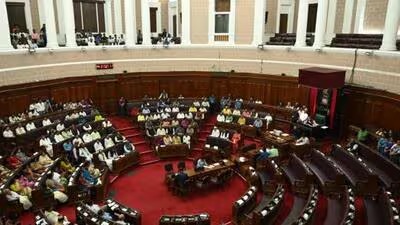
According to the official budget estimates tabled in the West Bengal Legislative Assembly, the ₹36,000 crore outlay is specifically structured to sustain a fixed monthly stipend of ₹3,000 for women within the 25–60 age demographic. This represents an upgrade in individual financial disbursements compared to the former Lakshmir Bhandar scheme, which capped monthly transfers between ₹1,000 and ₹1,200 depending on social categories.
However, the mathematical mapping of the ₹36,000 crore allocation indicates a substantial contraction in the macro beneficiary database. At ₹3,000 per month per individual, an annual budget of ₹36,000 crore can support exactly one crore (10 million) women beneficiaries.
Under the previous ruling administration, the direct financial assistance umbrella was claimed to encompass approximately 2.4 crore women. Government sources confirmed that enhanced online application frameworks requiring micro family details, income parameters, and Aadhaar links have already weeded out roughly 30 lakh allegedly duplicated or ineligible entries. The transition aims to balance robust individual support with stricter fiscal filtering.
Broader Gender and Employment Mandates in the FY 2026-27 Budget
The massive capital infusion into the Annapurna Yojana anchors an expansive budgetary focus on female empowerment, rural employment, and administrative overhauls.
Beyond direct cash doles, Finance Minister Swapan Dasgupta announced a series of intersecting socio-economic policies:
Public Employment Expansion: The government has committed to filling one lakh vacant positions within state departments this fiscal year, explicitly reserving a 33% quota for women. This includes 20,000 upcoming vacancies inside the police force.
Higher Education Incentives: A separate one-time financial allocation of ₹50,000 was introduced for unmarried female students transitioning into college education.
All-Women Free Transit: The budget allocated ₹550 crore to subsidize an all-women free public bus service network across major municipal zones.
Concurrently, the state government announced a 20 percentage point hike in Dearness Allowance (DA) for state government employees and pensioners effective October 1, 2026, raising total DA to 38% and closing the historical disparity with central government scales.
Macro-Fiscal Rebalancing and Industrial Incentives
To offset the extensive social security spending, Chief Minister Suvendu Adhikari outlined a structural shift toward private capital accumulation and industrial deregulation. During a post-budget press conference, Adhikari revealed that the state will re-examine the historical Urban Land (Ceiling and Regulation) Act of 1976 to unlock developable urban land parcels, aiming to attract large-scale commercial developers and corporate investments.
The budget also earmarked ₹5,000 crore specifically for fresh industrial incentives targeting projects with investments exceeding ₹100 crore, eliminating localized permission barriers to simplify ease-of-doing-business parameters.
Official Sources Section
Statistical outlays, departmental allocations, and project blueprints detailed in this report are sourced from official state transcripts distributed by the [West Bengal Legislative Assembly](https:// debfs.wb.gov.in) and formal notifications compiled by the Finance Department, Government of West Bengal. Strategic labor quotas conform to guidelines verified by the central Ministry of Personnel, Public Grievances and Pensions.
Quote Section
Presenting the budget, Finance Minister Swapan Dasgupta defended the structural realignment of state finances:
"We have streamlined the architecture of welfare in the State and, at the same time, averted a financial collapse. We have changed the direction of State policy and given our total support to entrepreneurship, growth, innovation, technology, and business. We have ended the needless conflict with the Centre and tried to take advantage of everything the double engine has to offer."
Why It Matters
For household consumers and women across rural and urban Bengal, the transition to the Annapurna Yojana promises a tripling of personal monthly liquidity, providing enhanced purchasing power against inflationary pressures. However, for over a crore of families previously dependent on the wider Lakshmir Bhandar net, the updated eligibility caps mean a complete loss of state doles. For financial investors and corporate enterprises, the state's simultaneous pivot toward land ceiling relaxations and a ₹5,000 crore industrial incentive corpus signals a more friendly regulatory landscape for infrastructure development.
Key Facts at a Glance
Welfare Outlay: A total of ₹36,000 crore has been designated for the newly structured Annapurna Yojana women's financial assistance scheme.
Payout Escalation: Eligible women aged 25–60 will receive ₹3,000 monthly, directly deposited into verified bank channels.
Beneficiary Shrinkage: Tightened verification protocols will compress the recipient list from 2.4 crore women under the previous regime to a calibrated one crore base.
Employment Quotas: The state will initiate the recruitment of one lakh government personnel, enforcing a strict 33% reservation for women.
Transport Subsidy: An allocation of ₹550 crore has been set aside to launch an all-women free public transit bus model.
FAQ Section
Q: Is the Lakshmir Bhandar scheme completely stopped in West Bengal? A: The current administration has integrated and revamped the previous scheme into the newly launched Annapurna Yojana. While the payout has increased to ₹3,000 per month, eligibility guidelines have been tightened.
Q: Who is eligible to receive benefits under the new Annapurna Yojana? A: The scheme targets women in the 25–60 age bracket who fulfill the newly revised household income parameters and pass the state’s digital database verification process.
Q: When will the promised 20% Dearness Allowance (DA) hike for state workers take effect? A: According to the budget announcement, the 20 percentage point increase in DA, which brings the state employee allowance to 38%, will become operationally effective starting October 1, 2026.
Source: Finance Department of West Bengal, Press Information Bureau India, West Bengal Legislative Assembly Portals