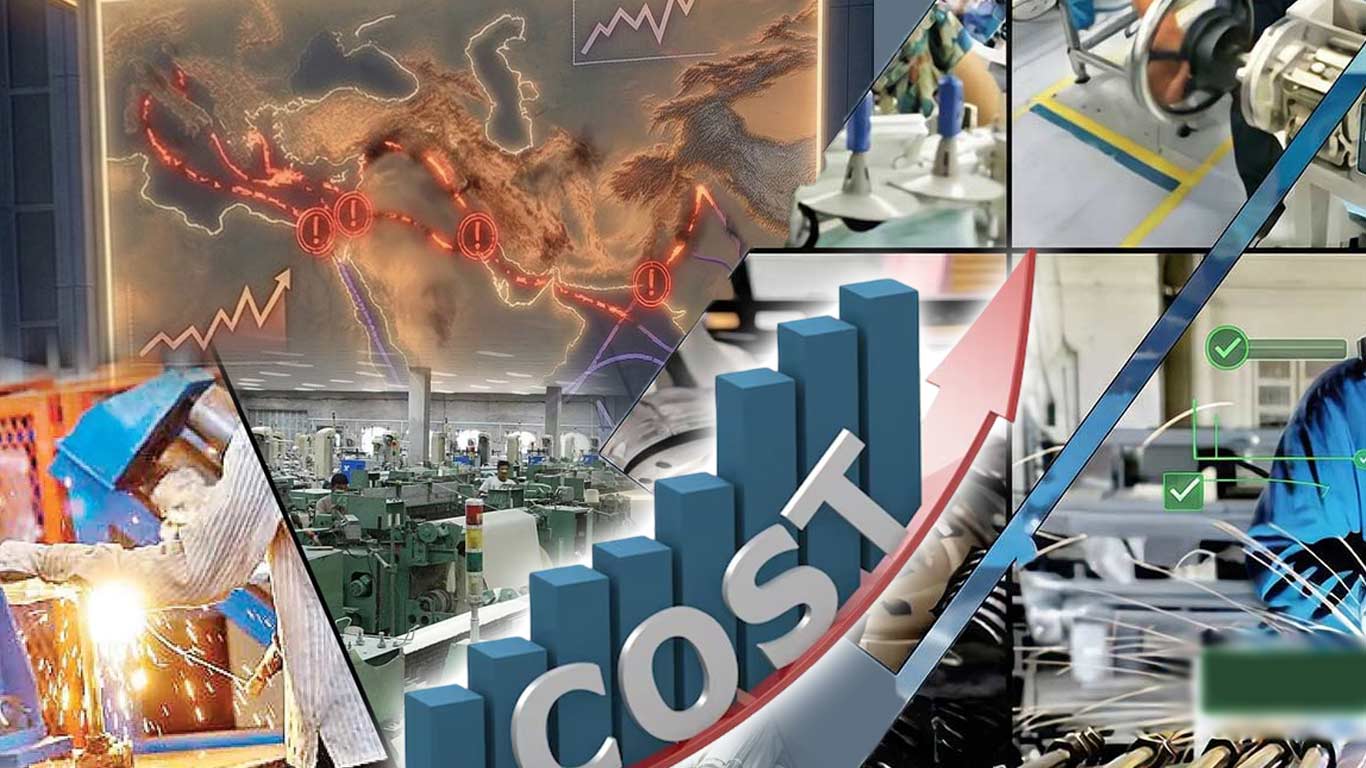
India's MSMEs are facing significant operational pressure as the West Asia conflict drives up domestic power and diesel costs. According to Crisil Intelligence, these rising energy prices are squeezing profit margins, leading to major production cutbacks across key manufacturing hubs like the Morbi ceramic and Firozabad glass clusters.
MUMBAI — Micro, Small, and Medium Enterprises (MSMEs) across India are experiencing intense operational and financial headwinds due to the ongoing geopolitical conflict in West Asia. According to an extensive industrial impact study released by Crisil Intelligence, the regional volatility has directly driven up domestic energy costs, leaving smaller manufacturing units to cope with escalating electricity overheads and a series of domestic diesel price hikes.
The economic pressure comes at a vital time for the sector, which serves as the primary backbone for India's domestic employment and manufacturing exports. In its June statutory updates, the Reserve Bank of India (RBI) confirmed that its latest manufacturing pulse surveys show prominent headwinds, with more than 80 percent of surveyed small businesses reporting a substantial spike in input costs. These escalating logistics and power expenses are preventing factory owners from maintaining baseline production schedules.
Escalating Diesel Prices and Energy Derivative Surges
The direct transmission of the West Asia conflict into the domestic assembly line has occurred primarily through transport fuel lines. State-run oil marketing companies enacted a series of cumulative retail price hikes, pushing non-branded diesel up to ₹95.20 per litre in Delhi and nearly ₹97.83 per litre in Mumbai.
For MSMEs, these changes translate into a sharp inflation of overhead costs. In sectors like road construction and heavy engineering, where direct diesel consumption for machinery and freight transport accounts for 8 to 10 percent of total operational outlays, profit margins are under severe strain.
The energy shock has expanded far beyond transit logistics, heavily impacting small firms that rely on petroleum-linked derivatives and chemical solvents:
The Chemical Sector: Smaller chemical blending plants, which import over 90 percent of their foundational inputs like methanol from West Asian suppliers, have watched raw material costs escalate by 1.2 to 1.4 times.
The Textile Sector: In clusters like Surat, manufacturers report that the prices of polyester yarn and synthetic fibers—both structural crude derivatives—have surged rapidly.
The Packaging Sector: Packaged food MSMEs face a parallel margin squeeze of 50 to 100 basis points due to a spike in plastic and polymer-based packaging materials.
Production Slowdowns Hit Specialized Industrial Clusters
The lack of cheap alternate fuels and a tightening in global liquefied natural gas (LNG) distribution networks have triggered deep manufacturing slowdowns across several prominent, specialized industrial clusters.
According to the Crisil Intelligence brief, the Morbi ceramic tile cluster in Gujarat—responsible for more than 80 percent of India's aggregate tile production—is among the hardest hit. Because 80 to 85 percent of Morbi's production architecture relies entirely on gas-fired kilns, localized supply contractions are projected to cause revenue growth to plummet from historical baselines of 9 to 11 percent down to just 1 to 3 percent.
Similarly, the historic glass manufacturing hub of Firozabad has been forced to institute a widespread 40 percent drop in daily production volumes. Smaller operators lack the capital reserves needed to transition their furnaces to alternative power systems or absorb prolonged energy price spikes without cutting active worker shifts.
Shrinking Corporate Profit Margins and Fiscal Support
The combined weight of elevated diesel costs and rising power bills is leading to a broad compression of corporate earnings across the small business ecosystem. Analysts project that aggregate MSME EBITDA margins will drop by 50 to 100 basis points, settling into a thin baseline of 5 to 5.5 percent for the current annual cycle. Because international buyers are concurrently demanding price discounts due to dampened global market sentiment, Indian suppliers have very little leverage to pass their rising input costs down the supply chain.
To mitigate a potential wave of corporate defaults and support working capital lines, the Union Cabinet has intervened with targeted emergency funding. The government has approved a relief scheme with an active layout of ₹181 billion, designed to deploy up to ₹2.55 trillion in structured credit guarantees under the updated Emergency Credit Line Guarantee Scheme (ECLGS 5.0) framework.
Official Sources Section
The underlying statistical projections, cluster revenue metrics, and fuel price tracking parameters detailed within this report are drawn from formal press releases published by Crisil Intelligence, statutory macroeconomic reviews within the June bulletin of the Reserve Bank of India (RBI), and ministerial oversight directives issued by the Ministry of Micro, Small and Medium Enterprises.
Quote Section
"MSMEs face a dual challenge this time round: first, production cuts and revenue losses due to reduced availability of raw material such as gas and, second, margin compression stemming from trade disruptions and limited pricing power."
— According to the official MSME Sector Analysis published by Crisil Intelligence.
Why It Matters
For retail consumers and industrial workers, the energy-driven slowdown in the MSME sector could trigger localized layoffs and a general reduction in new employment opportunities within major manufacturing belts. As smaller factories cut production lines to manage high power bills and expensive diesel logistics, the resulting decrease in output could lead to supply constraints for consumer goods, adding to broader domestic inflation pressures.
Key Facts at a Glance
Revenue Moderate: Widespread energy disruptions are expected to trim 100 basis points off overall MSME revenue growth.
Fuel Inflation: Consecutive retail revisions have pushed diesel prices up to ₹95.20 per litre in Delhi and ₹97.83 in Mumbai.
Cluster Stress: The gas-dependent Morbi ceramic cluster faces a steep revenue growth slowdown, dropping to a projected 1–3 percent.
Output Cuts: High energy overheads have led to an immediate 40 percent reduction in production volumes for the Firozabad glass hub.
State Intervention: The Union Cabinet has deployed the ECLGS 5.0 scheme, unlocking ₹2.55 trillion in emergency credit support.
FAQ Section
Q: Exactly how is the West Asia conflict driving up costs for Indian MSMEs? A: The conflict has disrupted critical shipping routes and global energy supply lines, raising crude oil and gas prices. In India, this has led to higher electricity costs and consecutive diesel price increases, making factory operations and freight logistics significantly more expensive.
Q: Which specific manufacturing clusters are experiencing the most severe impacts? A: The hardest-hit areas are energy-intensive hubs like the Morbi ceramic tile cluster in Gujarat and the Firozabad glass sector, both of which rely heavily on stable gas and power inputs to run their high-temperature furnaces.
Q: What steps is the government taking to protect small businesses from these fuel shocks? A: The government has launched the ECLGS 5.0 program, providing an allocation of ₹181 billion to guarantee up to ₹2.55 trillion in emergency credit, helping small businesses maintain their working capital and handle rising operational costs.
Source: Reserve Bank of India, Ministry of Micro, Small and Medium Enterprises.