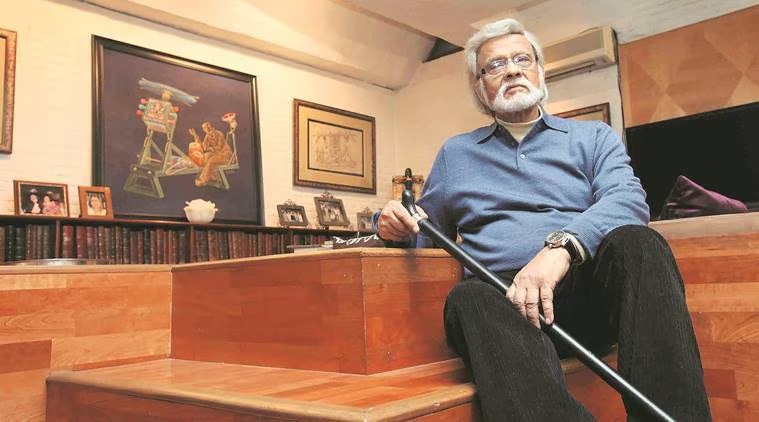
Satish Gujral’s seven decade practice shows how Indian modernism grew out of lived memory rather than pure abstraction, as he turned Partition trauma, nation building and everyday life into paintings, sculptures, murals and buildings that still shape how we see post Independence India today.
A major centenary exhibition at the National Gallery of Modern Art in New Delhi has recently brought this story into sharp focus, assembling more than 150 works that trace Gujral’s journey from Partition era drawings to monumental public murals. Curated by Kishore Singh with support from the Gujral Foundation, the show positions memory and medium as the two constant threads running through his art, and by extension, through a large slice of Indian modernism.
Partition, Trauma And Early Modernism
Gujral’s earliest works emerged directly from his experience of helping refugees cross into India during Partition, translating scenes of grief, displacement and violence into an intense figurative visual language. Paintings like Mourners, Snare of Memory and Desolation are now seen as foundational images of Partition art, where memory is not illustrative but almost forensic, a witness to history. This ability to turn private recollection into public testimony is one reason many curators locate him at the heart of Indian modernism’s humanist wing.
From Canvas To Ceramic, From Studio To Street
Over the decades, Gujral refused to be confined to a single medium, moving from painting to sculpture, architecture and large scale mural work on civic buildings in Delhi, Chandigarh and Punjab. Influenced by Mexican muralists like Diego Rivera and David Alfaro Siqueiros, he treated art as a social act, using ceramic, stone, metal and textured surfaces to bring modernist forms into everyday public spaces. Critics and curators note that for him, the concept came first and the medium followed, allowing the same recurring figures and memories to appear in vastly different material avatars.
Indian Modernism Through One Artist’s Memory
Recent scholarship frames Gujral’s practice as a multidimensional bridge between Partition memory, folk and classical motifs and international modernist idioms in abstraction and muralism. From burnt wood sculptures responding to the 1984 riots to mixed media abstract works that paralleled the rise of Indian abstraction globally, his career shows how Indian modernism stayed rooted in local histories even as it experimented restlessly with form and material.
Memory And Medium Highlights
- Partition era works like the Partition Series, Mourners and Snare of Memory turn lived trauma into a core pillar of Indian modern art
- Later murals and architectural collaborations use ceramic, metal and grit to embed modernism in public institutions and cityscapes
- Curators read his centenary exhibitions as maps of Indian modernism, where memory recurs as subject and metaphor across shifting mediums
Sources: NGMA, Times of India, Time Out, Artsy, ThePrint and Gujral Foundation