Starting July, West Bengal will begin a phased rollout of around two crore smart prepaid electricity meters, marking one of the largest grid-modernisation drives in the country. Union Power Minister Manohar Lal has asked the state to prioritise government offices, housing complexes and big consumers in the first wave, backed by central grants per meter. The move is aimed at improving billing efficiency, cutting losses and giving consumers more control over their power use.
West Bengal’s Smart Meter Push
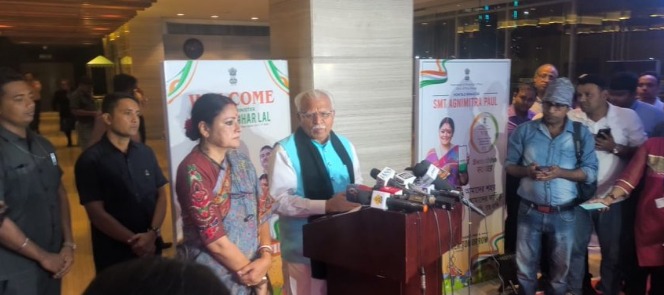
Announcing the plan in Kolkata, Manohar Lal said the smart meter rollout in West Bengal will begin from July, eventually covering nearly two crore consumers over the next three to four years. Initial deployment will focus on government establishments and high-consumption users, before gradually extending to ordinary domestic households across the state. This comes alongside a parallel push for rooftop solar under the PM Surya Ghar scheme, signalling a broader shift towards smarter, cleaner electricity systems in Bengal.
How The Rollout Will Work
In the first phase, prepaid smart meters will be installed in government offices, housing colonies and large commercial and industrial connections with higher energy demand. West Bengal State Electricity Distribution Company Ltd has already installed roughly seven lakh smart meters, giving the state a running start on the new targets. Over the next stages, the programme will be scaled up to cover smaller consumers and finally regular households, bringing most of Bengal’s grid onto an advanced metering platform.
What It Means For Consumers
Smart prepaid meters allow consumers to monitor their electricity usage in real time and recharge like a mobile wallet, helping avoid bill shocks and encouraging more efficient consumption. For distribution utilities, they improve billing and collection efficiency, reduce manual intervention and help detect theft and technical losses more quickly. The Centre has also committed a grant of about Rs 900 per smart meter, which is expected to soften the financial impact of the transition on the state and its consumers. Officials say the combined push on smart meters and rooftop solar can gradually flatten peak loads and make the state’s power system more resilient.
Policy Context And Next Steps
The smart meter rollout in Bengal ties into the national goal of deploying 100 million smart electricity meters across India, a key reform under the power sector revamp scheme. In Kolkata, Manohar Lal also indicated that a new power tariff order for West Bengal is expected by July, aligning tariffs, metering and subsidy structures with the upgraded infrastructure. State officials and the Centre are now working on implementation details, including timelines, consumer communication and grievance redressal mechanisms, before the July switch-on.
Key Highlights
- Rollout of around 2 crore smart prepaid electricity meters in West Bengal from July
- First phase to cover government offices, housing complexes and high-consumption users
- State already has about 7 lakh smart meters installed as a base
- Centre offering grant support of around Rs 900 per smart meter
- Push aligned with rooftop solar expansion under PM Surya Ghar in Bengal
- Part of national target of 100 million smart meters to modernise India’s power sector
Sources: Times Of India; UNI; PIB and social media updates