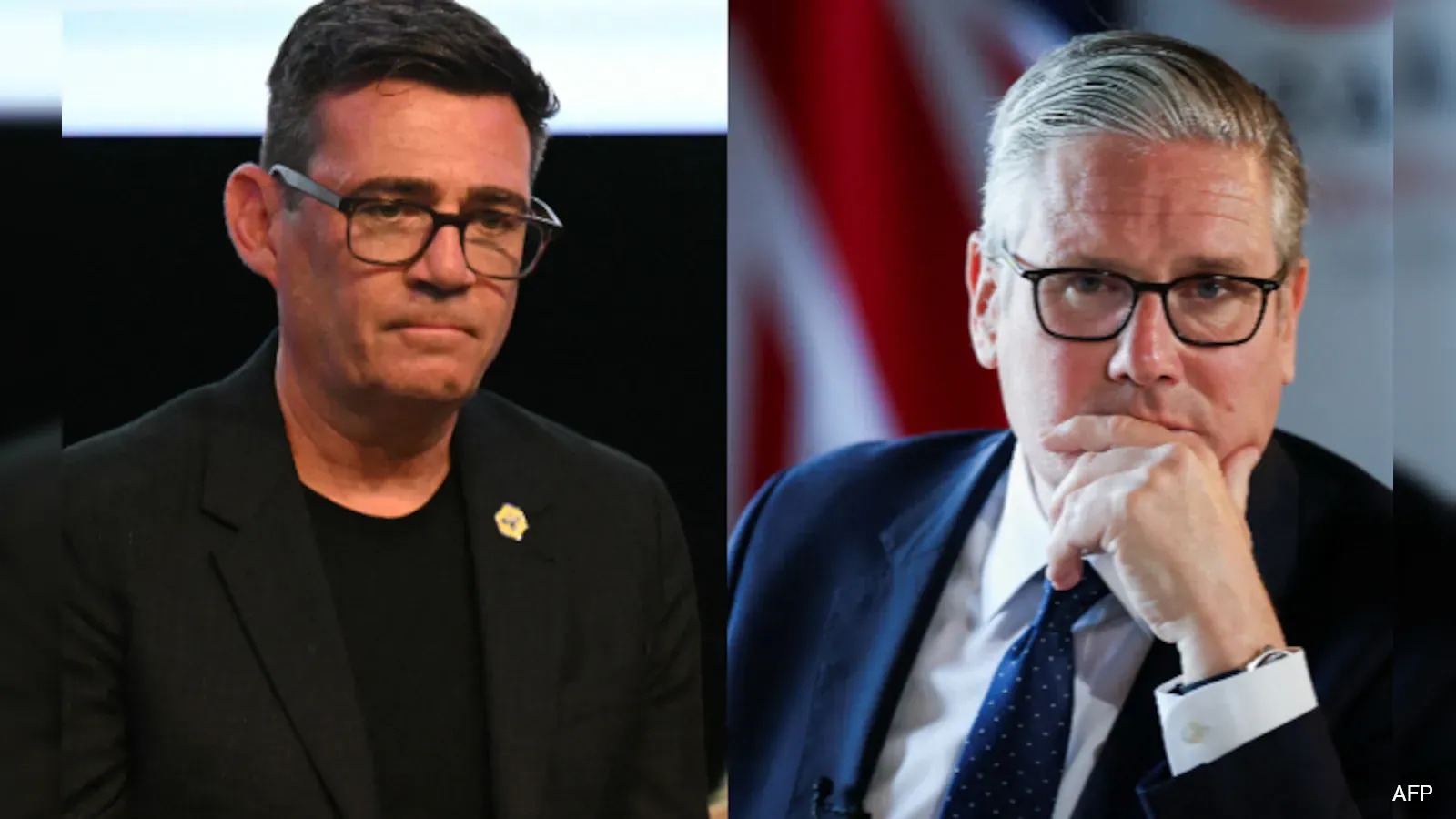
Following Prime Minister Keir Starmer's resignation, former Greater Manchester Mayor Andy Burnham has emerged as the clear frontrunner to assume the UK premiership. Burnham's decisive victory in the June 18 Makerfield by-election paved his way back to Westminster, positioning him to lead the nation as nominations open July 9.
LONDON — Following the dramatic resignation of United Kingdom Prime Minister Keir Starmer today, June 22, 2026, the political spotlight has shifted decisively to Andy Burnham, the newly elected Member of Parliament widely positioned to take over the Labour Party leadership and the premiership. Burnham, a seasoned political figure famously nicknamed the "King of the North," secured his return to the House of Commons just days ago in a high-stakes special election designed explicitly to facilitate a transition at the apex of British governance. As the Labour Party prepares to open formal nominations to select the nation's next executive leader, Burnham stands in pole position to navigate a fractured parliamentary party and inherit control of Downing Street.
The Makerfield By-Election: Launchpad to Westminster
Andy Burnham’s immediate path to the threshold of the premiership was cleared by a meticulously calculated political maneuver in North West England. On May 14, 2026, the sitting Labour lawmaker for the constituency of Makerfield, Josh Simons, abruptly resigned his parliamentary seat. Simons openly acknowledged that his resignation was engineered to grant Burnham—who had served as the elected Mayor of Greater Manchester since 2017—the legal opportunity to return to federal legislative politics.
In the resulting Makerfield by-election held on June 18, 2026, Burnham secured a commanding victory, claiming approximately 55% of the total vote share. He decisively defeated his closest challenger, Robert Kenyon of the right-wing, anti-immigration Reform UK party, by a margin of more than 9,000 votes.
According to senior parliamentary data, Burnham's performance represented a 10-percentage-point increase in the local Labour vote share compared to the 2024 general election. The decisive triumph against Farage-aligned populism instantly cemented Burnham’s status as Labour’s most electorally viable asset, triggering the internal cabinet revolt that forced Starmer’s resignation.
From New Labour Minister to the 'King of the North'
The 56-year-old Burnham is far from a political newcomer to Westminster. Before his high-profile tenure in municipal government, he maintained a extensive career within the traditional structures of the Labour Party:
Cabinet Veteran: Burnham served under the New Labour administrations of Tony Blair and Gordon Brown, holding prominent national portfolios including Chief Secretary to the Treasury, Culture Secretary, and Health Secretary.
Leadership Contender: He previously mounted two unsuccessful campaigns for the national Labour leadership, finishing fourth in the 2010 contest won by Ed Miliband and second in the 2015 election won by Jeremy Corbyn.
Metropolitan Autonomy: Leaving parliament in 2017, Burnham transformed the role of Mayor of Greater Manchester into a powerful platform for regional advocacy. He gained national prominence for fiercely challenging central government lockdowns during the pandemic, cultivating a distinct brand as a populist defender of working-class communities outside London.
The Path to the Premiership and Party Scrutiny
Under the constitutional rules governing the UK Parliament, a party holding a majority in the House of Commons can alter its leader midterm, allowing the winner to become Prime Minister without forcing a national general election.
However, Burnham's coronation is not entirely guaranteed without internal friction. To officially enter the race when nominations open on July 9, 2026, a candidate must secure the formal endorsement of at least 20% of Labour lawmakers, equating to 81 individual nominations.
While party insiders suggest Burnham already commands a significant portion of backbench support, centrist factions are reportedly pushing for a competitive contest. Potential alternative contenders, including Health Secretary Wes Streeting, are being urged to stand to ensure the incoming leader faces a full policy examination. Skeptics within the party express concern that Burnham’s long absence from daily parliamentary mechanics could leave him structurally unprepared for the rapid demands of prime ministerial scrutiny, particularly given the fragile state of national public services.
Official Sources Section
Biographical data, historical legislative appointments, and specific electoral metrics within this report are verified through official public data registries maintained by the UK Parliament. By-election voting statistics and constituency distributions conform to certified counts released by local returning officers via the Wigan Council Electoral Office.
Quote Section
"According to officials detailing the upcoming leadership timeline, Andy Burnham’s transition into the parliamentary party is proceeding on an accelerated track, with the newly elected lawmaker expected to leverage a five-point national polling advantage over all internal rivals to secure a unified mandate."
Why It Matters
The ascendancy of Andy Burnham signal a profound policy shift for the British state. Unlike the highly centralized, technocratic approach maintained by Keir Starmer, Burnham has consistently advocated for deep structural devolution, regional wealth redistribution, and a fundamental restructuring of the country's immigration and industrial frameworks. For businesses, international investors, and ordinary citizens, a Burnham-led government likely means an aggressive pivot toward infrastructure spending across northern industrial hubs, coupled with an overhaul of public sector funding mechanisms.
Key Facts at a Glance
Westminster Return: Andy Burnham re-entered Parliament by winning the Makerfield by-election on June 18, 2026, capturing 55% of the vote.
Frontrunner Status: Following Starmer’s resignation, Burnham is widely backed by Labour MPs to take over the UK Prime Minister post.
Electoral Viability: Public opinion data published by Ipsos ahead of the transition showed Burnham holding a double-digit lead over Starmer in public preference.
Nomination Threshold: Any leadership challenger must secure 81 signatures from Labour lawmakers when the nomination window opens on July 9.
Political Identity: Known as the "King of the North," Burnham brings a unique blend of cabinet experience and regional populist appeal.
FAQ Section
Q: Can Andy Burnham become Prime Minister without a general election? A: Yes. Under the United Kingdom's parliamentary system, the governing party retains the legal authority to select a new internal leader who automatically assumes the office of Prime Minister, avoiding a nationwide election.
Q: What are Andy Burnham's primary political stances? A: Burnham aligns with the soft-left of the Labour Party, placing heavy emphasis on regional devolution, localized public transport systems, affordable housing initiatives, and increased funding for the National Health Service (NHS).
Q: When will the new Prime Minister officially take office? A: Nominations open on July 9, 2026. If the party unites behind Burnham in a coronation, the transition could occur by mid-July; if a multi-candidate vote is triggered, a final leader will be installed before parliament returns in September.
Source: UK Parliament Members Registry, Wigan Borough Council Election Results, Labour Party National Executive Committee