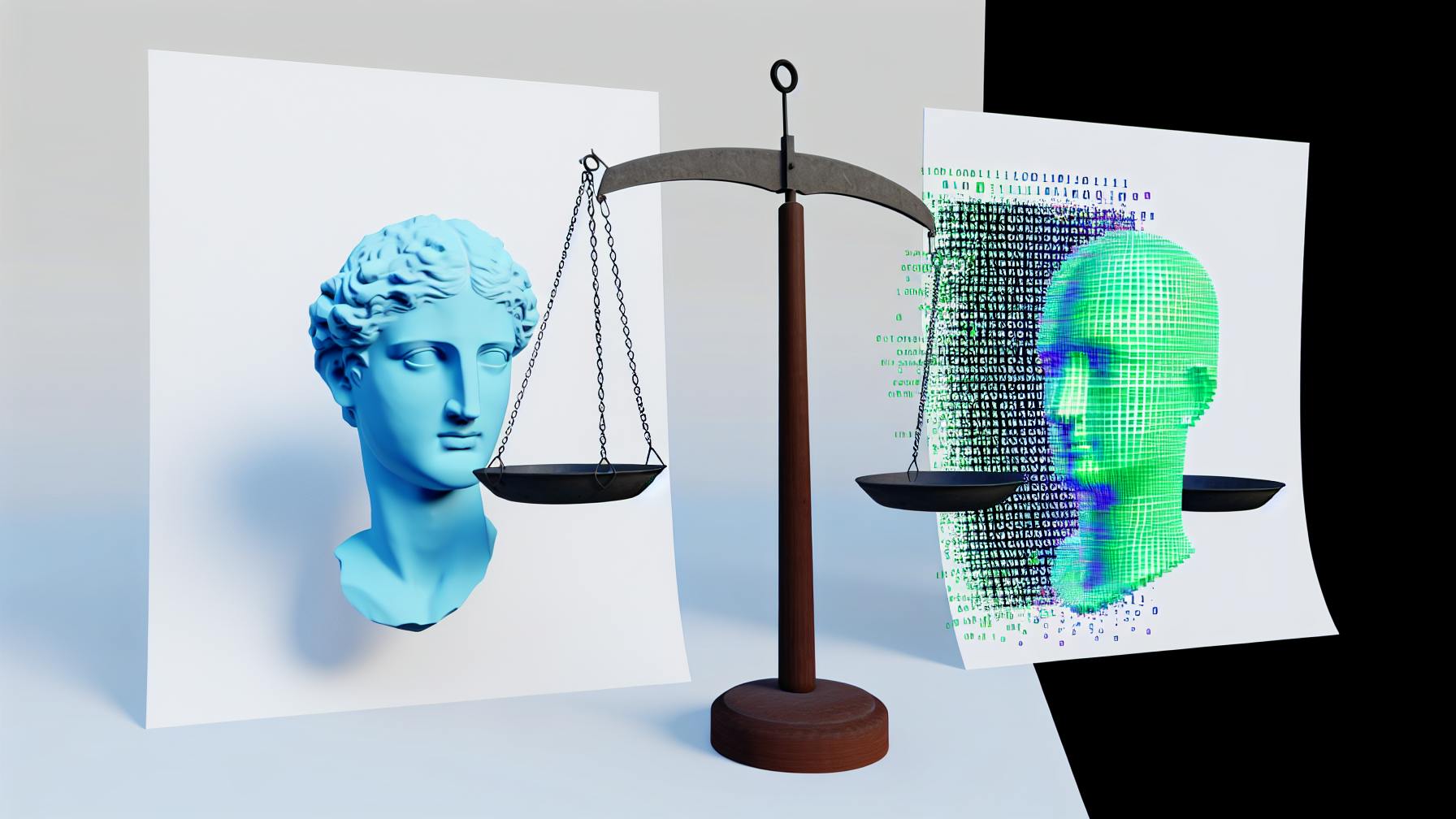
India’s legal framework does not grant copyright ownership to purely machine-generated content, requiring substantial human authorship and originality. Creators and businesses relying on artificial intelligence must document their creative direction and editing processes to secure legal protection against infringement and ensure enforceable rights over digital assets.
NEW DELHI — Type a single sentence into an automated neural network, and within seconds, a complex digital masterpiece or a 2,000-word marketing report appears on your screen. But as creators, corporate agencies, and independent studios across India scale up automated production in September 2026, a high-stakes legal reality is setting in: typing that prompt does not automatically mean you own the result.
As generative artificial intelligence reshapes commercial art, software code, and literary publishing, the question of who holds legal ownership over machine-assisted output has triggered fierce debate. With statutory frameworks anchored to decades-old definitions, creators and businesses face a fragmented landscape where convenience collides directly with copyright law.
The Human Authorship Barrier Under Indian Law
At the heart of the ownership puzzle is a fundamental legal requirement: copyright protection demands a human author. Under the framework of the Indian Copyright Act of 1957, statutory rights protect original literary, dramatic, musical, and artistic works created by natural persons or legally recognized entities exercising intellectual effort.
Because an artificial intelligence system lacks legal personhood, consciousness, and standing, it cannot hold property rights or be named as an author. While Section 2(d)(vi) of the Act addresses "computer-generated works" by designating the person who "causes the work to be created" as the author, legal scholars note this provision was originally drafted for computer-assisted software in the 1990s rather than autonomous generative models.
Consequently, legal precedents and administrative interpretations draw a sharp line based on the depth of human intervention:
The Pure Prompt Trap: Entering a basic prompt (e.g., "write a blog post about monsoon savings") and publishing raw, unedited output leaves the work legally vulnerable. Because the core expression came from the machine, the content may lack the required "modicum of creativity" and fall into the public domain.
The Collaborative Shield: When a human uses AI strictly as an advanced tool—providing detailed structural direction, iterative prompt engineering, personal voice, and heavy post-production editing—the human is recognized as the author, securing standard copyright eligibility.
Corporate Risks and Platform Realities
For businesses deploying generative tools for mass marketing, product design, and code generation, the legal ambiguity creates immediate commercial exposure.
First, paying for a software subscription grants a user a commercial license to use a tool, but it does not automatically confer statutory copyright ownership over every generated asset. Second, because foundational models are trained on vast datasets of scraped internet media, unvetted outputs can inadvertently mirror protected third-party material, exposing companies to infringement claims. If a competitor copies unprotectable, purely AI-generated marketing copy, businesses often lack legal standing to sue for copyright infringement.
Official Sources Section
Legal analyses and regulatory background verified via statutory reviews of the Indian Copyright Act 1957, judicial interpretations on originality, and intellectual property compliance advisories published in September 2026.
Quote Section
According to intellectual property legal experts tracking digital assets, "copyright protection depends strictly on the depth of human creative input; unedited outputs driven entirely by automated prompts struggle to meet statutory standards for authorship."
Why It Matters
Establishing clear ownership boundaries for digital assets protects commercial investments and prevents costly infringement disputes. Businesses and independent creators must document their creative contributions to ensure their generated media remains legally defensible.
Key Facts at a Glance
The Legal Standard: Indian copyright law requires human authorship and originality, meaning autonomous AI output lacks statutory protection.
The Prompt Limitation: Entering simple text prompts without substantial human editing or curation generally does not confer exclusive ownership.
Commercial Vulnerability: Unprotected AI outputs can be legally copied by competitors or challenged under platform licensing agreements.
Best Practice: Maintain detailed audit trails of human revisions, structural edits, and iterative inputs to defend copyright claims.
Frequently Asked Questions
Does paying for an AI software subscription give me full copyright ownership of the output?
No. Subscription fees provide a license to use the platform and its generated assets, but statutory copyright ownership still depends on substantial human creative input and originality.
Can an artificial intelligence system be listed as an author on a copyright application in India?
No. Indian law does not recognize AI as a legal person capable of holding property rights, enforcing claims, or acting as an author.
How much human editing is required to make AI-assisted content copyrightable?
Courts and intellectual property offices evaluate the substance of human contribution—such as personal voice, extensive rewriting, structural arrangement, and creative curation—rather than superficial word changes.
Source: Indian Copyright Act 1957 framework reviews; intellectual property advisory filings; legal technology scholarship archives.