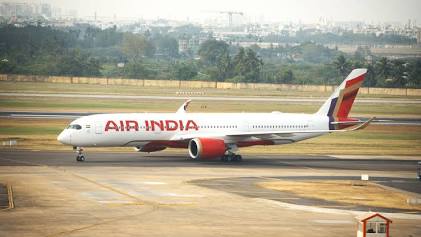
Indian civil aviation authorities confirmed that crew members of an Air India Phuket-Delhi flight underwent mandatory psychoactive substance screening following severe turbulence over Odisha. The DGCA investigation remains ongoing, with the operating flight crew taken off duty pending final regulatory reports and aircraft safety assessments.
NEW DELHI — The Indian government and civil aviation authorities confirmed on Sunday, August 9, 2026, that crew members of an Air India flight operating from Phuket to Delhi underwent prescribed psychoactive substance screening tests following a severe in-flight turbulence event. The flight safety procedure was initiated upon arrival at New Delhi’s Indira Gandhi International Airport after the Airbus A320 aircraft encountered sudden altitude fluctuations over eastern India on August 4.
Post-Flight Protocol Triggered After Odisha Turbulence
The flight, carrying 145 passengers and crew members from Phuket to New Delhi, encountered clear air turbulence near the coast of Odisha, resulting in a sudden 300-foot altitude drop. The sudden movement led to minor injuries among passengers and cabin crew, prompting medical evaluation and immediate post-flight safety protocols upon landing in Delhi.
Following standard Directorate General of Civil Aviation (DGCA) regulations, aviation safety officials subjected the operating flight crew to mandatory psychoactive substance screening. In accordance with national flight safety guidelines, all primary flight crew members involved in significant operational incidents must undergo comprehensive medical and toxicological evaluations.
Regulatory Framework and Fleet Safety Directives
Aviation authorities noted that prescribed screening tests for psychoactive substances form a core part of Civil Aviation Requirements (CAR) governing flight crew fitness in India. Under established DGCA protocols, any pilot or crew member who fails an initial psychoactive screening test is immediately removed from active flying duties and referred to mandatory medical de-addiction and rehabilitation programs.
Subsequent reinstatements require complete clearance through verified laboratory reports. Repeat violations result in a three-year license suspension, while a third positive result leads to permanent revocation of flying privileges, in alignment with standards set by the International Civil Aviation Organization (ICAO). Pending the final report of the multi-angle inquiry into the Phuket-Delhi incident, the operating pilots have been taken off active flying duties as per standard regulatory protocol.
Impact on Passengers, Airline Operations, and Safety Confidence
The incident highlights strict safety governance across India's rapidly expanding international aviation corridor. For air travelers and industry stakeholders, mandatory post-flight screening protocols reinforce institutional oversight and operational transparency.
Union Minister of Civil Aviation Ram Mohan Naidu Kinjarapu assured the public that the DGCA investigation is examining all operational dimensions, including weather variables, pilot handling, structural aircraft integrity, and adherence to diversion protocols. Most injured passengers received prompt medical attention and were discharged shortly after landing.
Official Sources Section
According to official updates from the Ministry of Civil Aviation, statements from the Directorate General of Civil Aviation (DGCA), and corporate bulletins issued by Air India, mandatory post-flight testing protocols were fully executed following the August 4 flight arrival.
Quote Section
According to officials, "We are aware that a post-flight screening test was conducted on the pilots in accordance with applicable protocols. Air India undertakes regular drug testing of crew members in compliance with civil aviation regulations, independent of any specific flight or operational incident, and continues to cooperate fully with regulatory authorities."
Why It Matters
Ensuring rigorous, mandatory psychoactive substance testing after in-flight incidents maintains international aviation safety standards and upholds public confidence in commercial air travel. The enforcement of strict regulatory protocols guarantees that flight crews adhere to global safety mandates, minimizing operational risks across domestic and international routes.
Key Facts at a Glance
Flight Route: Air India flight operating from Phuket, Thailand, to New Delhi, India.
Incident Trigger: Aircraft experienced severe clear air turbulence and a 300-foot altitude drop over Odisha.
Mandatory Testing: Operating flight crew members underwent prescribed psychoactive substance screening upon arrival.
Regulatory Action: Crew members taken off active flying duty pending final DGCA investigation results.
FAQ Section
Why were the Air India crew members tested for psychoactive substances?
Mandatory post-flight medical and toxicological screenings are conducted under DGCA guidelines following severe in-flight turbulence incidents or sudden altitude drops to verify crew operational fitness.
Were passengers injured during the Phuket to Delhi flight?
A small number of passengers and crew members sustained minor injuries due to the sudden turbulence and were provided immediate medical care upon landing in Delhi.
What happens if a pilot tests positive under DGCA rules?
A first-time positive result requires immediate removal from flying duty, mandatory rehabilitation, and full clearance before resuming flight privileges. Repeat offenses lead to multi-year suspensions or permanent license cancellation.
Source: Ministry of Civil Aviation Official Bulletins, Directorate General of Civil Aviation (DGCA) Regulations, Air India Corporate Communications, Press Trust of India (PTI) Aviation Desk.