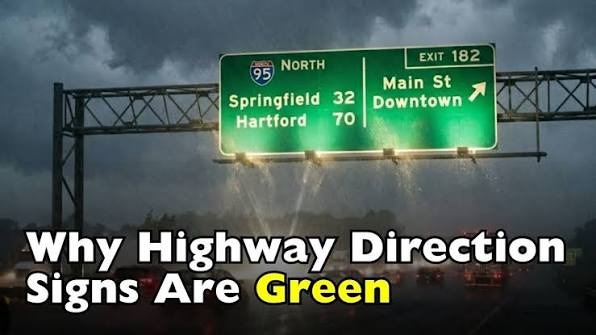
Green highway signboards are a global standard designed to improve driver safety and navigation. Their specific color profile reduces eye strain and provides high-contrast legibility, while their psychological "cool" tone informs drivers without triggering the stress or caution associated with red or yellow warning signs.
To any motorist navigating a national highway, the ubiquitous green signboards providing directional guidance are a familiar sight. While they may appear to be a simple design choice, the prevalence of green on highways is the result of decades of research into human perception, driver psychology, and international road safety standards.
According to traffic engineering experts, the primary purpose of these signboards is to provide essential navigation information without distracting drivers or causing the urgency associated with other colors. Unlike red or yellow, which are reserved for warnings and regulatory commands, green is used globally as a "guide" color, signaling that the information is meant to assist a driver's intended path.
The Science of Visibility and Contrast
The effectiveness of green highway signs is rooted in how the human eye processes light. Green sits in the middle of the visible light spectrum, making it a color that the eye can process comfortably even while traveling at high speeds.
Traffic management authorities, including the Federal Highway Administration (FHWA) and international standards under the Vienna Convention on Road Signs and Signals, prioritize green for its high-contrast potential. When white reflective lettering is applied to a green background, it creates a crisp, clear contrast that is highly legible both in daylight and under artificial light at night.
"The green color acts as a calm, cool background that allows the white text to stand out without creating the glare often associated with brighter colors," a transport safety consultant noted. This legibility is critical on highways, where drivers have mere seconds to read exit numbers, destination names, and distance markers before making lane changes or preparing to turn.
Why Not Red, Yellow, or Blue?
Every color used in road signage serves a distinct, standardized function:
Red: Reserved for "stop" and "prohibition" signs. Its high-intensity nature demands immediate attention and obedience.
Yellow: Used universally for permanent hazards, warning signs, and potential dangers ahead, such as sharp curves or pedestrian crossings.
Blue: Generally designates service information, such as hospitals, fuel stations, rest areas, or tourist accommodations.
Orange: Dedicated exclusively to temporary hazards, primarily construction zones and road maintenance.
Using warning colors like red or yellow for directional signs would likely cause "cognitive interference," where a driver might instinctively brake or slow down due to the color's association with danger. Green, by contrast, suggests "go" or "uninterrupted travel," allowing the driver to maintain a steady, safe speed while planning their route.
Standardizing the Global Highway
The consistency of green signage is not unique to India; it is a global standard. Through the implementation of international conventions, road agencies worldwide have adopted this color-coded system to ensure that drivers navigating unfamiliar regions—or even foreign countries—can intuitively understand road information.
This uniformity reduces the mental burden on drivers. By seeing a green signboard, a motorist immediately understands that the sign contains navigational information, thereby shortening the time required to process the message and make an informed decision.
Key Facts at a Glance
Guide Function: Green is the universal color for directional and guide signs, providing information on exits, distances, and destinations.
Optimal Contrast: The combination of white lettering on a green background maximizes legibility and minimizes glare for night driving.
Psychological Impact: Green is a "cool" color that reduces driver stress and eye strain compared to "warm" colors like red or yellow.
International Standard: Signage colors are largely standardized under the Vienna Convention on Road Signs and Signals, ensuring consistency across national borders.
Frequently Asked Questions (FAQ)
1. Is the green color of highway signs a national or international standard?
It is both. Most countries, including India and the United States, follow internationally recognized traffic control standards, such as the Vienna Convention, which use green for directional guidance.
2. Why do some highways use blue or brown signs instead?
Blue signs are used for traveler services (like rest stops or hospitals), and brown signs typically indicate outdoor recreation or historical points of interest. These colors help distinguish different types of information from the primary directional guidance provided by green signs.
3. Do green signs fade over time?
While all outdoor signage is subject to environmental degradation, green signs are engineered with retroreflective sheeting that maintains color integrity and visibility for decades, often outlasting warning signs in long-term field testing.
4. Can green signs be distracting?
No. Experts consider green a "neutral" color that blends into the natural scenery, ensuring it only catches a driver's attention when they are actively looking for navigational guidance.
Source: India Today (Road Safety Report), Federal Highway Administration (FHWA), Reader's Digest (Highway Expert Insights), Vienna Convention on Road Signs and Signals