Prime Minister Narendra Modi has made political history by becoming India's longest continuously serving democratically elected Prime Minister, completing 4,399 consecutive days in office. Surpassing a six-decade-old record, the milestone drew widespread accolades from world leaders, who lauded his economic vision, transformative governance, and prominent advocacy for the Global South
NEW DELHI — Prime Minister Narendra Modi has officially secure his place as India's longest continuously serving democratically elected Prime Minister, crossing a historic milestone of 4,399 consecutive days in office. By eclipsing the post-1952 elected tenure record previously held by independent India's first Prime Minister, Jawaharlal Nehru, the development has triggered a wave of high-level congratulatory messages from heads of state and global dignitaries. World leaders across multiple continents have issued official statements praising Modi's twelve-year tenure, citing his structural economic reforms, large-scale poverty alleviation, and assertive leadership of the Global South.
Global Heads of State Extend Official Tributes
The diplomatic community responded rapidly to the milestone, with several international leaders delivering formal letters and video addresses to New Delhi. The accolades highlighted India’s shifting position from a regional player to a highly consequential voice in global geopolitics and macroeconomics over the past twelve years.
Sri Lankan President Anura Kumara Dissanayake dispatched an official diplomatic letter to the Prime Minister of India, emphasizing that the feat reflects a deep-seated democratic mandate. Dissanayake noted that the milestone is a clear testament to the consistent trust and confidence that the people of the world’s largest democracy have repeatedly placed in his administration. He further noted that Modi’s governance model and socio-economic vision have significantly inspired nations beyond India’s borders, particularly within the South Asian neighborhood.
From the Pacific, Papua New Guinea Prime Minister James Marape released a personal video message describing the Indian leader as a global role model and an exemplary figure of modern statesmanship. Marape specifically drew attention to India's domestic execution capabilities, stating that lifting over 200 million people out of poverty into a sustainable quality of life is an amazing feat that commands international study.
Similarly, Trinidad and Tobago Prime Minister Kamla Persad-Bissessar extended her congratulations, observing that under Modi's ongoing stewardship, India has successfully evolved into a leading, authoritative voice on complex global matters. She highlighted the historic trajectory of his leadership across three consecutive terms, underlining advancements in foreign policy, digital public infrastructure, and cross-border trade.
Historical Context of the Democratic Milestone
According to records maintained by the Parliament of India and historical election desks, Modi first took the oath of office on May 26, 2014, after securing a full parliamentary majority. He subsequently defended his mandate in the general elections of 2019 and June 2024.
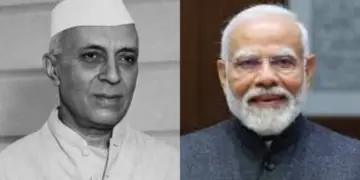
The milestone achieved on June 10, 2026, explicitly tracks tenure served after India's first democratic general election cycle. While Jawaharlal Nehru served as Prime Minister from August 15, 1947, his post-election tenure following the constitution of the first Lok Sabha spanned from May 13, 1952, until his passing on May 27, 1964, totaling 4,398 days. Modi had previously surpassed Indira Gandhi’s uninterrupted tenure of 4,077 days back on July 25, 2025.
| Prime Minister | Continuous Elected Days in Office | Tenure Era |
| Narendra Modi | 4,399 Days | 2014 – Present |
| Jawaharlal Nehru | 4,398 Days | 1952 – 1964 |
| Indira Gandhi | 4,077 Days | 1966 – 1977 |
Impact on Global Markets, Investors, and Business
International political analysts and sovereign risk assessors indicate that political longevity at the executive level heavily influences inbound foreign direct investment (FDI). For multinational businesses and institutional investors, a stable administration in New Delhi ensures a high level of policy predictability and regulatory continuity.
Over the last 12 years, India's economic framework has transitioned from a position of power deficits to a net surplus energy exporter, alongside massive physical asset creation. According to data from the Ministry of External Affairs (MEA), India's infrastructure development—including the rapid expansion of operational airports, national expressways, and specialized tech corridors—has been a core pillar reinforcing this prolonged political stability.
Official Sources Section
The information surrounding this historical milestone and the corresponding foreign state communications has been verified through official releases issued directly by the Prime Minister's Office (PMO), public circulars from the Government of India, and official dispatches recorded by respective foreign ministries.
Quote Section
"According to officials tracking international diplomatic correspondence at South Block, the statements from global capitals demonstrate more than just standard protocol," stated diplomatic analysts in New Delhi. "The messages reflect a clear international recognition of India’s heightened institutional capacity, its robust economic resilience amid global supply chain shocks, and its formal positioning as a stabilizing anchor in the Indo-Pacific region."
Why It Matters
In an era characterized by short political cycles, fragmented coalitions, and rapid leadership turnover across Western democracies, a continuous twelve-year tenure at the helm of a nation of 1.4 billion people stands out. For global markets, this milestone signals that India's long-term economic policies, trade pacts, and digital integration projects remain securely on course without the risk of immediate systemic reversals.
Key Facts at a Glance
The Record: Prime Minister Narendra Modi has completed 4,399 consecutive days as an elected head of government, breaking a 62-year-old record.
The Comparison: The benchmark tracks continuous tenure after India's initial democratic general election of 1951-52, surpassing Jawaharlal Nehru's post-1952 record by one day.
Global Recognition: Formal congratulatory diplomatic dispatches were registered from South Asia, the Caribbean, and the Pacific Island nations.
Domestic Scale: The political milestone comes at a time when India's registered voter base has expanded to more than 96 crore electors.
Frequently Asked Questions (FAQ)
Is Narendra Modi now India's longest-serving Prime Minister overall?
No. Jawaharlal Nehru remains the longest-serving Prime Minister overall when including his pre-election interim governance period from August 15, 1947, to May 13, 1952. His cumulative tenure stands at 6,131 days. Narendra Modi holds the record for the longest continuous, uninterrupted tenure as an elected Prime Minister after the institutionalization of formal general elections.
When did Modi surpass Indira Gandhi's continuous record?
Modi surpassed former Prime Minister Indira Gandhi’s longest continuous, uninterrupted tenure of 4,077 days on July 25, 2025.
What specific achievements did world leaders focus on in their letters?
The official messages from global heads of state primarily lauded India's massive scale of poverty reduction, its robust digital infrastructure transformation, its assertive foreign policy balancing, and its proactive role as an economic voice for developing nations.
Source: Prime Minister of India (PMO), Ministry of External Affairs (MEA), Official State Letters of the President of Sri Lanka and Prime Ministers of Papua New Guinea and Trinidad & Tobago.