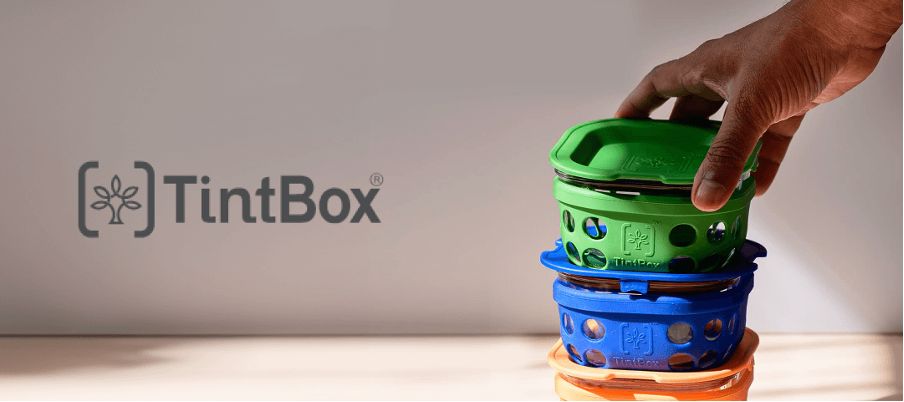
Ridhi Singhai, an IT engineer and mother from Mumbai, quit TCS after five years to found TintBox in 2017 alongside her father Vinay Jain. India's first borosilicate glassware brand with a protective silicone sleeve concept, TintBox has served 1.5 lakh-plus customers, generates ₹2 crore in annual revenue entirely bootstrapped, and appeared on Shark Tank India Season 4.
A Mother, a Problem, and a Father Who Said Yes
- Ridhi Singhai studied IT engineering, joined TCS as a systems analyst, and spent five years in a stable corporate career. But she was restless. The job felt disconnected from the things that mattered most to her: design, sustainability, and her family's health.
- The founding moment came from the most ordinary place. Ridhi and her husband kept breaking glass tiffin boxes during their daily commute. A conversation with her father Vinay Jain about the problem led somewhere unexpected: what if you made glass unbreakable? The answer was a protective silicone sleeve that wrapped around a borosilicate glass container, absorbing impact and protecting the user from heat.
- "I always had a deep love for design and sustainability, and my papa had a sharp eye for strategy. We saw the world drowning in plastic and one question kept coming back: why couldn't everyday essentials be safe, stylish, and sustainable?" Ridhi says.
- She quit TCS. In 2017, the father-daughter duo launched TintBox, India's first borosilicate glassware brand with a protective silicone sleeve, under their tagline: Think Inside the Box.
Design as the Weapon in a Commodity Market
- The boldest decision TintBox made was to treat glassware as a lifestyle product rather than a utility product. In a market full of plain glass boxes and generic plastic containers, TintBox launched with international-standard design, colour variants, canvas carry bags, and the kind of aesthetic that earned the Stanley Cup comparison from the Shark Tank India panel.
- Borosilicate glass is thermal-shock resistant, odour-free, stain-free, microwave-safe, dishwasher-safe, and completely inert. It leaches no chemicals regardless of heat or cold. The silicone sleeve is removable for cleaning, non-slip, and colour-coded for style. The result is a product that is genuinely better for health, genuinely better for the environment, and genuinely more beautiful than anything else in its category.
- Within two to three months of going live on Amazon, TintBox reached 90-plus orders per day without any paid marketing. Amazon placed it on its Choice List for uniqueness, quality, and seller feedback. Corporate offices and premium residential societies started approaching TintBox for exhibitions after seeing the products in person.
The Shark Tank Moment and What Followed
- TintBox appeared on Shark Tank India Season 4, seeking ₹70 lakh for 5% equity. The Sharks tasted the product quality immediately. Kunal Bahl praised the profitability. Vineeta Singh noted that similar brands were doing ₹10 crore in revenue, suggesting the brand had significant headroom to grow. The Sharks passed, citing stagnant revenue at ₹2 crore and the need for a dedicated sales and marketing co-founder to unlock the next phase of growth.
- The feedback was sharp but fair. And Ridhi, a founder who left corporate life because she believed in the mission, took it exactly as it was intended: as direction, not defeat.
Scale and Real-World Impact
TintBox has served over 1.5 lakh customers across India entirely through organic growth and word of mouth, with zero external funding raised. Annual revenue stands at ₹2 crore with a GMV of ₹40 lakh per month. The brand is available on Amazon and its own website, with FedEx delivering pan-India. Products designed in Australia are manufactured to international standards. TintBox's three co-founders are Ridhi Singhai, Vinay Jain as COO, and Deepak Kumar Jain as CMO. India's kitchenware market is valued at $1.7 billion in 2024 and is projected to reach $2.04 billion by 2030, with the eco-friendly segment representing a $240 million-plus niche growing rapidly with rising health consciousness.
The Most Powerful Products Are Built From Problems You Have Personally Lived
Sources: TintBox Official Website, YourStory, BusinessToday, Tracxn, Startup Chai