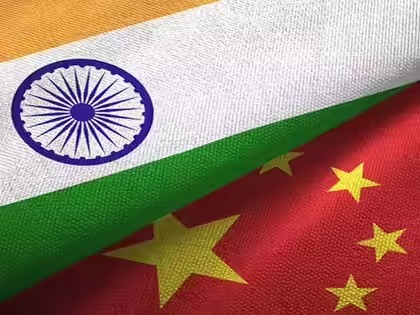
The World Trade Organization has agreed to establish a dispute panel to review a complaint filed by China against India's import tariffs and incentive programs for solar modules and IT goods. The move follows failed bilateral talks and aims to determine if India's local manufacturing incentives align with global trade rules.
GENEVA, Switzerland — The World Trade Organization’s (WTO) Dispute Settlement Body (DSB) agreed during a specialized session on Tuesday, June 23, 2026, to establish a formal WTO dispute panel to examine a comprehensive trade complaint filed by China against India’s domestic tariffs and incentive programs targeting solar cells, solar modules, and information technology goods. The global trade body’s decision to move forward with the expert panel follows India's procedural block of Beijing's initial arbitration request in May.
The escalation of this dispute signals a critical friction point between the two largest economies in the Global South. As countries increasingly balance domestic industrial growth with international rules, this development highlights the intense competition surrounding renewable energy components and consumer technology supply chains during the current global energy transition.
Technical Objections Raised by Beijing
According to formal case filings distributed at the WTO headquarters in Geneva, China’s trade ministry asserts that India has enacted a series of import tariffs and fiscal incentives that unfairly discriminate against foreign-made components. Beijing’s initial legal petition, which was submitted late last year, claims that India's customs duties on imported electronic hardware—such as mobile phones, telecommunications gear, and equipment used to manufacture flat-screen display panels—breach bound tariff commitments agreed to under international trade frameworks.
Furthermore, China’s legal team is challenging the structural rules of India’s solar manufacturing incentives. Beijing argues that New Delhi’s financial support structures provide specific benefits to local producers that are explicitly tied to meeting minimum domestic content requirements and utilizing local value-addition thresholds. In its official statement to the WTO, China stated that these active protectionist practices violate basic multilateral trade laws, specifically referencing the General Agreement on Tariffs and Trade (GATT) 1994, the Agreement on Subsidies and Countervailing Measures (SCM), and the Agreement on Trade-Related Investment Measures (TRIMs).
India's Defense and Domestic Production Context
During the DSB session, Indian trade representatives defended the country's economic policies, stating that the measures align with its international trade commitments and are designed to build resilient domestic supply chains. New Delhi expressed disappointment regarding China's decision to press for a secondary review panel, maintaining that its delegation had already provided clear evidence of WTO compliance during initial bilateral consultations held in December.
Over the past several years, India has rolled out multiple initiatives to boost its domestic solar and technology manufacturing capabilities and reduce its dependence on a single sourcing market. Key measures include:
The Approved List of Models and Manufacturers (ALMM): A regulatory system ensuring that government-backed clean energy projects source components exclusively from approved, quality-certified suppliers.
Production-Linked Incentive (PLI) Schemes: Multi-billion dollar state funding pools distributed to manufacturers based on their local factory output and local value addition.
Targeted Customs Structures: Standard import duties levied directly on foreign solar modules to ensure local manufacturing plants remain competitive.
Broader Trade Imbalances and Global Implications
The establishment of this WTO dispute panel occurs amid an expanding trade imbalance between the two neighboring nations. Economic data indicates that China has become India’s largest single trading partner, with overall bilateral trade hitting a record USD 151.1 billion. However, this expanding commercial relationship has led to a widening trade deficit for New Delhi, which reached USD 112.16 billion during the same reporting period, driven heavily by heavy imports of industrial machinery, active pharmaceutical ingredients, and electronic components.
Because of the high stakes involved in green technology supply chains, this legal battle has drawn significant interest from other major trading nations. A total of twelve sovereign members—including the United States, the European Union, Japan, South Korea, Australia, Canada, Brazil, Singapore, Turkey, the Russian Federation, the Philippines, and the United Kingdom—have officially reserved their third-party rights. These nations will be allowed to deliver independent statements and monitor the legal findings of the panel, as the eventual ruling could set a major precedent for green industrial subsidies worldwide.
Official Sources Section
The institutional tracking and legal framework governing this international litigation were formally confirmed via regulatory updates published by the World Trade Organization following its panel assembly in Geneva, Switzerland. Case arguments reference the official compliance text of the GATT 1994 along with the WTO structural codes for countervailing measures. Supplementary trade data points were sourced from the Ministry of Commerce and Industry and national stock exchange trade filing databases.
Quote Section
"According to officials, China said that its concerns over India's measures remain unresolved despite bilateral consultations, requiring the intervention of an independent tribunal to review the legality of the import curbs."
"Organizers stated that India argued dispute settlement resources should be reserved for genuine and unresolved trade concerns, maintaining that it had already clearly demonstrated the consistency of its local policies during initial diplomatic consultations."
Why It Matters
The final ruling of this WTO dispute panel could directly impact the pricing and availability of solar infrastructure and consumer electronics across Asia. If the panel rules against India's local content rules, New Delhi may have to adjust its tariff structures, which could lower procurement costs for solar developers but increase competitive pressures on local factories. Conversely, a ruling that favors India could encourage other developing countries to adopt similar protective measures to build up their own domestic green tech industries.
Key Facts at a Glance
Tribunal Authorization: The WTO Dispute Settlement Body has officially approved a formal WTO dispute panel to review India's trade measures.
Core Disputed Items: The legal challenge focuses on tariffs and subsidies affecting solar cells, solar modules, and high-tech components like mobile phone displays.
Procedural Transition: China successfully advanced the case by exercising its right to a second panel request, which cannot be blocked under WTO rules.
Bilateral Trade Deficit: The dispute highlights a growing trade imbalance, with India’s trade deficit with China climbing to USD 112.16 billion.
International Observers: Twelve global powers, including the U.S. and the EU, have joined the proceedings as interested third parties.
FAQ Section
Why was India unable to prevent the dispute panel from forming this time?
Under standard WTO dispute rules, a defending country can block a first request for a panel. However, if the complaining country submits a second request at a subsequent meeting, the panel's establishment is automatically approved.
What specific WTO agreements is China accusing India of violating?
China alleges that India's policies violate the General Agreement on Tariffs and Trade (GATT), the Agreement on Subsidies and Countervailing Measures (SCM), and the Agreement on Trade-Related Investment Measures (TRIMs).
How long does it typically take for a WTO panel to issue a final ruling?
A standard WTO dispute panel generally takes between six months to a year to examine the legal arguments, conduct hearings, and issue its final report to the member states.
Source: World Trade Organization Dispute Settlement Gateway, Ministry of Commerce and Industry of India, National Stock Exchange Regulatory Tracking Desk.