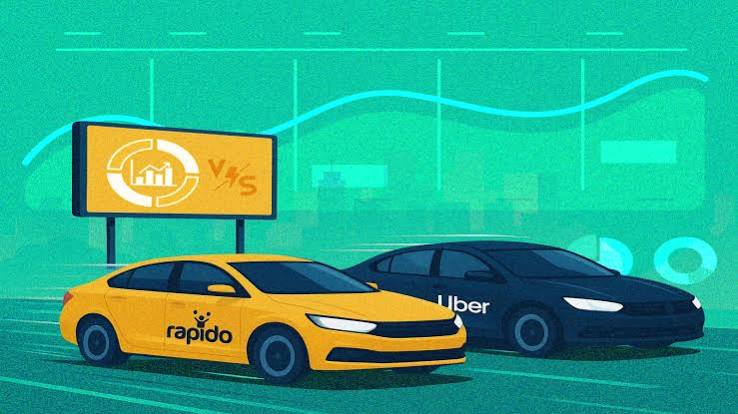
Ride-hailing giant Uber and Indian mobility platform Rapido held high-level discussions to combine their India operations, according to sources familiar with the matter. However, the strategic transaction collapsed after both companies failed to reach an agreement regarding governance, operational control, and the final structural framework of the entity.
NEW DELHI — San Francisco-headquartered Uber Technologies Inc. and Indian ride-hailing platform Rapido engaged in high-level discussions to merge their Indian operations, but the transaction collapsed due to irreconcilable differences over operational control and governance, sources familiar with the matter revealed.
The preliminary negotiations took place during Uber Chief Executive Officer Dara Khosrowshahi's visit to India, where executives evaluated potential consolidation scenarios aimed at reshaping India's multi-billion-dollar urban mobility sector. Uber initially proposed a combined entity structure wherein Rapido would manage day-to-day operations of the joint venture. However, the proposal unravelled after Rapido countered with an acquisition structure that Uber ultimately rejected. The breakdown highlights the intense competitive dynamics and valuation friction characterising India’s high-volume, low-margin ride-hailing market.
Conflict Over Operational Structure and Control Rights
Disagreements surrounding corporate control and board composition proved to be the primary friction point during negotiations between Uber and Rapido, people aware of the development stated. The proposed deal aimed to integrate Rapido's extensive two-wheeler and auto-rickshaw network with Uber's cab fleet and technological infrastructure across Indian metropolitan areas.
Under the initial outline, Uber sought to combine its Indian mobility assets while leveraging Rapido's local operational team to run the unified platform. In contrast, Rapido’s management submitted a counter-proposal centered on an outright acquisition or majority stake transfer, which Uber's global leadership declined to accept.
The breakdown of Uber and Rapido merger talks means both companies will continue operating independently while competing aggressively for market share in bike-taxis, auto-rickshaws, and four-wheeler cab services.
Evolving Dynamics in India's Mobility Landscape
The failed deal underscores strategic shifts within India's ride-hailing sector, where nimble domestic operators have challenged established global players. Founded in 2015, Bengaluru-based Rapido expanded rapidly by specializing in affordable two-wheeler bike-taxis and commission-free auto-rickshaw models, capturing substantial market volume in congested tier-1, tier-2, and tier-3 cities.
To counter local competition, Uber has committed substantial capital toward expanding its presence in India, injecting over $360 million (approximately Rs 3,000 crore) into its domestic subsidiary. The capital infusion was designated to scale two-wheeler services, upgrade driver technology, and expand fleet operations across secondary regional markets.
The termination of Uber and Rapido merger talks comes at a time when major industry participants, including SoftBank-backed Ola Cabs and quick-commerce platforms entering mobility, are re-evaluating profitability, unit economics, and commission structures under regulatory supervision.
Practical Impact on Consumers, Drivers, and Investors
The decision by both companies to maintain independent operations carries tangible consequences across the transportation ecosystem:
Commuters and Consumers: Ongoing independence maintains competitive promotional pricing and platform choices between Uber and Rapido across bike, auto, and cab segments.
Gig Workers and Drivers: Multi-platform competition prevents a single-entity monopoly, providing drivers with alternative commission rates and incentive structures.
Venture Capital Investors: Highlights valuation hurdles and governance constraints when foreign tech conglomerates attempt domestic consolidation with Indian startups.
Corporate Strategy: Both entities must continue heavy capital expenditure in technology, driver onboarding, and regional marketing rather than achieving immediate operational synergies.
Official Sources Section
According to official disclosures, neither Uber Technologies Inc. nor Rapido has issued formal regulatory filings announcing a binding transaction, and representatives from both companies declined to comment on private bilateral discussions.
Filings with the Competition Commission of India confirm that no official merger or combination notification was submitted by either entity. Corporate updates maintained by the Ministry of Corporate Affairs reflect that both Uber India Systems Private Limited and Roppen Transportation Services Private Limited (Rapido) continue to operate as separate corporate entities.
Quote Section
"According to officials familiar with the negotiations, both parties recognized the potential operational synergies of a unified platform, but consensus could not be reached regarding equity ownership, board seats, and long-term management control."
"Industry sources stated that Uber remains firmly committed to its independent growth strategy in India, backed by direct capital investments into fleet expansion and technology localized for Indian urban transit."
Why It Matters
The collapse of Uber and Rapido merger talks prevents a massive consolidation event that would have concentrated significant market power within a single platform. For consumers and gig workers, continued rivalry ensures active price competition, varied service offerings, and competitive driver payout models across India’s rapidly growing urban transit network.
Key Facts at a Glance
Talks Initiated: Disclosures reveal Uber and Rapido held discussions in May 2026 during Uber CEO Dara Khosrowshahi's visit to India.
Stumbling Block: Strategic disagreement over governance structure, equity distribution, and operational command.
Uber's Stand: Rejected Rapido's acquisition counter-proposal in favor of retaining strategic oversight.
Market Position: Both companies will proceed with independent expansion across two-wheeler, auto, and four-wheeler segments.
Frequently Asked Questions (FAQ)
Why did the Uber and Rapido merger talks fail?
The discussions collapsed primarily due to disagreements over management control and transaction structure, with Uber rejecting Rapido's acquisition counter-proposal.
Will Uber or Rapido alter their current ride prices?
Because the merger did not materialize, both platforms remain independent competitors, preserving current pricing models and promotional discounts for riders.
Is Uber exiting or scaling back its operations in India?
No. Uber continues to invest heavily in its Indian operations, deploying capital toward localized technology, driver onboarding, and expanding two-wheeler and auto-rickshaw availability.
Source: Competition Commission of India, Ministry of Corporate Affairs, Uber Investor Relations