The removal of Air India’s iconic red signage at Nariman Point, following the building's ₹1,601 crore handover to the Maharashtra Government in June 2026, marks the end of an era. The 1974 tower remains a historic masterclass in pre-digital branding, having seamlessly embedded its identity into Mumbai’s everyday language and physical geography.
MUMBAI — The iconic red signage of the Air India Building at Nariman Point has been officially dismantled following the formal handover of the property to the Government of Maharashtra. The transaction, concluded on Tuesday, June 2, 2026, saw Chief Minister Devendra Fadnavis finalize a ₹1,601 crore deed of surrender with Air India Assets Holding Limited (AIAHL). While the architectural landmark will now consolidate state administrative offices, its structural transition has triggered deep industry reflection. Long before social media feeds and programmatic algorithms dominated corporate strategy, the 23-storey tower stood as India's premier masterclass in physical brand visibility and localized consumer engagement.
Establishing Dominance on Mumbai's Mental Map
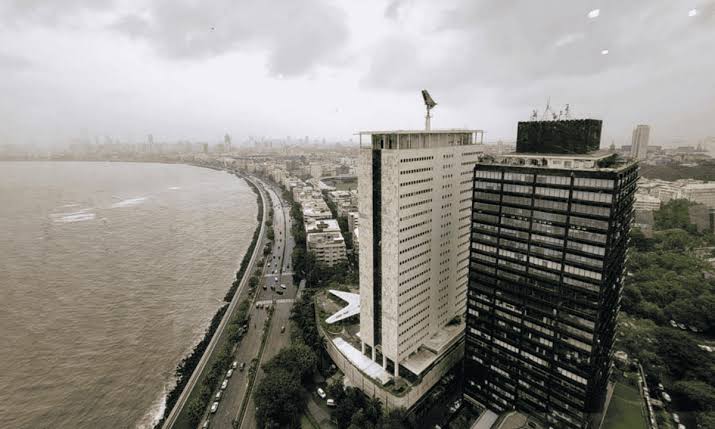
Completed in 1974 on a 64-acre maritime reclamation site, the 105-metre marble-clad skyscraper was designed by renowned Manhattan architect John Burgee. Topped with a massive, illuminated metal centaur—Air India’s early trademark emblem selected by founder J.R.D. Tata—the building was structurally engineered to capture unyielding visual attention.
Positioned at the terminus of Marine Drive, the red lettering and rotating rooftop icon became an unavoidable focal point for anyone traversing South Mumbai. Marketing experts note that this placement allowed Air India to establish absolute ambient dominance.
By anchoring its corporate identity onto the geographical topography of the city's primary commercial hub, the airline achieved perpetual consumer impressions without relying on recurring advertising expenditure.
Embedding the Corporate Brand into Everyday Vernacular
The structural configuration of the tower successfully converted commercial real estate into a permanent conversational asset. For generations of Mumbaikars, the building transitioned from a corporate office into an essential geographic reference point.
Directions, meeting spots, and public transport routes routinely utilized the skyscraper as an anchor. Phrases like "Take a left after the Air India Building" or "Meet me near Air India" became embedded into the local dialect.
This organic integration meant that even citizens who had never purchased an international airline ticket regularly interacted with and amplified the corporate brand name. The strategy demonstrated how a tangible physical asset could cultivate household familiarity across diverse socio-economic demographics long before digital impression tracking existed.
Advanced Infrastructure as a Marketing Tool
Beyond its external scale, the building utilized experiential infrastructure to assert market leadership and corporate prestige. It was the first commercial high-rise in India to feature an internal escalator, designed to transport retail passengers from the street-level entrance directly up to the main booking office.
The structure was fully centralized for air conditioning and housed six state-of-the-art elevators equipped with piped background music. Furthermore, the property acted as an architectural gallery, housing a meticulously curated collection of Indian fine art.
By transforming a routine booking interaction into a premium, sensory experience, the physical environment validated the airline’s broader market positioning as a luxurious portal to the western world.
Official Sources Section
The history, operational transitions, and architectural milestones of the property are documented through several authoritative records:
State Government Proceedings: The Public Works Department (PWD) of Maharashtra and files from the Chief Minister's Office tracking the June 2026 acquisition.
Aviation Asset Records: Asset monetization filings managed by Air India Assets Holding Limited (AIAHL), the central special purpose vehicle.
Architectural Monographs: Historical records of modern urban infrastructure in India documenting the corporate designs of firm Johnson/Burgee.
Quote Section
Marketing consultants emphasize that modern digital campaigns rarely match the cross-generational longevity achieved by physical landmarks.
"According to communication professionals, the Air India Building achieved organic brand integration by becoming a permanent fixture in the visual landscape and everyday language of the city, a feat that algorithm-driven digital banners cannot replicate."
State authorities highlighted the economic logic prompting the modern real estate shift:
"Officials stated that the acquisition will centralize scattered government departments, saving approximately ₹200 crore in annual private rental costs while preserving a vital piece of municipal heritage."
Why It Matters
The transition of the Nariman Point skyscraper offers critical lessons for corporate strategists, urban planners, and modern enterprises:
The Power of Tangible Assets: It highlights how physical architecture can serve as an enduring, non-depreciating marketing asset that builds multi-generational equity.
Vernacular Marketing: True brand integration occurs when an organization's name becomes an active tool for public navigation and daily utility.
Skyline Identity Evolution: As corporate headquarters increasingly decentralize or shift into digital cloud frameworks, global cities are witnessing a major transformation in how commercial skylines are named and recognized.
Key Facts at a Glance
The Modern Transfer: The Maharashtra Government officially acquired the Air India Building in June 2026 for a total consideration of ₹1,601 crore.
Architectural Legacy: Designed by Manhattan architect John Burgee and completed in 1974, the tower stands 105 metres tall with 23 commercial floors.
Engineering Firsts: The skyscraper was the first building in India to install an internal passenger escalator and featured six high-speed elevators with piped music.
The Branding Landmark: For over 50 years, the tower was crowned by an illuminated corporate logo that served as a core visual reference point across Marine Drive.
Financial Impact: Moving displaced state offices into the vacant 46,470 square metres of space is projected to save the state government ₹200 crore annually.
FAQ Section
Why was the Air India logo removed from the Nariman Point building?
The logo was dismantled in June 2026 following the formal structural transfer of the building to the Government of Maharashtra, which purchased the property to host state administrative offices.
What made the Air India Building an early marketing marvel?
Long before digital media, the building achieved maximum visibility by using its prime coastal location, massive red illuminated signage, and unique rooftop centaur to become an unavoidable landmark on Mumbai's mental map.
Did the Tata Group acquire the building during the Air India privatization?
No. The building was excluded from the privatization deal with the Tata Group. It was transferred to a central government special purpose vehicle, AIAHL, before being sold to the state.
What architectural innovations did the building introduce to India?
It was one of India's earliest centrally air-conditioned skyscrapers and the very first building in the country to feature an operational escalator connecting the street to the ticketing lobby.
Source: Maharashtra Public Works Department Asset Ledger 2026, Air India Corporate History Archives, and Municipal Corporation of Greater Mumbai (MCGM) Realty Records.