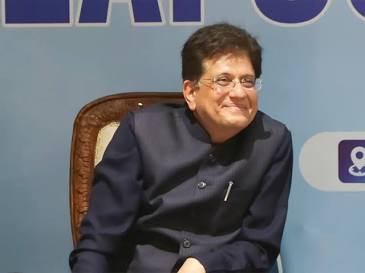
MUMBAI — Union Minister of Commerce and Industry Piyush Goyal officially launched a series of high-impact skill development and Artificial Intelligence (AI) employment initiatives in Mumbai on Saturday, June 6, 2026. Addressing a large assembly of students, educators, and industry leaders at a specialized youth conclave, the Minister introduced digital training frameworks designed to bridge the gap between traditional education and the evolving requirements of the global technology market. The launch marks a pivotal step in the central government's "Viksit Bharat 2047" vision, shifting focus toward large-scale AI literacy and specialized vocational training to future-proof the Indian labor force against automation-led disruptions.
Integrating Artificial Intelligence into Vocational Training
The core of the new initiative involves a multi-layered partnership between the Ministry of Commerce and Industry, the Ministry of Skill Development and Entrepreneurship, and several leading domestic technology firms. The program is structured to provide accessible, low-cost certification in AI ethics, machine learning fundamentals, and data analytics across both urban and rural learning centers.
Minister Goyal emphasized that the initiative is not merely about technical coding but about "AI-fluency" across all sectors, including manufacturing, logistics, and retail. By embedding AI training into the existing National Skills Qualifications Framework (NSQF), the government aims to ensure that Indian artisans, factory workers, and service professionals can utilize digital tools to enhance productivity.
Official data released during the event suggests that the first phase of the rollout will target approximately 500,000 young professionals in Maharashtra, with plans for national replication based on the Mumbai pilot results.
Empowering Youth for the Viksit Bharat 2047 Journey
A significant portion of the Mumbai launch was dedicated to the "Viksit Bharat 2047" roadmap, which aims to transform India into a developed nation by the centenary of its independence. Minister Goyal urged the youth to transition from being job seekers to becoming "innovation leaders" who drive self-reliance (Atmanirbharta).
To support this transition, the new initiatives include specialized employment portals that use AI-driven matching algorithms to connect newly skilled youth with startups and established enterprises. These platforms are designed to provide real-time feedback to educational institutions regarding the specific skills currently in demand, allowing for more agile curriculum adjustments.
Industry observers note that Mumbai, as India's financial capital, serves as an ideal launchpad for these programs, given the high concentration of FinTech and e-commerce headquarters currently seeking talent proficient in automated systems.
Public-Private Partnerships Drive Employment Links
The success of the newly launched initiatives relies heavily on the "Dual Training System," which combines theoretical classroom instruction with practical, on-the-job internships. During the proceedings, several Memorandum of Understandings (MoUs) were acknowledged between the government and private sector giants to facilitate guaranteed internship slots for top-performing students in the AI modules.
The Minister highlighted that these initiatives are designed to foster an entrepreneurial spirit, providing micro-grants and mentorship to young innovators looking to build AI-based solutions for local challenges in agriculture and healthcare. This decentralization of technology is a primary pillar of the government’s 2047 development strategy.
Official Sources Section
The program details, fiscal allocations, and training modules were outlined through the following official channels:
Ministry of Commerce and Industry: Official press communiqués detailing the Minister’s Mumbai itinerary and policy announcements.
National Skill Development Corporation (NSDC): Technical briefing papers on the integration of AI modules into the national vocational curriculum.
Viksit Bharat 2047 Secretariat: Strategic roadmap documents defining the role of youth and technology in the 2047 developed nation objective.
Quote Section
The Minister highlighted the necessity of rapid adaptation in a shifting global economic landscape.
"According to officials, the focus is now on ensuring that every young Indian is equipped with the digital tools necessary to compete at a global level, transforming our demographic dividend into a technological powerhouse."
Addressing the youth directly, the Minister underscored the scale of the current opportunity:
"Organizers stated that the programs launched today represent a formal commitment to provide the infrastructure for excellence, but the responsibility to lead the 2047 journey rests with the ambition and grit of the Indian youth."
Why It Matters
The launch of AI-centric employment initiatives in Mumbai has several practical implications for various stakeholders:
For Students and Job Seekers: It provides a clear, government-backed pathway to acquiring high-demand skills that are often prohibitively expensive in the private market.
For Businesses: It promises a steady pipeline of "industry-ready" talent, reducing the time and cost associated with corporate retraining.
For the Economy: By focusing on AI and high-end skills, India positions itself to move up the value chain from back-office processing to high-end technological innovation, supporting long-term GDP growth.
Key Facts at a Glance
Primary Objective: To integrate Artificial Intelligence (AI) and modern vocational skills into the national employment strategy to support the Viksit Bharat 2047 goal.
Target Demographic: The initial phase focuses on 500,000 youth in Maharashtra, with a particular emphasis on first-generation learners.
Structural Innovation: The programs utilize AI-driven job matching and a "Dual Training System" that pairs learning with corporate internships.
Strategic Hub: Mumbai was selected as the pilot location due to its status as a financial and technological center.
Lead Authority: The initiative is a collaborative effort led by Union Minister Piyush Goyal, involving multiple central ministries and private sector partners.
FAQ Section
What is the "Viksit Bharat 2047" journey mentioned by the Minister?
It is the Indian government’s strategic vision to transform India into a fully developed nation by the year 2047, the 100th anniversary of its independence, focusing on economic growth, social progress, and technological leadership.
How can youth apply for these AI employment initiatives?
Interested candidates can register through the official National Skill Development Corporation (NSDC) portal or the newly launched AI-driven employment matching platforms linked to the Ministry of Skill Development.
Are these programs only for technical students?
No. The initiatives are designed to be inclusive, providing varying levels of AI literacy and skill training suitable for a wide range of educational backgrounds, including vocational and arts students.
Will there be financial support for those starting AI-based businesses?
Yes. As part of the broader initiative, the government is facilitating micro-grants and mentorship programs for young entrepreneurs developing AI solutions for local sectors like healthcare and agriculture.
Source: Ministry of Commerce and Industry Press Releases, National Skill Development Corporation (NSDC) Program Guidelines, and Viksit Bharat 2047 Strategic Documents.