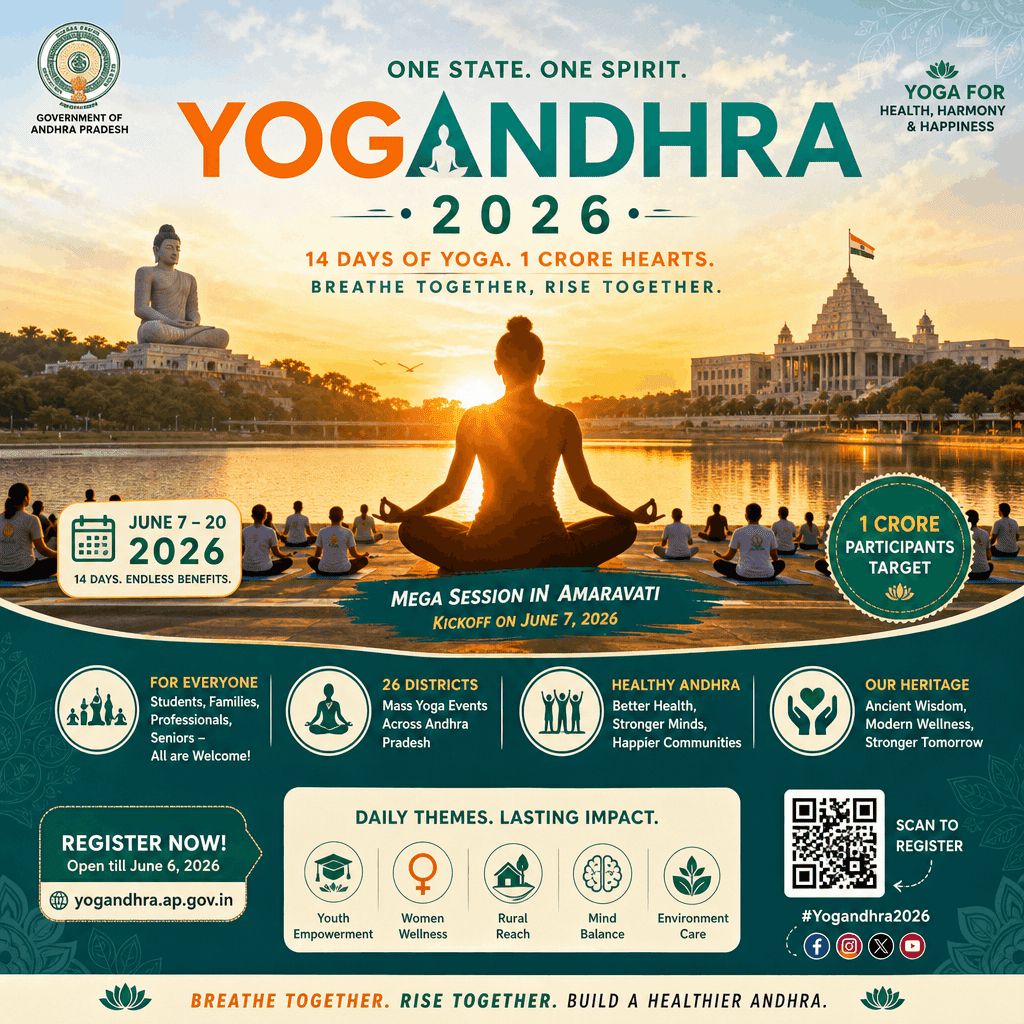
The Government of Andhra Pradesh launched Yogandhra-2026, a major wellness program spanning all 26 districts that drew over 25,000 opening-day registrations. Operating through 10,000 village and ward health centers, the state-backed initiative focuses on utilizing structured yoga and lifestyle counseling to proactively combat rising rates of chronic conditions.
AMARAVATI — The Government of Andhra Pradesh officially kicked off its highly anticipated statewide wellness initiative, Yogandhra-2026, on Monday, June 8, 2026. Spearheaded by the Department of Health, Medical and Family Welfare, the extensive public program launched across all 26 districts, securing over 25,000 online and offline registrations within its first 24 hours.
The launch marks a major structural shift in how the state handles public healthcare, transitioning from purely reactive medical treatment to proactive, community-based wellness practices. Aimed at countering a sharp rise in regional lifestyle diseases, state authorities have set up a multi-layered infrastructure network to integrate traditional yoga practices directly into the daily lives of citizens.
Deploying a Multi-Tiered Wellness Network
The primary phase of Yogandhra-2026 relies on an extensive network of newly established village and ward wellness centers. Rather than concentrating the program solely within major urban hubs like Visakhapatnam, Vijayawada, and Guntur, the state health ministry has deployed certified trainers to rural clinics to ensure equal access across the state.
The rapid implementation of the program relies on an integrated community outreach pipeline:
By activating more than 10,000 village and ward health centers, the state government has created an accessible path for citizens to participate in daily guided health sessions without requiring long-distance travel.
Addressing the Rise of Lifestyle Diseases
The core motivation behind the Yogandhra-2026 program is a growing set of public health statistics tracking non-communicable diseases (NCDs) across the state. According to recent public health data, chronic conditions such as hypertension, type-2 diabetes, and stress-related disorders have risen by nearly 14 per cent over the past decade in both rural and urban areas of Andhra Pradesh.
The targeted curriculum focuses on key preventative health practices:
| Program Focus Area | Targeted Health Issue | Strategic Implementation |
| Pranayama & Breathing | Respiratory health and stress management. | 15-minute daily sessions integrated into local community centers. |
| Asana Flexibility Training | Chronic joint pain and sedentary lifestyle issues. | Labeled physical posture guidelines tailored for older adult demographics. |
| Dhyana (Meditation) | Mental fatigue and high occupational stress. | Weekly guided group sessions conducted at ward levels. |
| Nutritional Counseling | Early-stage metabolic and cardiovascular disorders. | Direct diet consultations led by visiting public health officers. |
By focusing the campaign on scientifically backed physical and mental exercises, health officials aim to significantly reduce the long-term burden on the state’s secondary and tertiary hospital systems.
Digital Integration and Scalable Tracking Systems
To manage the sudden surge in public participation, the state’s digital governance division deployed a dedicated tracking dashboard alongside the main registration portal. This specialized software allows neighborhood health workers to log daily attendance, track individual progress metrics, and monitor changes in vital statistics like blood pressure and resting heart rates among long-term participants.
The state health department confirmed that the 25,000 initial enrollments include diverse groups of college students, government employees, corporate workers, and agricultural laborers. To sustain this momentum, the administration announced plans to host localized weekend wellness drives at public parks, beaches, and historic landmarks, making healthy lifestyle choices highly visible and socially engaging.
Official Sources Section
The operational frameworks, district registration metrics, health center locations, and medical focus areas detailed in this report are based directly on formal declarations from the Department of Health, Medical and Family Welfare, Government of Andhra Pradesh, alongside public deployment guidelines issued by the Ministry of Ayush.
Quote Section
"According to officials from the state health department, the opening response to Yogandhra-2026 has exceeded internal projections, highlighting a strong public demand for accessible wellness resources. The administration is committed to funding the infrastructure needed to maintain these daily sessions, ensuring that preventative care becomes a fundamental part of our state's public health framework."
— Andhra Pradesh Health Directorate Operational Update
Why It Matters
The rollout of Yogandhra-2026 carries deep practical implications for the standard of living and public expenditure across Andhra Pradesh. For ordinary citizens, having free, expert-led wellness sessions right in their neighborhoods removes the financial and geographical barriers that typically keep people from accessing preventative health resources.
On an institutional level, this large-scale initiative offers a blueprint for sustainable healthcare management. By actively helping citizens manage stress and metabolic health before they escalate into serious medical emergencies, the state can curb rising healthcare costs. This strategic shift allows public funds to be used more efficiently, improving long-term health outcomes for communities statewide.
Key Facts at a Glance
Massive Launch: Yogandhra-2026 officially debuted across Andhra Pradesh, securing over 25,000 registrations on its very first day.
Statewide Scope: The preventative healthcare program is active across all 26 districts, utilizing both urban ward centers and rural village clinics.
Preventative Focus: The campaign is specifically designed to combat a rising trend in lifestyle diseases, such as hypertension and type-2 diabetes.
Digital Monitoring: Health workers are using a central digital dashboard to track participant progress and evaluate long-term wellness outcomes.
Broad Inclusion: The initial registration wave spans a wide demographic, including corporate professionals, students, and agricultural workers.
FAQ Section
1. What is the primary objective of the Yogandhra-2026 initiative?
The initiative aims to integrate structured yoga and wellness routines into daily life across Andhra Pradesh, focusing heavily on preventing and managing chronic lifestyle diseases.
2. How can citizens register for the wellness sessions?
Residents can sign up online through the official state health portal or register in person at their local village or ward health and wellness centers.
3. Are the daily sessions free for the general public?
Yes. The program is fully sponsored by the state government, meaning all guided classes, training sessions, and health tracking resources are completely free for citizens.
4. Who conducts the daily yoga and wellness classes?
Classes are led by certified yoga instructors and public health workers who have completed specialized training programs designed by the state health ministry.
Source: Department of Health, Medical and Family Welfare, Andhra Pradesh; Ministry of Ayush National Wellness Registry; Press Trust of India (PTI) Amaravati Bureau.