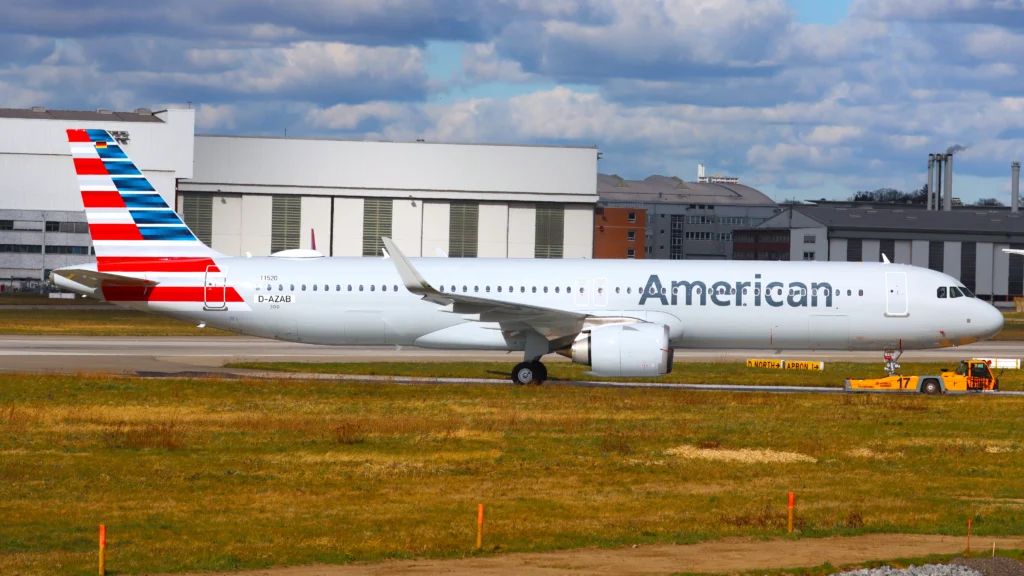
American Airlines is currently operating an unusual series of 20 roundtrip transatlantic flights between Philadelphia and Edinburgh using an empty Airbus A321neo aircraft with no passengers or cargo onboard. The unique operation, spanning from September 4 to 24, 2025, is designed for pilot traini...
American Airlines is currently operating an unusual series of 20 roundtrip transatlantic flights between Philadelphia and Edinburgh using an empty Airbus A321neo aircraft with no passengers or cargo onboard. The unique operation, spanning from September 4 to 24, 2025, is designed for pilot training purposes, specifically to qualify check airmen in transatlantic operations ahead of the launch of international Airbus A321XLR services.
Key Highlights: Why the Empty Flights?
These flights run daily on the Philadelphia to Edinburgh route, departing late evening from PHL and returning mid-day from EDI.
No passengers or freight are carried, making these some of the rare examples of empty commercial flights across the Atlantic.
The dedicated aircraft for the operation, registered N471AN, is a brand-new A321neo slated to be the basis for augmented pilot training before A321XLR integration.
Check airmen, who are responsible for training and certifying pilots, require real-world flight hours on transatlantic routes, which simulators alone cannot fully replicate.
As American currently lacks A320-family transatlantic services, these flights establish the practical experience needed for pilots to certify and guide other crew for future international A321XLR operations.
Training and Operational Context
The Airbus A321neo is commonly employed for short- to medium-haul travel. The upcoming A321XLR variant extends range, enabling efficient transatlantic routes previously unserved by narrowbody aircraft.
Training check airmen on live transatlantic flights ensures their familiarity with North Atlantic Routes (NAT), special air traffic control procedures, and extended oceanic flying.
Philadelphia to Edinburgh offers a relatively short but valid full transatlantic sector with manageable traffic volumes, ideal for repeated training cycles.
The operation anticipates the commencement of American’s international A321XLR base at JFK, slated for early 2026.
Environmental and Commercial Considerations
Though operating empty cross-Atlantic flights contributes additional carbon emissions, American prioritizes safety and thorough crew qualification for seamless future services.
Discussions among industry experts debate operational efficiencies and alternatives, but regulatory and logistical constraints necessitate such training flights.
The training flights highlight unique challenges in pilot certification when expanding type ratings to new markets and routes.
Future Prospects and Industry Impact
American is positioning for a significant expansion of its narrowbody international services using A321XLR jets, targeting underserved transatlantic and Latin American markets.
The meticulous training of check airmen now ensures rapid scaling of pilot pools and regulatory approvals needed for safe operations.
This practice enhances overall network flexibility and competitive positioning against rivals investing similarly in advanced narrowbody aircraft for long haul.
Conclusion
American Airlines' undertaking of 20 empty transatlantic A321neo flights is a strategic and safety-driven initiative ensuring pilot readiness for a new era of international narrowbody operations. While uncommon and scrutinized for environmental impact, such operational measures reflect the complex realities of modern commercial aviation training and expansion.
Sources: One Mile at a Time, Aviation A2Z, Simple Flying