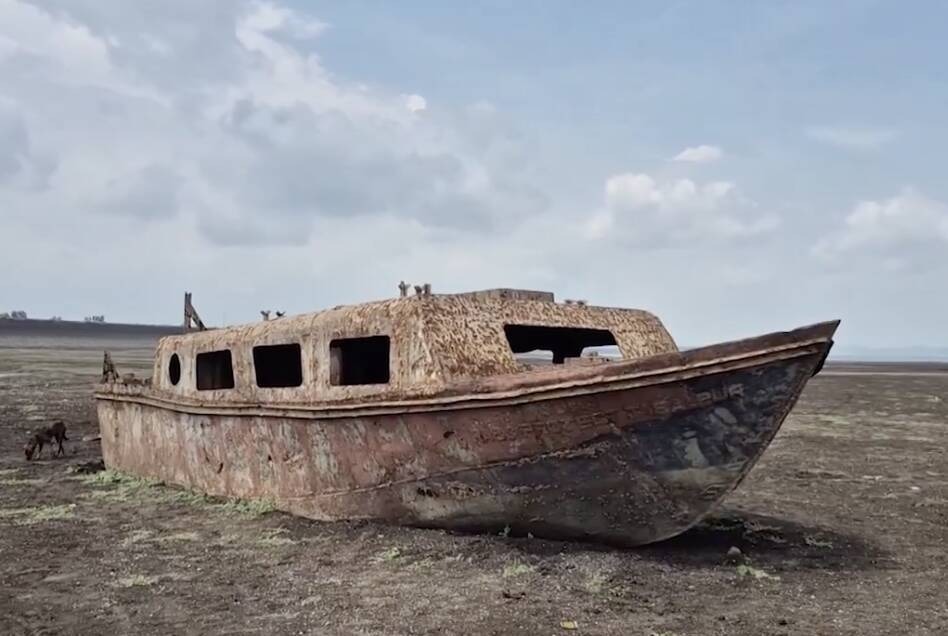
Record-low water levels at Madhya Pradesh’s Bargi Dam have exposed ancient temple ruins, a vintage boat, and long-submerged industrial gates. The reservoir, which has reached a 42-year low, has attracted large numbers of tourists, prompting district authorities to issue urgent safety warnings regarding the stability of the exposed terrain.
JABALPUR, Madhya Pradesh — Ancient temple ruins and a decades-old submerged boat have resurfaced at the Bargi Dam in Jabalpur, as the reservoir’s water levels have plummeted to their lowest point in 42 years. The emergence of these long-hidden relics, triggered by a combination of extreme summer heat and sustained water release for irrigation, has drawn significant public interest and prompted local authorities to issue safety advisories.
The Bargi Dam, a major irrigation and power project on the Narmada River, has seen its water levels recede by approximately 5 centimeters daily. According to data provided by the Narmada Valley Development Authority (NVDA), the reservoir level has dropped to 407.45 meters, falling below the historical low of 408 meters for the first time since the dam was commissioned four decades ago.
Decades of History Reclaimed by Receding Waters
The reservoir’s retreat has exposed a canal gate on the southern bank that had remained underwater since the dam was first filled in the 1980s. This colossal structure, measuring 50 feet in width and 100 feet in height, is now fully visible, offering a rare glimpse into the dam's engineering foundations.
Beyond the industrial infrastructure, residents and visitors have reported the discovery of ancient stone ruins—believed to be parts of temples submerged during the dam's construction—and a vintage boat, which had been lost to the depths for years. For locals like Neeraj Mishra, a lifelong resident of Bargi town, the sight is unprecedented. "I have lived here since childhood but have never seen the water level this low," Mishra stated. "As the water recedes, sights are emerging that people have never witnessed before."
Authorities Issue Safety Warnings
The unexpected emergence of these sites has led to a surge in visitors seeking to explore the exposed reservoir bed. In response, Jabalpur Additional Collector Neeta Rathore has urged the public to exercise extreme caution. The district administration is actively monitoring the area, warning that the terrain around the exposed structures can be unstable and dangerous.
The drop in water level is attributed to a combination of high evaporation rates during the summer and the ongoing release of water to support the Kharif season paddy cultivation, as well as the power plant’s operational requirements. While the exposure of these historical markers provides a unique look at the region’s past, officials are focusing on managing the dam’s remaining water resources, which currently stand at a depth of approximately 5.5 meters.
Quote Section
According to officials, the administration is actively urging visitors to adhere to strict safety guidelines while exploring the newly exposed reservoir bed to prevent accidents in the unstable terrain.
Why It Matters
The recession of water at Bargi Dam highlights broader concerns regarding water management and changing climate patterns in Madhya Pradesh. The discovery serves as a reminder of the archaeological heritage submerged during the era of large-scale dam construction, while simultaneously posing a challenge to authorities tasked with balancing irrigation needs against reservoir conservation.
Key Facts at a Glance
Historical Low: Water levels at the Bargi Dam have reached their lowest point in 42 years.
Structural Exposure: A massive 100-foot-tall canal gate, submerged since the 1980s, is now fully visible.
New Discoveries: Receding waters have revealed long-submerged ancient temple ruins and a vintage boat.
Primary Causes: Extreme summer heat and the release of water for irrigation and power generation.
Official Stance: Local authorities are urging the public to avoid dangerous areas and follow safety advisories.
FAQ
Why is the water level in the Bargi Dam so low?
The level has dropped due to high summer evaporation rates and the consistent release of water for paddy cultivation and power generation, leading to the lowest levels since the dam's inception.
Is it safe to visit the exposed ruins?
District officials have issued warnings and are urging visitors to exercise caution, as the reservoir bed may be unstable or contain hidden hazards.
What will happen to the uncovered artifacts?
While residents are documenting the finds, the primary focus of the Narmada Valley Development Authority remains the operational safety and water management of the dam.
Official Sources