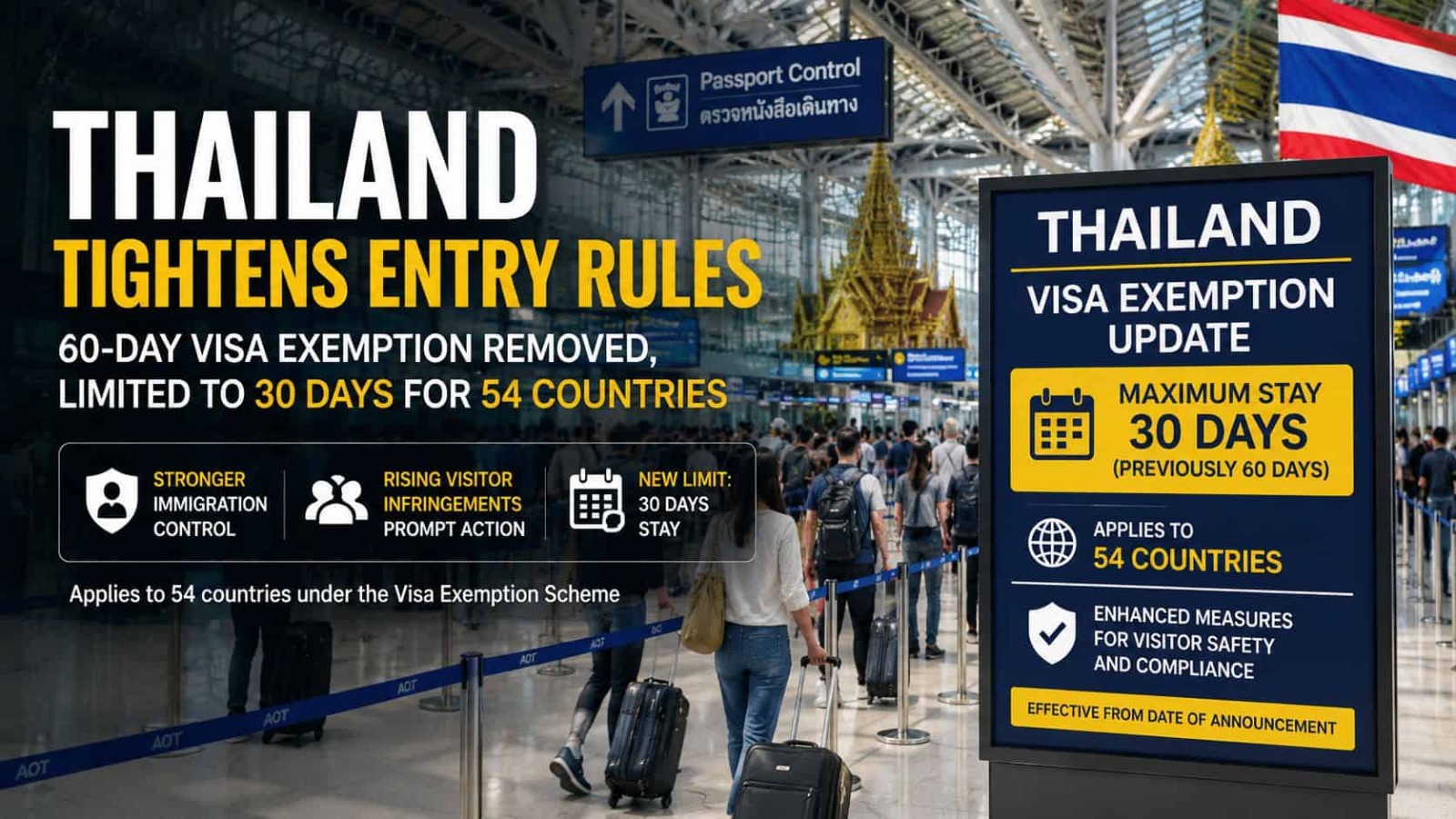
As of July 2026, Thailand has ended its visa-free policy for Indian nationals, replacing it with a mandatory Visa on Arrival or e-Visa requirement. Travelers must now provide proof of funds, confirmed return tickets, and hotel bookings, alongside a mandatory online digital arrival card, to ensure smooth entry into the country.
BANGKOK — Indian nationals traveling to Thailand face updated entry requirements as the Thai government moves to restructure its national immigration framework. Following a decision by the Thai Cabinet in May 2026, the previous visa-free entry policy for Indian tourists has been replaced by a more controlled, verification-based system, effective as of mid-2026.
This shift marks a significant departure from the post-pandemic tourism incentives that allowed Indians 60 days of visa-free access. Authorities have implemented these changes to address concerns regarding the misuse of long-term tourist stays, unauthorized business activities, and a surge in immigration overstays.
Transition to New Visa Protocols
Under the revised Thai immigration regulations, Indian travelers can no longer enter the country without pre-authorization or a formal permit. The current framework mandates one of the following pathways:
Visa on Arrival (VoA): Eligible for short-term visits of up to 15 days. Travelers must complete this process at the immigration desk upon arrival, which requires a fee of 2,000 THB—payable exclusively in local currency (Thai Baht).
Tourist e-Visa: Recommended for travelers planning stays exceeding 15 days or those wishing to bypass potential queues at airport immigration. Applications must be submitted through the official Thai e-Visa portal prior to departure.
Destination Thailand Visa (DTV): Aimed at long-term visitors, digital nomads, and remote workers, this visa offers extended stays of up to 180 days per visit.
Increased Scrutiny at Immigration
Beyond the visa itself, Thai immigration officers have been instructed to conduct stricter verification of all international arrivals. Travelers are now frequently required to present physical or digital documentation proving their intent and financial stability.
According to official Thai Immigration Bureau guidance, incoming passengers should be prepared to provide:
A passport valid for at least six months beyond the date of entry.
Proof of a confirmed return or onward travel ticket.
Verification of accommodation, such as confirmed hotel bookings.
Evidence of sufficient funds, typically equivalent to 10,000 THB per person.
Additionally, all travelers must complete the Thailand Digital Arrival Card (TDAC) online before their journey. This system replaces the legacy paper forms and generates a QR code, which must be scanned by airline staff at check-in and by immigration officers upon arrival in Bangkok, Phuket, or other international gateways.
Impact on Travelers and Tourism
The transition to a more structured entry system is aimed at promoting "quality tourism," according to statements from the Thai Ministry of Tourism and Sports. While these measures add a layer of planning for Indian tourists, experts note that the popularity of Thailand as a destination remains robust due to its extensive air connectivity from major Indian cities like New Delhi, Mumbai, and Bengaluru.
Travelers are urged to avoid last-minute documentation issues by ensuring all requirements—specifically the THB 2,000 cash requirement for VoA—are prepared before departure. Currency exchange rates at airport counters are often unfavorable, and immigration officials generally do not accept foreign currencies.
Key Facts at a Glance
Visa-Free Status: Removed; Indian travelers now require a Visa on Arrival or a pre-approved e-Visa.
Visa on Arrival: Valid for up to 15 days; costs 2,000 THB (payable only in Thai Baht cash).
Mandatory Digital Card: All visitors must submit a Thailand Digital Arrival Card online before flying.
Financial Proof: Immigration may request proof of funds (approx. 10,000 THB per person).
Prohibited Items: Vaping devices and e-cigarettes are strictly illegal; possession can lead to heavy fines or detention.
FAQ
Do I still get 60 days of visa-free entry in Thailand?
No. The 60-day visa-free policy was officially replaced in May 2026. You must now obtain a visa (VoA or e-Visa) for any duration of stay.
Can I pay for my Visa on Arrival in Indian Rupees?
No. The 2,000 THB fee must be paid in Thai Baht. It is highly recommended to exchange currency in India or at reputable city-based kiosks to avoid poor airport exchange rates.
Is travel insurance required?
While not a legal entry requirement, it is strongly recommended. Medical costs at private hospitals in Thailand can be high for foreign nationals, and insurance is essential for emergency coverage.
What happens if I overstay my visa?
Thailand maintains a strict zero-tolerance policy regarding overstays. Penalties range from heavy fines to long-term entry bans, depending on the length of the overstay.
Source: Royal Thai Embassy, Thai Immigration Bureau, Ministry of Foreign Affairs of Thailand, Thailand Digital Arrival Card (TDAC) Portal