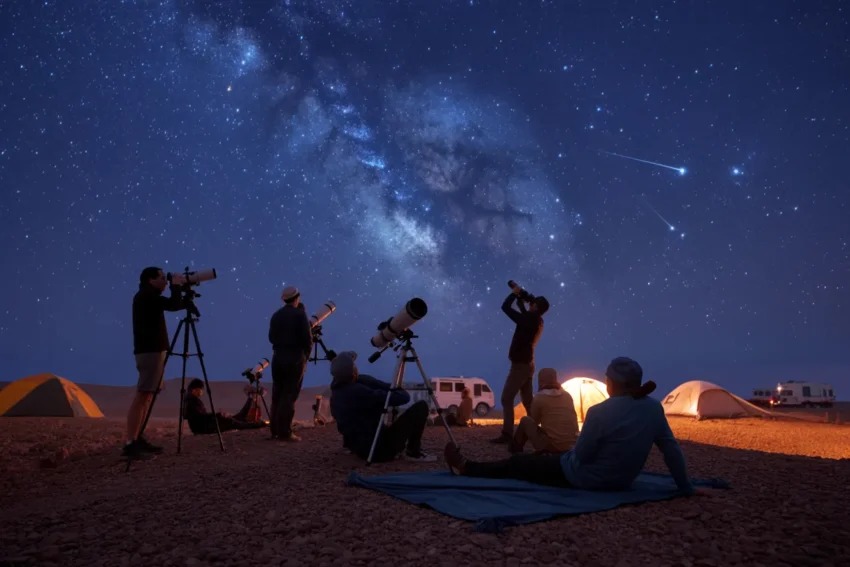
Noctourism has emerged as a major travel trend in India, with the Ministry of Tourism backing dark sky infrastructure. Top destinations like Hanle, Spiti Valley, and the Rann of Kutch are drawing thousands of travelers for stargazing, moonlit safaris, and unique cultural experiences, boosting local economies.
NEW DELHI — Noctourism the practice of traveling specifically for post-sunset adventures, stargazing, and wildlife tracking has emerged as one of the fastest-growing niches in the domestic travel sector.
According to data tracking indicators compiled by online booking systems and state tourism departments on Thursday, July 2, 2026, search queries for nighttime travel experiences have surged significantly. Driven by rising light pollution in urban metros and an environmental push for slow travel, the trend has caught the direct attention of the Ministry of Tourism. Under existing policy expansions like the Dekho Apna Desh 2.0 campaign, authorities are systematically backing local communities to develop dark sky infrastructure. This structural pivot allows regional economies to capture visitor spending outside standard daylight hours, shifting the baseline for sustainable hospitality across the country.
High-Altitude Deserts Lead India's Astrotourism Maps
According to field assessments published by regional hospitality associations, the core of India’s noctourism sector relies on pristine, high-altitude landscapes that remain largely insulated from artificial urban glow. Two northern mountain enclaves have positioned themselves as primary infrastructure nodes for global stargazers:
1. Hanle, Ladakh
Situated within the Changthang Wildlife Sanctuary at an elevation exceeding 14,000 feet, Hanle functions as India’s premier Dark Sky Reserve. Managed in coordination with the Indian Institute of Astrophysics, the high-altitude desert offers exceptional atmospheric clarity due to near-zero humidity and negligible light pollution. Local administrative setups have successfully trained village residents as certified astrotourism facilitators, turning local homestays into scientific stargazing bases equipped with advanced telescopes.
2. Spiti Valley, Himachal Pradesh
Remote mountain clusters around Kaza, Langza, and Kibber have registered high tourist traction for celestial photography. The geographic isolation of the Spiti basin provides uncompromised views of the Milky Way ribbon. Local eco-tourism organizations use these pristine night skies to fund community-led high-altitude conservation programs, combining cultural heritage tours with nocturnal nature exploration.
Cultural Rituals and Luminescent Ecosystems Expand Footprints
Beyond high-altitude astronomy, the Ministry of Tourism is actively expanding the definition of noctourism to encompass night-shift cultural events and unique ecological environments:
3. Rann of Kutch, Gujarat
The vast, 30,000-square-kilometer salt flat functions as a natural mirror during seasonal cycles. During full moon phases, the white salt desert reflects moonlight completely, creating a distinct visual horizon that draws thousands of night travelers. The state’s curated Rann Utsav integrates midnight camel safaris and folk musical events directly under open skies.
4. Varanasi Ghats, Uttar Pradesh
Spiritual noctourism has stabilized urban economies along the Ganges. Frontline sites like Dashashwamedh Ghat host the daily evening Ganga Aarti, drawing immense crowds to the riverbank after dark. Local boat operators have adjusted their schedules to offer midnight river cruises, allowing tourists to observe the continuous 24-hour cultural practices defining the ancient city.
5. Neil Island, Andaman and Nicobar Islands
The archipelago is experiencing rising interest due to localized coastal bioluminescence. When conditions align between October and winter cycles, specific species of marine phytoplankton emit visible light upon agitation, causing the shorelines to glow blue under dark skies. This natural phenomenon has catalyzed specialized nighttime kayaking and guided coastal ecology walks.
6. Hampi, Karnataka
The architectural ruins of the historical Vijayanagara Empire are taking on fresh utility under starlight. Authorized guides under the Archaeological Survey of India organize regulated heritage night walks around lit monuments. This initiative offers travelers an alternative perspective on the UNESCO World Heritage site while avoiding intense daytime heat cycles.
Official Sources Section
The destination lists, regulatory frameworks, and market indicators used in this travel trends report are verified by formal administrative records:
Ministry of Tourism Scheme Data: Guidelines under the Swadesh Darshan and Dekho Apna Desh frameworks tracking sustainable niche circuits.
Indian Institute of Astrophysics Reports: Technical boundary logs validating dark sky parameters and light pollution limits for the Hanle reserve.
Gujarat Tourism Board Disclosures: Operational schedules and lunar calendar coordination frameworks for the Rann of Kutch infrastructure.
Quote Section
"According to officials at regional tourism desks, the rise of noctourism represents a structural shift toward low-impact, high-value travel models," noted a sustainable hospitality consultant in New Delhi. "Organizers stated that by steering tourist footprints into nighttime hours and remote dark sky pockets, local communities can generate steady operational income without causing severe physical congestion at fragile heritage locations during the day."
Why It Matters
For mainstream travelers, the development of specialized noctourism routes offers unique, highly educational alternatives to standard holiday itineraries. For regional homestay owners, village artisans, and local transport providers, night travel initiatives extend the standard tourist earning window, creating viable jobs in remote border regions like Ladakh and Spiti. On a broader scale, establishing certified dark sky locations helps protect natural habitats from urban light encroachment, blending environmental conservation directly with economic growth.
Key Facts at a Glance
Market Shift: Noctourism has evolved into a major travel trend in 2026, driven by growing urban light pollution and interest in offbeat experiences.
Institutional Support: The Union Ministry of Tourism is integrating dark sky exploration models into national domestic travel policies.
Flagship Hub: Hanle, Ladakh stands as India's premier high-altitude Dark Sky Reserve, combining science with community-run homestays.
Diverse Formats: The trend spans multiple unique formats, ranging from high-altitude astronomy in Spiti to moonlit desert safaris in Kutch and bioluminescent coastal walks in the Andamans.
FAQ Section
What is noctourism and why is it growing in India?
Noctourism involves travel experiences centered around nighttime activities, such as stargazing, moonlit safaris, and night heritage walks. It is growing rapidly due to rising urban light pollution and a travel preference for unique, eco-conscious experiences.
Which is the best destination for stargazing in India?
Hanle in Ladakh is considered India's premier stargazing location. At over 14,000 feet, it hosts the country's first official Dark Sky Reserve, offering exceptional atmospheric clarity.
How do I plan a night travel trip to the Rann of Kutch?
Travelers should check the lunar calendar to align their visits with full moon nights during the winter Rann Utsav festival, when the vast salt desert glows white under the moonlight.
Is noctourism safe for solo travelers in remote areas?
Yes, provided trips are booked through certified local operators, authorized state tourism boards, or empanelled guides who follow strict safety and environmental standards.
Source: Ministry of Tourism Policy Documents, India Bullion and Jewellers Association Local Trackers, Incredible India National Travel Guides.