Disagreements over Article 5 of the newly signed US-Iran MoU have triggered heavy military strikes in the Persian Gulf. While the clause mandates the reopening of the Strait of Hormuz, conflicting interpretations over shipping corridors led to attacks on commercial tankers, prompt U.S. retaliatory bombing, and Iranian missile strikes on American bases.
Article 5 of US-Iran MoU Behind Recent Persian Gulf Strikes
Disagreements over the Strait of Hormuz maritime routing clause trigger military exchanges, threatening the Pakistan-brokered truce.
DUBAI — A fragile diplomatic breakthrough between Washington and Tehran faces collapse following a series of weekend military strikes across the Persian Gulf. The escalation centers on competing interpretations of Article 5—the critical maritime routing clause within the newly signed U.S.-Iran Memorandum of Understanding (MoU).
Brokered by Pakistan and signed on June 17, 2026, the interim ceasefire aimed to permanently halt hostilities following months of devastating conflict. However, separate drone attacks on commercial tankers on June 26 and 27 triggered retaliatory U.S. airstrikes against Iranian coastal defense networks, which were met by Iranian ballistic missile salvos targeting American bases in Kuwait and Bahrain. Both nations now accuse each other of violating the core tenets of Article 5, pushing the maritime chokepoint back to the brink of a blockade.
What is Article 5 of the US-Iran MoU?
Article 5 was drafted as the primary mechanism to safely reopen the Strait of Hormuz—a vital maritime gateway through which roughly one-fifth of global oil and liquefied natural gas (LNG) supplies transit. Under the explicit text of the provision, the Islamic Republic of Iran committed to making arrangements using its "best efforts" to ensure the safe passage of commercial vessels free of charge for an initial period of 60 days.
Furthermore, the clause mandated that Iran remove all "technical and military obstacles," including defensive demining operations, within 30 days to gradually restore commercial traffic to pre-war volumes. Long-term, Article 5 explicitly requires Tehran to conduct formal dialogue with the Sultanate of Oman and other Persian Gulf littoral states to define the future administration and maritime services of the strait, in alignment with international maritime law and sovereign coastal rights.
The Clash of Interpretations: Northern vs. Southern Corridors
The implementation of Article 5 has sparked intense friction over who dictates exact shipping coordinates. The United States, cooperating with Oman and the International Maritime Organization (IMO), has sought to divert commercial shipping traffic through a southern transit route within Omani territorial waters to protect merchant fleets from lingering risks.
Tehran has strongly opposed this unilateral realignment. The Iranian government asserts that Article 5 recognizes its exclusive administrative authority over the waterway during the transition phase. Consequently, the Islamic Revolutionary Guard Corps (IRGC) declared that the only "authorized route" is the northern shipping corridor running directly through Iranian territorial waters.
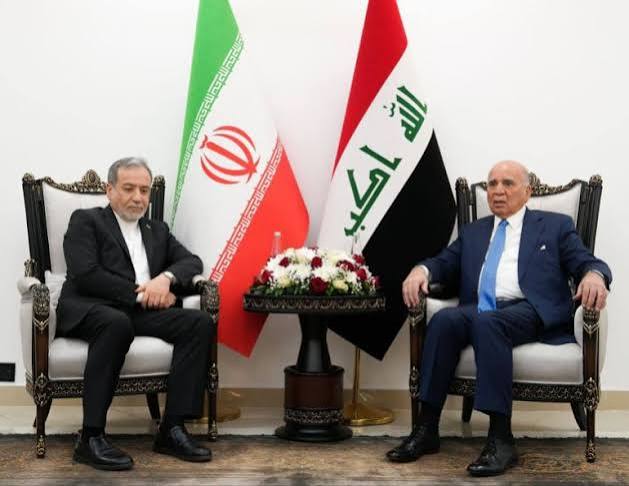
The dispute escalated sharply when IRGC naval assets intercepted four commercial tankers utilizing the southern Omani route, ordering them to reverse course. Iranian Foreign Minister Abbas Araghchi reinforced this stance during a diplomatic visit to Baghdad.
"The Strait of Hormuz remains under the total oversight and management of Iran through the 30 coming days. This responsibility rests on the Islamic Republic of Iran. There is no other party or state in this respect. Any intervention or any unilateral action will result in exacerbating the situation."
— Abbas Araghchi, Foreign Minister of Iran
Tanker Attacks Trigger Intense US Retaliation
The operational dispute turned violent over the weekend following targeted strikes on commercial shipping assets:
While Iran denied direct involvement, Washington attributed the aggression to Tehran. U.S. Central Command (CENTCOM) launched immediate, heavy airstrikes targeting five coastal defense installations inside Iran, destroying drone storage depots, maritime surveillance infrastructure, and coastal radar stations.
U.S. President Donald Trump defended the swift military intervention on social media, warning that Washington would not tolerate threats to international freedom of navigation.
"U.S. forces struck Iranian missile and drone storage locations, and coastal radar sites, for violating the Cease Fire Agreement, AGAIN! There may come a point when we are no longer able to be reasonable, and will be forced to militarily complete the job that we very successfully started."
— Donald Trump, President of the United States
In immediate retaliation, the IRGC deployed a barrage of ballistic missiles and loitering munitions against American forces at Kuwait’s Ali Al Salem Air Base and the U.S. Fifth Fleet Headquarters in Bahrain, characterizing the response as a decisive defense against a blatant breach of the MoU.
Global Economic Impact and Energy Risks
The breakdown of the maritime agreement has immediate consequences for global markets, consumers, and shipping conglomerates. Insurance premiums for transiting the Persian Gulf have surged, forcing multiple international logistics firms to reconsider routing vessels around Africa’s Cape of Good Hope, a move that introduces severe inflationary pressures. If the 60-day stabilization window envisioned by Article 5 collapses entirely, the resulting disruption could trigger an acute global energy supply shock.
Official Sources Section
According to official military press statements from U.S. Central Command and regulatory advisories published by the International Maritime Organization, security protocols along the Strait of Hormuz have been raised to their highest readiness levels. The Iranian Ministry of Foreign Affairs filed a formal protest with the United Nations Security Council, labeling the American strikes a direct breach of Paragraph 1 of the June 17 Memorandum of Understanding.
Why It Matters
The dispute over Article 5 demonstrates the extreme difficulty of implementing a ceasefire when the underlying terms contain conflicting operational details. While the United States views the clause as a guarantee of unhindered international navigation, Iran views it as a formal recognition of its sovereign right to control and police the world's most critical energy chokepoint.
Key Facts at a Glance
The Core Provision: Article 5 demands that Iran provide free, safe passage for commercial ships for 60 days and complete demining operations within 30 days.
The Strategic Route Dispute: The U.S. and Oman favor a southern shipping route, while Iran mandates that all commercial vessels use its northern corridor.
Chronology of Escalation: Tankers Ever Lovely and Kiku were struck, prompting U.S. CENTCOM strikes on Iranian coastal radar networks and subsequent Iranian counter-attacks on U.S. bases in Bahrain and Kuwait.
Mediated Foundation: The broader 10-point interim MoU was brokered by Pakistan on June 17, 2026, to halt a broader regional conflict.
Frequently Asked Questions
Why is Article 5 the main source of current U.S.-Iran fighting?
While both countries agreed to reopen the Strait of Hormuz, they disagree on who controls the traffic lanes. The U.S. is routing ships through Omani waters for safety, while Iran argues Article 5 gives it exclusive rights to direct traffic through its own northern corridor.
What commercial ships were targeted over the weekend?
The Singapore-flagged tanker Ever Lovely was hit by a drone on Friday, June 26, followed by a strike on the Panama-flagged vessel Kiku on Saturday, June 27.
Which American military installations did Iran target in response?
The IRGC launched missile and drone salvos against the Ali Al Salem Air Base in Kuwait and the U.S. Fifth Fleet Headquarters located in Bahrain..
Source: Maritime traffic tracking data via Windward AI, tactical incident logs compiled by U.S. Central Command, diplomatic statements from the Ministry of Foreign Affairs of the Islamic Republic of Iran, and international legal assessments published by Chatham House.