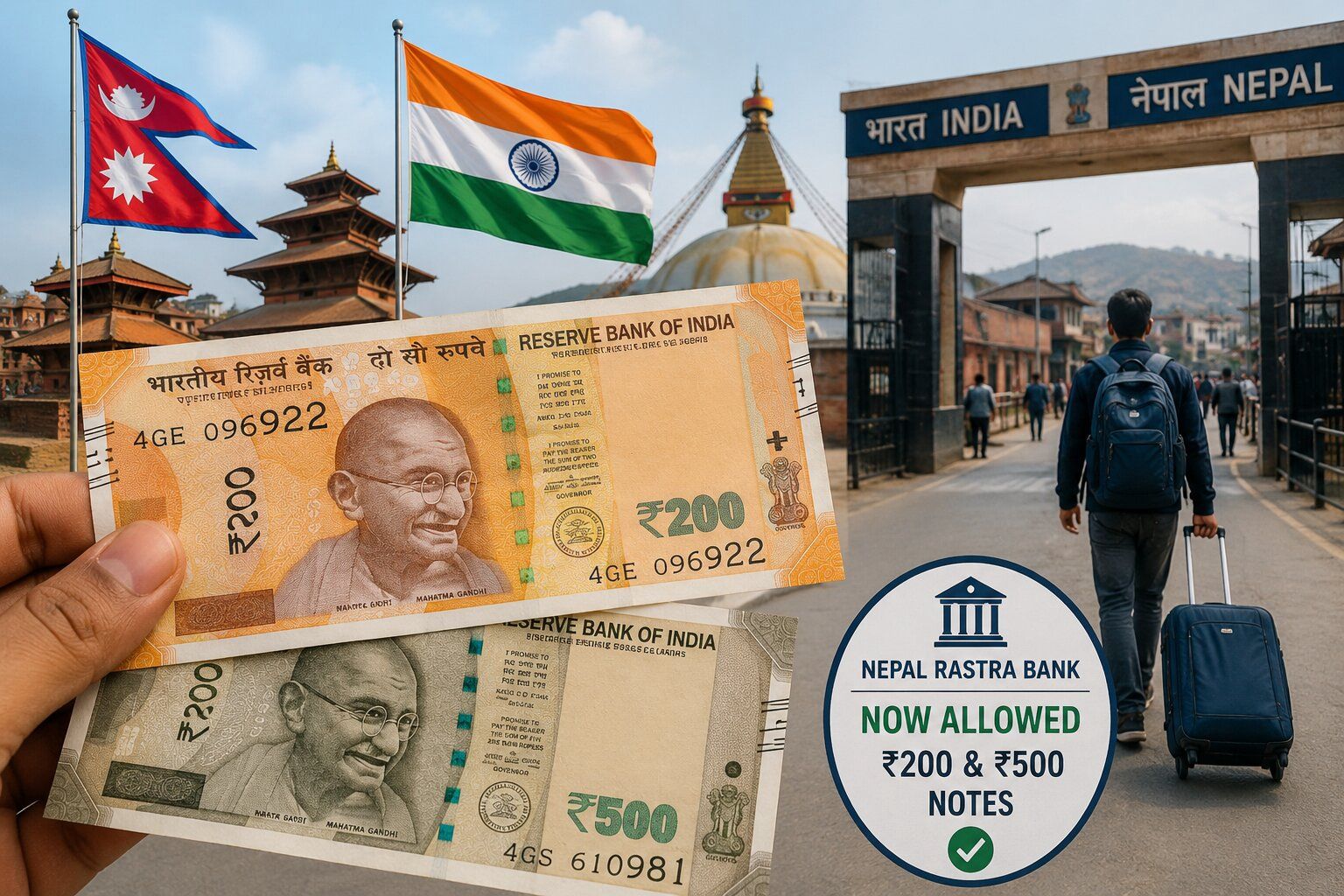
Nepal has officially eased its currency restrictions, allowing Indian and Nepali citizens to carry and exchange Indian Rs. 200 and Rs. 500 banknotes up to Rs. 25,000. The policy change eliminates years of tourist and trader inconvenience while keeping a strict ban on higher-value and legacy notes.
Travelers and cross-border traders get relief as Kathmandu officially permits carrying Indian Rs. 200 and Rs. 500 banknotes up to Rs. 25,000.
In a major policy shift easing nearly a decade of tight monetary restrictions, the Nepal Rastra Bank (NRB) has officially announced that Indian and Nepali citizens can carry and exchange Indian currency notes of Rs. 200 and Rs. 500 up to a cumulative ceiling of Rs. 25,000. Rolled out across Kathmandu and border checkpoints in July 2026, the updated regulatory framework resolves years of logistical friction for tourists, migrant workers, and cross-border merchants who previously faced strict limits restricting them solely to Rs. 100 denominations.
Regulatory Framework and Exchange Guidelines
According to official notifications released by the Nepal Rastra Bank (NRB) following coordination with the Reserve Bank of India (RBI), the revised rules come with specific compliance parameters.
Authorized Denominations: The clearance applies exclusively to Indian Rs. 200 and Rs. 500 banknotes issued subsequent to India's November 2016 demonetization exercise.
Transaction Ceiling: Individuals are permitted to hold, transport, or exchange up to a maximum limit of Rs. 25,000 per person.
Persistent Restrictions: The long-standing ban on legacy Rs. 1,000 and high-value Rs. 2,000 notes remains strictly in effect across all financial channels and exchange desks.
Economic Impact on Tourism and Cross-Border Trade
The relaxation addresses major operational hurdles that had persisted since late 2018, when high-value Indian banknotes were prohibited due to regulatory and counterfeit concerns. Tourism bodies and trade associations have welcomed the update, noting that allowing mid-tier denominations significantly streamlines travel logistics for Indian visitors—who represent one of Nepal's largest tourism demographics. Furthermore, Nepali laborers working across India can now repatriate savings more efficiently without being forced to break down funds into cumbersome stacks of Rs. 100 notes.
Why It Matters
For Indian tourists and business travelers visiting Nepal, carrying higher-denomination notes eliminates the constant friction of handling bulky lower-currency stacks. For regional commerce, the policy establishes a predictable financial environment that supports bilateral trade.
Key Facts at a Glance
Allowed Denominations: Indian Rs. 200 and Rs. 500 banknotes issued after November 9, 2016.
Carrying Limit: Maximum ceiling of Rs. 25,000 per individual.
Regulatory Authorities: Nepal Rastra Bank (NRB) and Reserve Bank of India (RBI).
Prohibited Notes: Older Rs. 1,000 and current Rs. 2,000 notes remain barred.
Frequently Asked Questions
What Indian currency notes are now allowed in Nepal?
Citizens can carry Indian Rs. 200 and Rs. 500 banknotes that have been issued since November 2016.
What is the maximum amount of Indian currency a traveler can carry?
The individual limit is set at Rs. 25,000 per person.
Are Rs. 2,000 notes accepted under the new rules?
No, the prohibition on Rs. 2,000 and older Rs. 1,000 notes remains fully active.
Source: Nepal Rastra Bank (NRB), Reserve Bank of India (RBI), Times of India