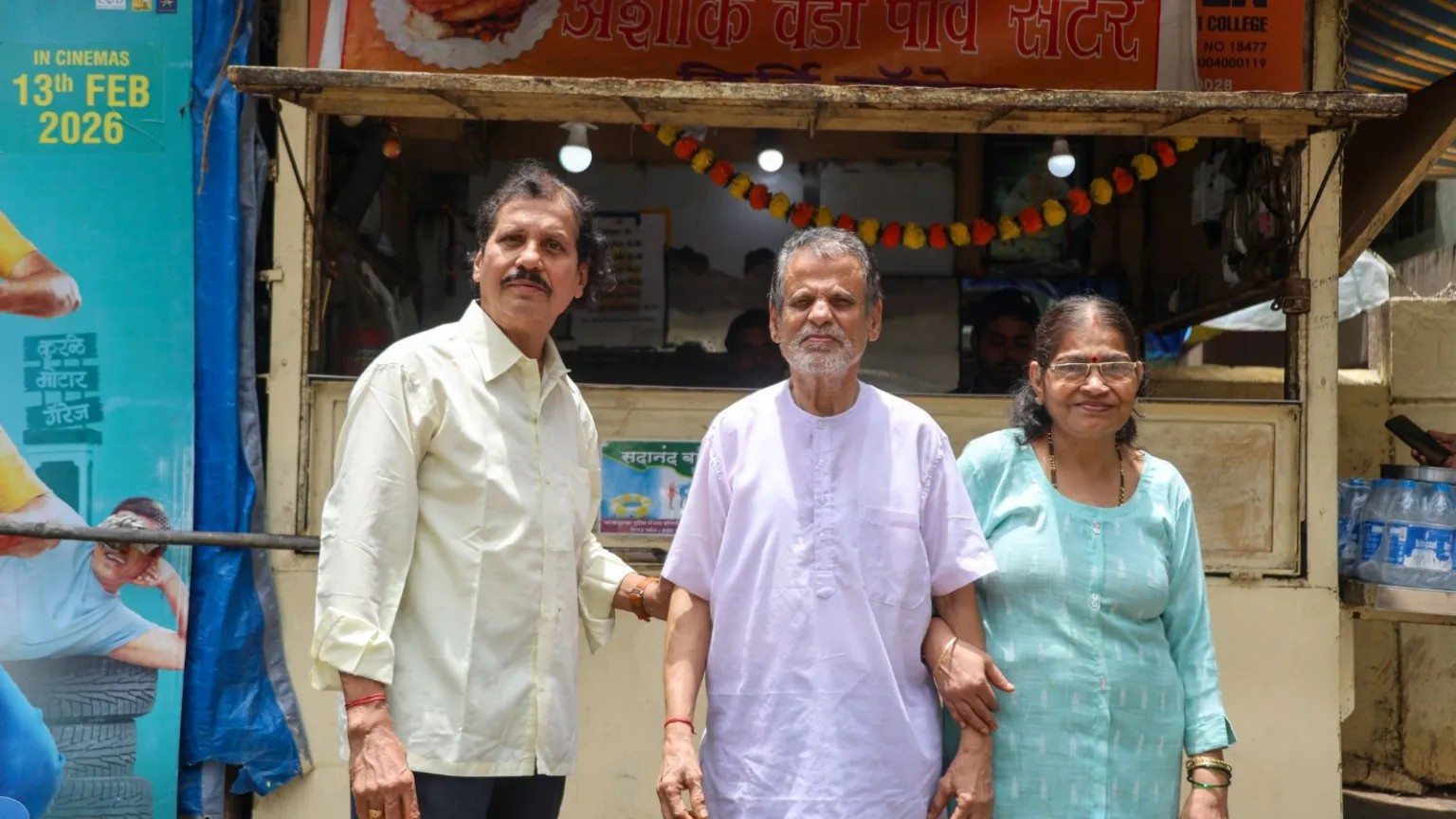
Dadar's legendary Ashok Vada Pav stall has placed 25th on TasteAtlas’s international list of the world's most iconic sandwiches. Recognized for its historic ties to Mumbai's industrial working class and its signature crispy "chura" filling, the global honor celebrates decades of unbroken family-run culinary consistency and local heritage.
MUMBAI, INDIA — Transitioning from a humble street side enterprise into an internationally recognized culinary destination, Dadar's legendary eatery, Ashok Vada Pav, has officially been ranked 25th on TasteAtlas’s global index of the "World’s Most Iconic Sandwiches." The international gastronomic platform published its verified global list on June 3, 2026, positioning the iconic Mumbai stall alongside world-renowned delicacies like the American Reuben and Israeli Sabich. Located contextually on Kashinath Dhuru Marg near the Kirti M. Doongursee College of Arts, Science and Commerce, the vendor—famously known by generations of locals as the "Kirti College Vada Pav"—has served commuters, students, and public figures for decades, preserving a culinary legacy that highlights the economic history of the Maharashtrian capital.
The Historical Genesis of a Working-Class Staple
The international validation of Ashok Vada Pav draws widespread interest toward its structural origins, which date back to the height of Mumbai’s historic textile mill era. According to socio-political archives and documentation maintained by local food historians, the basic concept of the vada pav was pioneered in 1966 by street vendor Ashok Vaidya outside the bustling Dadar Railway Station.
Seeking to design an affordable, filling, and easily portable hot lunch for thousands of laborers walking daily toward the industrial mills of Parel and Worli, Vaidya executed a culinary experiment by placing a freshly fried, spiced potato dumpling (batata vada) inside a split Portuguese-influenced bread roll (ladi pav).
Following the economic decline of the mills through subsequent decades, the stall currently operating near Kirti College was independently formalized by Ashok Thakur in 1978. Initially utilizing a simple wooden handcart, Thakur collaborated with his brothers, Manohar and the late Mahendra, eventually securing a fixed municipal stall structure in 1986 under a designated local government welfare quota.
Today, the operational venue is managed directly by Ashok Thakur alongside his son, Prasad Thakur. The family explicitly maintains strict traditional preparation standards, completely rejecting synthetic additives or commercial baking powders while utilizing over 100 kilograms of fresh potatoes daily to sustain customer demand.
The Unique Culinary Anatomy of Chura Pav
While hundreds of street corners throughout Maharashtra offer versions of the standard potato sandwich, food critics attribute the unique global ranking of Ashok Vada Pav to a specific operational innovation introduced in the early 1980s.
Up front at the Dadar facility, workers assemble orders using a highly specialized, fast-paced assembly pattern:
The Bread Core: Splitting a fresh, soft ladi pav using local techniques.
The Chutney Layer: Drizzling a hot green coriander mix alongside a balanced sweet tamarind-date reduction.
The Spice Dust: Adding a generous portion of a traditional dry red garlic seasoning commonly referred to as ghati masala.
The Signature Crunch: Wrapping the central potato vada with chura—crispy fried batter crumbs that fall away during the deep-frying process.
According to family records, the inclusion of chura began entirely by accident when cash-strapped college students who could not afford a full 30-paise vada pav requested to buy leftover deep-fried crumbs stuffed into empty bread buns at a discount. The modification proved so phenomenally popular that the establishment eventually converted the byproduct into a deliberate feature, frying massive batches of specialized chickpea flour (besan) slurry daily to achieve the signature textural crunch.
Official Sources Section
The current product listings, historical timelines, and international street-food scores cited in this release are verified according to the official global database entries updated by TasteAtlas Experiential Travel Guide and formal biographical interviews archived by the Municipal Corporation of Greater Mumbai (MCGM).
Quote Section
"Vada pav is more than a simple roadside snack; it is an undeniable cultural emblem of Mumbai. Its utter simplicity, affordability, and historic connection to the city's industrious working-class spirit have rightfully turned it into an iconic street food loved across international borders."
— Celebrity Chef Ananya Banerjee, reflecting on the historical significance of the dish following the global TasteAtlas publication.
Why It Matters
The global recognition of a roadside stall provides substantial economic and cultural validation for small-scale street vendors across developing markets. Elevating traditional, low-cost street items to international food indexes stimulates culinary tourism, enhances regional soft power, and demonstrates that rigorous consistency can establish global brand authority without requiring corporate franchise capital.
Key Facts at a Glance
Global Ranking: Ashok Vada Pav in Dadar secured the 25th position on TasteAtlas’s "World’s Most Iconic Sandwiches" roster.
Historical Grounding: The business model traces its lineage to the 1960s textile mill boom, designed originally as a portable, low-cost worker lunch.
Signature Component: The stall is widely credited with popularizing chura pav, a texture variation using crispy fried chickpea batter crumbs inside the bun.
Volume Metrics: The 100-square-foot facility processes upwards of 100 kilograms of fresh potatoes daily under strict quality controls.
Price Evolution: From a baseline of 30 paise per unit in the late 1970s, the current standardized retail rate stands at 35 Indian Rupees.
FAQ Section
What is the primary address of this specific award-winning stall?
The stall is located along Kashinath Dhuru Marg in Dadar West, Mumbai, situated immediately adjacent to Kirti College.
Who originally invented the combination of Vada and Pav?
The invention is widely credited to a street vendor named Ashok Vaidya outside Dadar Railway Station in 1966, while the Kirti College stall was established by Ashok Thakur in 1978.
Is the food served at Ashok Vada Pav suitable for vegetarians?
Yes. The entire traditional menu, comprising spiced potato fillings, chickpea flour coating, and accompanying herbal chutneys, is completely vegetarian.
Source: TasteAtlas Iconic Sandwich Rankings, The Indian Express Urban History Archive, Bombay Bhukkad Food Journal.