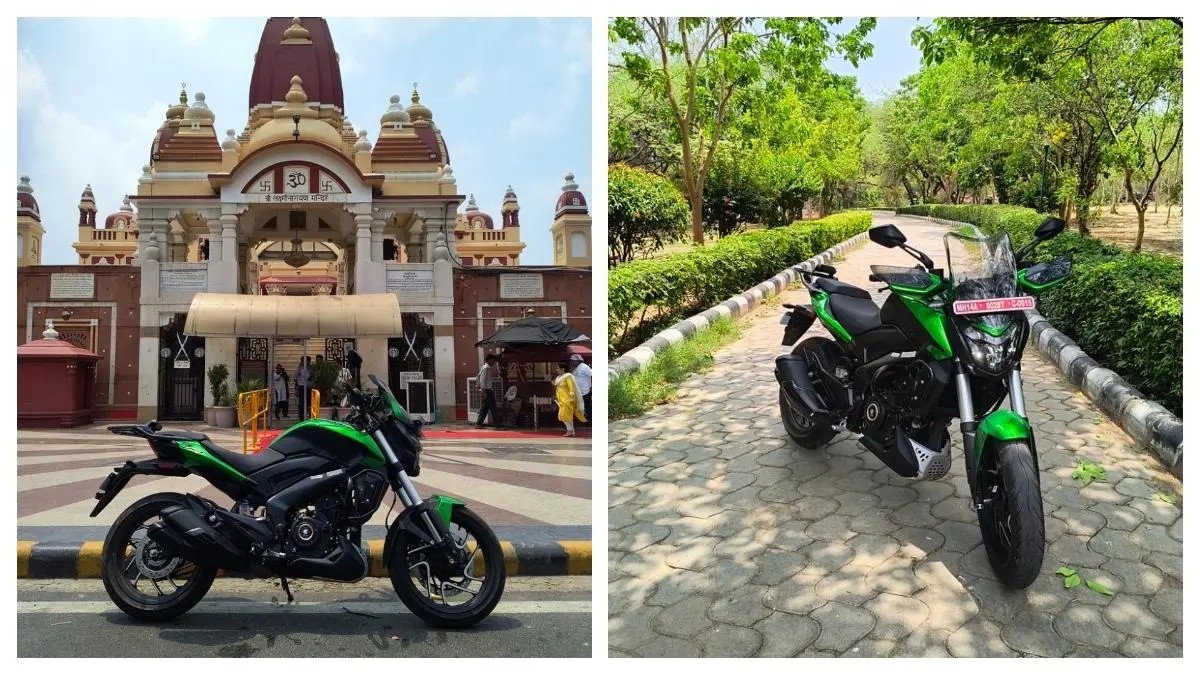
The updated 2026 Bajaj Dominar 400 adopts a downsized 349cc single-cylinder engine, reducing its price by over ₹36,000 to ₹2.04 Lakh (ex-showroom). While the smaller engine trades away some mid-range torque, it maintains a 40.6 PS output, 7.4-second 0–100 km/h sprint time, and excellent highway stability.
PUNE — Bajaj Auto has rolled out its most substantial structural update to the Dominar 400 since the flagship motorcycle first debuted nearly a decade ago. Facing strict regulatory shifts and intensifying market competition, the Indian automaker has downsized the model’s powertrain to a 349cc single-cylinder architecture. Evaluated during media trials at Bajaj Auto’s Akurdi testing facility in June 2026, this mechanical modification brings an immediate retail price drop of over ₹36,000, sliding the motorcycle into a far more favorable tax structure.
The core question for Indian long-distance riders, tourers, and commuters remains whether this smaller, 350cc displacement engine can still support the highway manners and steady high-speed performance that established the original motorcycle's cult following.
Technical Shift: Downsizing for the Market
The engineering changes behind the 2026 Bajaj Dominar 400 center strictly on engine dimensions rather than an entirely new design. To adapt the previous 373cc KTM-derived engine into the new 349.13cc setup, Bajaj engineers reduced the piston stroke from 60mm down to 56.1mm while maintaining the large 89mm cylinder bore.
According to official specification filings from Bajaj Auto Ltd., this reconfiguration shifts the bike's power curves quite noticeably:
Peak Power: Rises marginally by 0.6 PS to 40.6 PS, but peaks 200 rpm later at 9,000 rpm.
Peak Torque: Decreases from 35 Nm down to 33.2 Nm, arriving 1,000 rpm higher in the rev range at 7,500 rpm.
To balance this softer mid-range delivery, Bajaj fitted the Dominar variant with distinct camshafts and a heavier flywheel compared to its naked sibling, the Pulsar NS400Z. The 6-speed gearbox remains equipped with an assist and slipper clutch system to handle rapid downshifts.
On the Road: Real-World Performance Analysis
Track and open-road testing confirm that the downsized engine yields a highly distinct power delivery. At lower engine speeds, the 350cc motor behaves noticeably flatter and tamer than its predecessor. Swift overtakes on two-lane highways now require deliberate downshifts to tap into the upper half of the rev range.
However, once spun past 4,000 rpm, the engine reveals a rev-happy character. Data from initial instrumented tests show that despite the torque loss, the bike hits 60 km/h in 2.9 seconds and accomplishes the 0–100 km/h sprint in an identical 7.4 seconds, matching the top speed of 146.1 km/h seen on the outgoing model. Cruising at 100–120 km/h remains smooth, though riders will note minor high-rpm vibrations creeping into the footpegs and handlebars if pushed toward the redline.
Ride Quality, Weights, and Factory Touring Kit
Beyond the engine casing, the mechanical foundations of the sports tourer remain identical to prior iterations. The motorcycle utilizes a heavy beam-type perimeter frame balanced by chunky 43mm inverted (USD) front forks and a multi-step adjustable rear monoshock.
| Metric / Feature | Specification |
| Kerb Weight | 190 kg (Fully Fueled) |
| Seat Height | 800 mm |
| Braking Setup | 320mm Front Disc / 230mm Rear Disc |
| Safety Electronics | Dual-Channel ABS (Road, Rain, Sport, Off-Road) |
| Fuel Tank Capacity | 13 Liters |
At 190 kg, it remains a heavy machine to handle during low-speed garage maneuvering or heavy city traffic. However, that mass grants the bike excellent wind resistance and tracking stability on exposed highways. It also retains its distinct factory-installed touring kit, which saves buyers thousands in aftermarket upgrades:
Tall, aerodynamically sculpted front windscreen.
Integrated plastic knuckle guards.
Sturdy engine crash guard and bash plate.
Rear luggage rack paired with an integrated pillion backrest.
Official Sources & Industry Perspectives
"Our engineering target was to maximize value without compromising the high-speed cruising nature of the motorcycle. By moving to the 349cc engine, we have successfully optimized the vehicle's tax overhead under the revised guidelines, passing 100% of those financial benefits directly to our consumers."
— Product Development Representative, Bajaj Auto Ltd.
"While the initial midrange punch is softer, the final performance numbers indicate that high-speed capabilities remain intact. The significant price correction repositions this motorcycle as an absolute value leader for budget-conscious long-distance tourers."
— Editorial Review Team, Autocar India
Why It Matters
This update alters the entry barrier for mid-capacity sports touring in India. By lowering the ex-showroom price to ₹2.04 Lakh (ex-showroom, Delhi), Bajaj has made a 40-horsepower, highway-ready machine available at a price bracket typically reserved for smaller 250cc or entry-level 300cc bikes. For long-distance riders and daily commuters looking to upgrade, the massive financial savings far outweigh the slight loss in low-end torque.
Key Facts at a Glance
Engine Downsizing: Displacement drops from 373cc to 349.13cc via a shorter 56.1mm piston stroke.
Price Reduction: Substantial price drop of roughly ₹36,000, bringing the base ex-showroom Delhi cost to ₹2.04 Lakh.
Performance Metrics: Produces 40.6 PS and 33.2 Nm of torque, clocking a 0–100 km/h time of 7.4 seconds.
Touring Ready: Ships standard with a tall windscreen, handguards, a luggage carrier, and an integrated pillion backrest.
Chassis Carryover: Retains the 190 kg kerb weight, 43mm USD forks, and dual-channel ABS configuration.
Frequently Asked Questions
Q: Why did Bajaj downsize the Dominar 400 engine from 373cc to 349cc?
A: The reduction allows the motorcycle to qualify for a lower Goods and Services Tax (GST) slab category under domestic manufacturing regulations. This change enabled Bajaj to reduce the retail price by approximately ₹36,000.
Q: Is the new 350cc Dominar slower than the older model?
A: In a straight line, no. The 0–100 km/h acceleration time remains steady at 7.4 seconds, and the top speed is unchanged. However, the mid-range torque feels flatter, meaning you will need to downshift more frequently to complete quick highway overtakes.
Q: What is the real-world fuel efficiency of the 2026 Dominar 400?
A: Road test data indicates that during steady highway cruising at 90–110 km/h, the motorcycle delivers a fuel efficiency range between 25 km/l and 30 km/l depending on the payload and riding conditions.
Source: Bajaj Auto Official Motorcycle Portfolio, Autocar India Comprehensive Road Test Report, Overdrive India Automotive Reviews