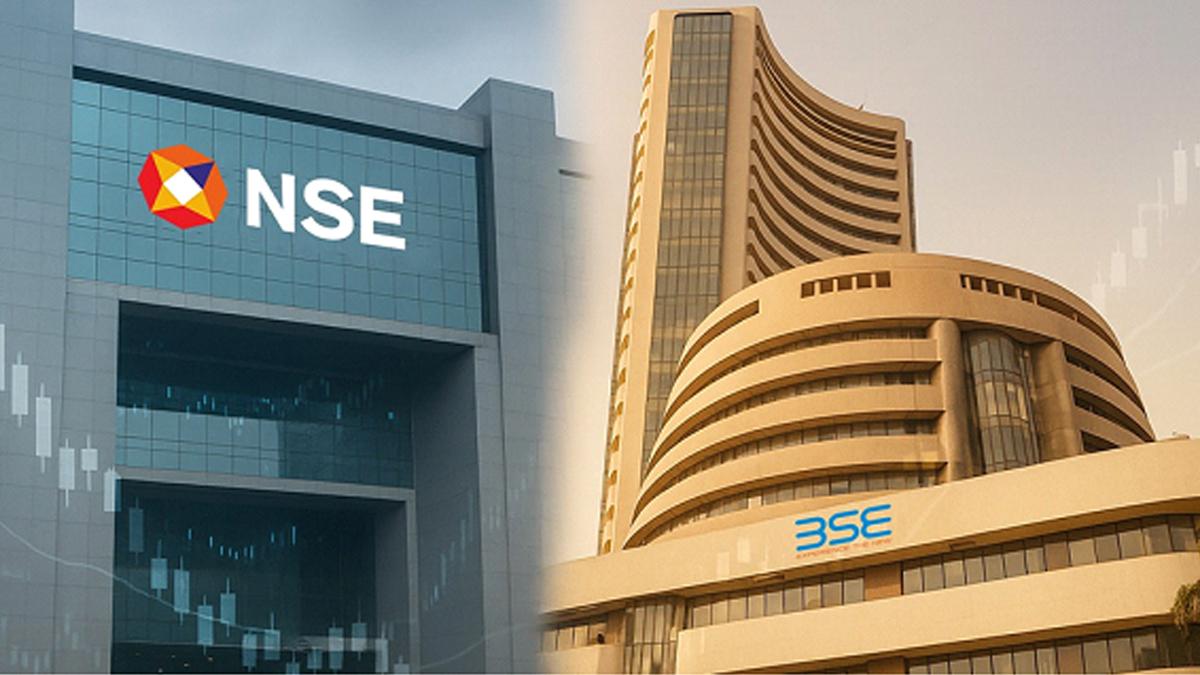
Dalal Street braces for heightened volatility next week as the Nifty 50 hovers above 24,000. While domestic monsoon progress and IT sector recoveries remain central, market participants must navigate external global shocks from a fresh US-Iran military escalation alongside localized rumors surrounding a major Union Cabinet expansion.
MUMBAI, INDIA — Following a condensed trading week capped by a statutory exchange closure for Muharram on June 26, India's primary financial hubs are preparing for a rapid acceleration in institutional trading activity. Market analysts on Dalal Street expect a multi-layered series of developments to drive the trajectory of equity benchmarks next week, as the indices adjust to volatile sector dynamics and near the end of the month's derivatives settlement phase. Following a sharp 791-point rebound in the Bombay Stock Exchange (BSE) Sensex and a decisive move by the Nifty 50 to close firmly back above the critical 24,000 threshold, capital markets are closely tracking domestic monsoon progress, repositioning within the technology sector, and a busy macro reporting calendar.
Shifting Focus to Monsoon Impact on Rural Demand
A key point of focus for equity fund managers entering the final days of June is the geographical progression of the southwest monsoon across central and northern India. Domestic consumer and agricultural equities have experienced increased volatility as financial analysts re-evaluate corporate earnings visibility for rural-dependent sectors.
According to agricultural data monitored by financial institutions, a well-distributed precipitation pattern is critical to stabilizing food-based consumer price index (CPI) inflation and stimulating rural consumer discretionary spending. Asset management firms indicate that any sustained acceleration in early-season monsoon coverage will directly support the operational margins of Fast-Moving Consumer Goods (FMCG) corporations, fertilizer manufacturers, and two-wheeler automotive players. Conversely, prolonged regional rain deficits are expected to trigger defensive sector rotations into localized pharmaceutical and banking assets.
US-Iran Military Flares Shock Global Energy Routes
Adding sudden geopolitical risk to international capital markets, a severe escalation in the Middle East over the weekend is poised to dictate Monday's opening sentiment. Tensions between the United States and Iran have resurfaced violently following a series of military cross-strikes. US Central Command (CENTCOM) confirmed it executed targeted airstrikes against Iranian surveillance, air defense, and drone infrastructure in response to a drone attack on a commercial cargo ship in the Strait of Hormuz—the world’s most critical energy transit artery.
In retaliation, Iran's Islamic Revolutionary Guard Corps (IRGC) launched missile and drone operations targeting US military installations in Kuwait and Bahrain, warning that diplomatic ceasefire processes have completely halted. With US President Donald Trump issuing sharp public warnings of military escalation, global energy desks are bracing for heightened crude oil volatility. Any prolonged disruption to the Strait of Hormuz will heavily impact import-dependent economies like India, potentially shifting inflation projections and near-term corporate margins.
Political Circles Abuzz With Union Cabinet Reshuffling Rumors
On the domestic political front, intense speculation regarding an impending Union Cabinet expansion or reshuffle is keeping institutional investors alert. Rumors have mounted following a high-profile meeting between Prime Minister Narendra Modi and President Droupadi Murmu, alongside the recent resignation of Union Minister of State George Kurien.
Political analysts and regional lawmakers have fueled the discourse with public claims that the ruling National Democratic Alliance (NDA) government may introduce major structural changes to key economic portfolios ahead of critical upcoming state assembly elections. Speculation is particularly high regarding the potential allocation of a major central finance portfolio or key ministerial berths to prominent political figures from Maharashtra, especially following recent party floor-crossings in the region. Historically, changes in key ministerial portfolios trigger sharp, localized volatility across public sector undertakings (PSUs), infrastructure, and defense counters as traders re-align portfolios with potential leadership changes.
Banking and IT Counters Steer Benchmark Rebound
The near-term technical support lines for Indian indices remain anchored to structural trends within the banking and IT landscapes. The Nifty IT index experienced a sharp 6% intraday drop earlier in the month following external revenue guidance downgrades from global enterprise peers, including Accenture. However, immediate institutional value hunting during mid-week trading sessions successfully erased a portion of those losses, triggering a 2% recovery wave led by major software exporters like Infosys and TCS.
Simultaneously, financial indices—specifically the Bank Nifty and the Nifty Financial Services benchmarks—advanced by more than 1.5% due to sustained foreign portfolio investor (FPI) capital inflows. According to institutional trading desks, domestic banks are showing healthy balance sheet expansion and stable quarter-on-quarter credit growth. Traders are watching whether the Nifty 50 can break through its immediate overhead resistance level between 24,140 and 24,170, or if profit-taking will pull prices back to major support zones near 23,900.
Official Sources Section
All performance parameters, trading data metrics, and technical index valuations were compiled from official data feeds provided by the National Stock Exchange of India (NSE) and the BSE Limited. Macroeconomic data points were cross-referenced against statements released by the Reserve Bank of India (RBI) and Ministry of Commerce regulatory bulletins.
Quote Section
"According to officials at domestic brokerage houses, the market's recovery above the 24,000 baseline demonstrates strong underlying institutional support, though near-term momentum remains highly sensitive to global liquidity flows and localized weather patterns."
Why It Matters
The incoming week of trading holds practical implications for both retail participants and large institutional investors. As the market enters a new calendar month, institutional traders must balance their index derivatives contracts against overhead technical hurdles. For regular retail consumers, the underlying strength of the corporate sector will influence broad employment trends, while the performance of rural-facing stocks will directly map onto the purchasing power and consumer demand of the wider population.
Key Facts at a Glance
Geopolitical Shock: Renewed military hostilities between the US and Iran in the Strait of Hormuz introduce immediate global energy supply risks.
Political Adjustments: Rumors of an imminent Union Cabinet expansion under Prime Minister Narendra Modi are driving speculation across infrastructure and defense sectors.
Technical Milestone: The Nifty 50 successfully regained its structural position above the 24,000 baseline, settling at 24,056.00 following a late-week rally.
Capital Expansion: Mid-week trading momentum added over ₹1 lakh crore to total investor wealth, pushing total BSE-listed market capitalization above ₹476 lakh crore.
Holiday Framework: The formal trading closure on June 26 for Muharram left participants with an extended three-day window to evaluate positions before markets resume.
FAQ Section
What are the immediate technical support levels to watch for the Nifty 50 next week?
Market technical analysts point to strong support levels around the 23,900 and 23,870 regions. On the upside, the index faces immediate resistance between 24,140 and 24,170.
How could the US-Iran military escalation affect Dalal Street?
Escalation in the Strait of Hormuz could threaten global oil and LNG transport routes, driving crude oil prices up. As a major oil importer, India could face inflationary pressures, affecting corporate input costs and currency stability.
Why are rumors of a Union Cabinet reshuffle affecting equity markets?
Cabinet reshuffles often signal policy realignments, altered spending priorities, or structural changes within targeted ministries like Finance, Defense, or Infrastructure. Traders actively adjust allocations in affected sectors to mitigate policy risks.
Source: National Stock Exchange of India, BSE Limited, Reserve Bank of India