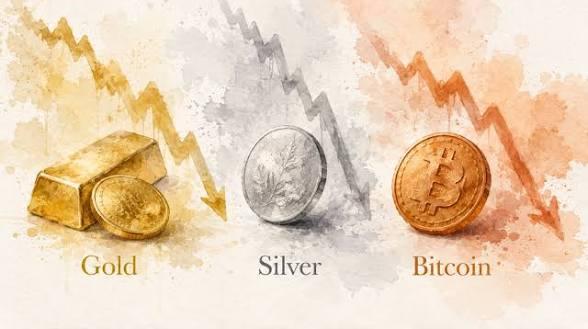
The silver price falling is primarily driven by its close monetary relationship with gold, its "paternal cousin." As persistent high interest rates elevate bond yields and strengthen the US dollar, institutional capital is rotating away from non-yielding precious metals, causing a pronounced chain-reaction correction across global silver markets.
LONDON, United Kingdom — The global commodities market is experiencing a significant shift as the silver price falling continues to capture the attention of institutional investors and retail traders alike. Historically treated as both an industrial asset and a monetary reserve, silver relies heavily on its unique relationship with other major market forces—frequently described by commodities analysts as its financial "cousins." In Part 1 of this market analysis, structural data indicates that the primary driver behind the current downturn is silver’s closest "paternal cousin": gold, alongside the compounding macro pressures of rising bond yields and an aggressive US dollar.
The Dual Identity of Precious Metals
To understand why the silver price falling has accelerated, market economists point toward the metal’s dual economic identity. Unlike standard commodities that only react to industrial supply and demand, silver operates under two distinct valuation umbrellas. It behaves half like an industrial base metal used in electronics, photovoltaics, and automotive manufacturing, and half like a traditional safe-haven monetary asset.
When analyzing its monetary side, silver is inextricably bound to gold. Historically, when gold experiences downward weight due to shifting central bank policies, higher interest rates, or institutional profit-taking, silver reactively mirrors these downward swings. Because it possesses a lower liquidity threshold and higher natural volatility than gold, any negative pressure exerted on its "paternal cousin" often results in an amplified percentage decline for silver.
Macroeconomic Headwinds and the Bond Yield Shift
According to regular tracking data from international trading desks, the broader precious metals sell-off is heavily tied to recent hawkish commentary from central banking authorities. With global inflation remaining stubborn and the Federal Reserve signaling a prolonged pause in interest rate reductions, sovereign bond yields have experienced an incremental push upward.
When interest rates remain elevated, non-yielding assets like gold and silver lose their competitive edge against interest-bearing securities like US Treasuries. As institutional capital rotates out of precious metals to capture guaranteed yields, gold prices pull back, dragging silver down in its wake.
Industrial Demand Weakness and Sector Rotations
While the monetary "paternal cousin" relationship explains the sudden institutional capital outflows, silver is simultaneously facing headwinds from its industrial base. Recent industrial factory data out of manufacturing hubs indicates a slight cooling in immediate procurement cycles.
Furthermore, recent corrections in global technology sectors have caused short-term liquidity constraints. When hedge funds face margin calls or choose to rebalance heavy tech portfolios, they frequently liquidate highly liquid liquid commodities positions—including silver futures contracts—to raise cash reserves, adding additional downward technical pressure on the spot market.
Official Sources Section
Global spot pricing benchmarks, exchange volume metrics, and macroeconomic policy impact statements are continuously compiled and verified using official regulatory data published by the London Bullion Market Association (LBMA) and market transaction reports administered by the U.S. Commodity Futures Trading Commission (CFTC).
Quote Section
"According to officials monitoring international commodities exchanges, the phenomenon of the silver price falling cannot be viewed in isolation from broader monetary trends. Because silver retains a strong historical beta to the gold market, any macroeconomic factor that dampens institutional appetite for gold automatically accelerates defensive selling patterns within the silver derivatives space."
Why It Matters
For everyday consumers, a falling silver price translates to cheaper raw components for industrial goods, jewelry, and green-energy technology components like solar panels. However, for retail investors and silver stackers, the downturn highlights the extreme risk of treating silver purely as an isolated industrial play without calculating the dominant, overarching influence of its monetary "paternal cousin" and global interest rate cycles.
Key Facts at a Glance
The Gold Link: The primary catalyst for the silver price falling is the macro pressure applied to its "paternal cousin," gold, which dictates overall precious metals sentiment.
Yield Pressures: Higher for longer interest rates boost sovereign bond yields, drawing capital away from non-yielding commodities.
Currency Factors: A strengthening US dollar creates an immediate mathematical hurdle, making silver more expensive for international buyers using foreign currencies.
Volatility Amplifier: Due to thinner market liquidity, silver historically experiences sharper percentage drops than gold during generalized market corrections.
FAQ Section
Why is gold referred to as silver's "paternal cousin"?
In commodities trading, gold is considered silver’s closest financial relative due to their shared status as historical monetary metals and safe-haven assets that react similarly to inflation and currency fluctuations.
How does a strong US dollar cause a falling silver price?
Global commodities are priced in US dollars. When the value of the dollar increases, it requires fewer dollars to purchase the same amount of silver, driving the nominal spot price downward.
Will industrial demand eventually decouple silver from gold's price movements?
While industrial demand for solar energy and electric vehicles provides a strong fundamental floor for silver, its macro pricing remains heavily tied to global monetary policies and gold sentiment during major market cycles.
Source: Official market price indexes from the London Bullion Market Association (LBMA), macroeconomic policy statements from the Federal Reserve, and historic precious metals data monitored by the World Gold Council.