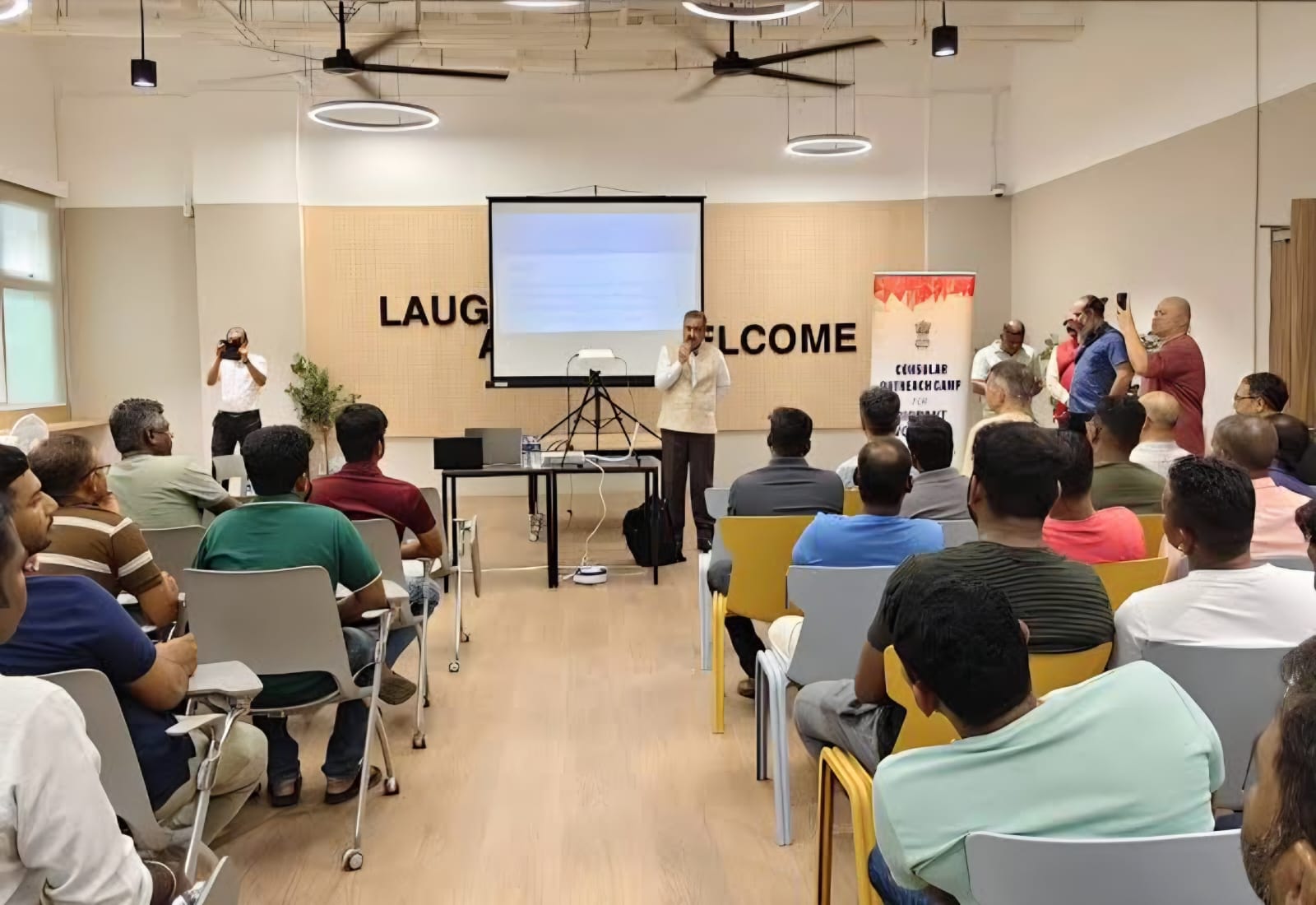
The Migrant Workers' Centre has partnered with the Indian Institutes of Technology Alumni Association Singapore to launch a two-year digital literacy program. Starting in August 2026, the initiative will equip nearly 1,000 migrant workers with vital tech skills and AI training to improve communication and workplace safety.
SINGAPORE — In a major initiative to bridge the digital divide within the regional labor force, a new technology partnership has been launched to deliver foundational artificial intelligence and digital literacy training to migrant workers in Singapore. The National Trades Union Congress (NTUC) Migrant Workers' Centre (MWC) announced a formal Memorandum of Understanding on June 28, 2026, with the Indian Institutes of Technology Alumni Association Singapore (IITAAS). Under this two-year strategic collaboration, specialized engineering and technology alumni from India's premier institutes will volunteer to train close to 1,000 migrant workers. The initiative aims to enhance workplace safety, personal communication, and overall economic productivity as emerging technologies continue to reshape traditional industries.
Technical Training Framework at Soon Lee Recreation Club
The newly established educational framework is engineered specifically to address the daily operational and communication barriers faced by non-technical laborers. According to the joint directive published on Sunday, the training sessions will officially commence in August 2026 and will occur twice a month at the MWC Recreation Club located along Soon Lee Road.
The curriculum is structured around incremental skill development, moving from baseline digital exposure into automated consumer platforms:
Foundational Digital Literacy: Navigating smartphone operating systems, online banking, personal data security, and official local administrative applications.
Workplace Productivity Applications: Utilizing collaborative digital communication platforms, understanding digitized logistics, and reading technical on-site compliance dashboards.
Emerging Technologies and AI: Understanding the core mechanics of artificial intelligence, utilizing translation tools to bypass language barriers, and deploying voice-to-text algorithms for hazard reporting.
By utilizing the deep domain expertise of the IIT alumni network, the program will deliver practical instruction designed to build confidence in using smart digital interfaces, ensuring that the foreign workforce remains highly adaptable.
Context Within Singapore's Broader Artificial Intelligence Push
The implementation of the MWC-IITAAS partnership comes at a time when Singapore is aggressively executing its updated National AI Strategy. The city-state has introduced several sweeping upskilling mandates, including multi-year blueprints overseen by the Infocomm Media Development Authority (IMDA) to establish a baseline level of "AI fluency" across various sectors of the economy.
While state-funded programs like the National AI Impact Programme are targeted at transitioning 100,000 white-collar, non-technical professionals into "AI bilingual" roles by 2029, the MWC initiative fills a critical social gap. It ensures that blue-collar migrant workers—primarily employed across Singapore's intensive marine, construction, and manufacturing sectors—are not excluded from the digital transformation.
Broader Welfare Milestones and Migrant Community Support
The educational announcement was made during the annual NTUC May Day Migrant Workers' Celebrations. Beyond the tech partnership, MWC officials utilized the public forum to detail an extensive annual financial report regarding direct support infrastructure.
Over the trailing 12-month period concluding on May 26, 2026, the MWC extended more than 2.4 million Singapore dollars in ex-gratia financial assistance. This financial safety net directly aided over 700 vulnerable workers who faced acute hardships, including complex salary disputes, sudden corporate liquidations, and unexpected employment termination. The center also verified it had provided logistical support, legal counsel, and temporary housing to over 10,000 workers throughout the year, reaffirming its commitment to stabilizing the local labor ecosystem.
Official Sources Section
The programmatic details, execution timelines, and organizational duties outlined in this report are verified according to the formal statements released during the annual NTUC May Day Migrant Workers' Celebrations and the official partnership registry maintained by the Migrant Workers' Centre.
Quote Section
"This partnership reflects our belief that technology must empower, not exclude. By equipping migrant workers with practical digital skills and confidence in emerging tools, we aim to strengthen their safety, productivity, and well-being, while supporting Singapore's vision of collective, future-ready growth."
— Dhruv Jain, President of the Indian Institutes of Technology Alumni Association Singapore (IITAAS), highlighting the social objective of the program.
Why It Matters
Providing technical training to the migrant workforce has immediate practical implications for both the workers and the industries they support. Elevating digital literacy allows workers to navigate essential financial and medical apps independently, reducing their vulnerability to digital scams. On the industrial front, an AI-fluent workforce can utilize advanced translation and smart reporting tools to improve real-time communication on job sites, significantly lowering operational risks and helping companies meet stringent municipal safety standards.
Key Facts at a Glance
Strategic Pact: The Migrant Workers' Centre and the IIT Alumni Association Singapore signed a two-year agreement on June 28, 2026, to provide tech training.
Target Demographic: The educational framework is designed to upscale the digital literacy of nearly 1,000 migrant workers.
Curriculum Scope: Training modules cover foundational digital navigation, workplace software, and practical everyday applications of artificial intelligence.
Execution Venue: Classes will run twice a month starting in August 2026 at the specialized MWC Recreation Club located at Soon Lee.
Welfare Ledger: Alongside the tech rollout, MWC confirmed distributing over 2.4 million Singapore dollars in emergency aid over the past 12 months.
FAQ Section
When do the AI and digital literacy classes start for the workers?
The first official run of the training modules is scheduled to commence in August 2026, with recurring classes held twice a month.
Where will the training sessions be physically conducted?
The interactive programs will be held on-site at the MWC Recreation Club located at Soon Lee Road in Singapore.
What industries are the targeted migrant workers primarily from?
The program focuses heavily on workers supporting essential industrial pillars of Singapore's economy, particularly the marine, construction, process, and manufacturing ecosystems.
Source: National Trades Union Congress (NTUC) Official Newsroom, Migrant Workers' Centre Corporate Communications Log, Singapore Ministry of Manpower Labor Welfare Registry.