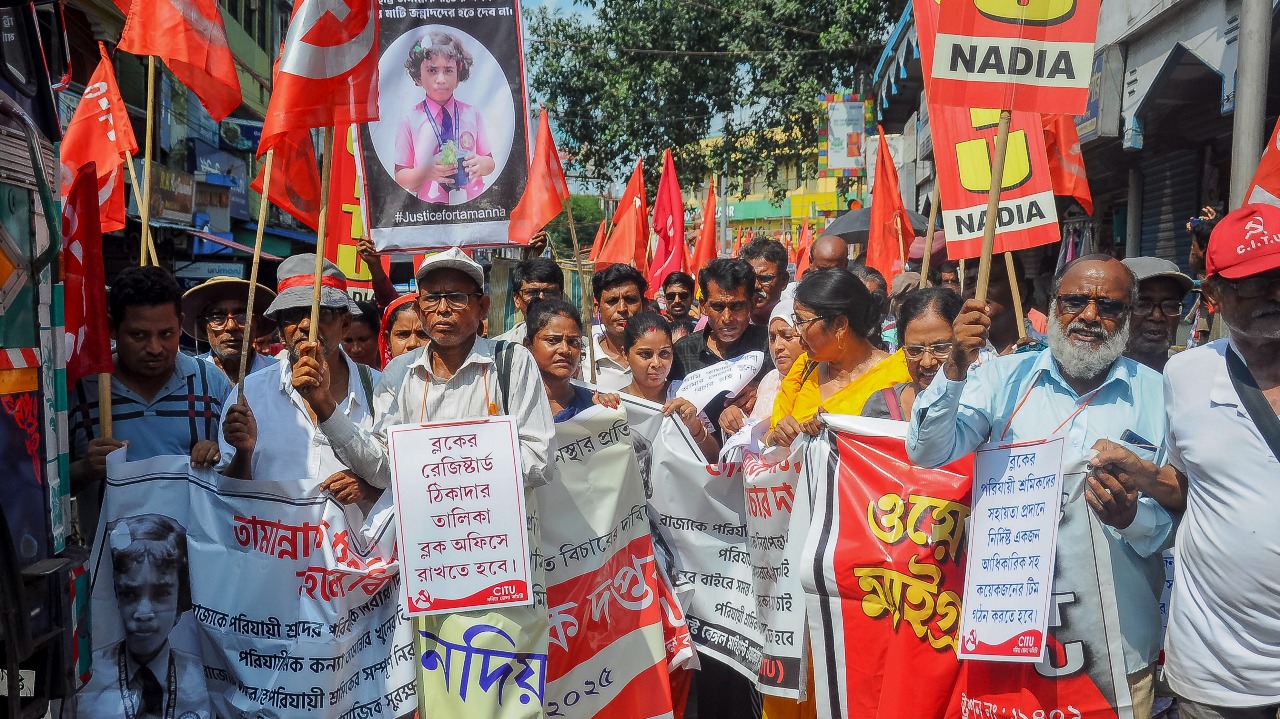
Amid growing reports of harassment and profiling of Bengali-speaking migrant workers in several Indian states, the West Bengal government and the ruling Trinamool Congress have launched a coordinated and expansive initiative to address the crisis. The response blends administrative urgency with g...
Amid growing reports of harassment and profiling of Bengali-speaking migrant workers in several Indian states, the West Bengal government and the ruling Trinamool Congress have launched a coordinated and expansive initiative to address the crisis. The response blends administrative urgency with grassroots political outreach, aiming to provide real-time support to distressed workers and their families.
Administrative Measures And Helpline Activation
The West Bengal Police has rolled out a WhatsApp-only helpline to enable families of migrant workers to report distress cases. The helpline allows users to send text-based complaints including the victim’s name, work location, and nature of the issue. This initiative is designed to streamline verified reporting and facilitate swift coordination with authorities in other states.
Key highlights from the administrative push:
-
The helpline was launched on July 25 and is being widely circulated on social media
-
District-level migrant welfare cells have been reactivated with new staffing and direct coordination lines to district magistrates
-
The West Bengal Migrant Workers’ Welfare Board is mapping major Bengali migrant clusters across India to improve support delivery
The board, chaired by Rajya Sabha MP Samirul Islam, is also working to dispel narratives suggesting mass migration due to lack of jobs in Bengal. Islam stated that while 22.5 lakh Bengali workers are employed outside the state, nearly 1.5 crore migrants from other states work within West Bengal.
Grassroots Political Outreach And Task Forces
In parallel, the Trinamool Congress has mobilised its party network across high-migration districts such as Malda, Murshidabad, Uttar Dinajpur, Dakshin Dinajpur, Cooch Behar, Alipurduar, Birbhum, Nadia, and both 24 Parganas. Each municipal ward, gram panchayat, and block has been instructed to create migrant tracking cells to maintain real-time registers of outbound workers.
These grassroots units are supervised by area leaders, elected panchayat members, and MLAs.
Each task force typically includes:
-
A ward-level party member
-
A panchayat representative
-
A youth volunteer from the TMC
Upon receiving a complaint, these teams verify details, assist with documentation, and coordinate with local police and block offices. In some cases, they even arrange transport for families seeking help.
One notable intervention has emerged in Uttar Dinajpur’s Itahar, where TMC MLA Mosaraf Hussen has set up a full-time helpdesk near the Pater Sathi bus stand. The desk helps families secure residential and clearance certificates required to prove citizenship in other states. Volunteers have already intervened in multiple cases, including alleged custodial detentions in Gurugram.
District Coordination And Escalation Protocols
To reinforce field-level efforts, district migrant worker coordination teams have been formed.
These teams include:
-
Block Development Officers
-
MLAs and municipal councillors
-
Panchayat officials
-
Representatives from the labour department and migrant welfare board
These teams meet regularly to review grievances from local helpdesks and escalate unresolved cases to the state level. The goal is to ensure that no complaint is lost in bureaucratic layers and that families receive timely assistance.
Political Resonance And Opposition Response
While TMC leaders assert that the initiative is driven by humanitarian concerns, many acknowledge its political resonance ahead of the 2026 assembly elections. TMC spokesperson Krishanu Mitra stated that the party is fighting injustice through every democratic channel, including Parliament and the courts.
Opposition BJP leader Suvendu Adhikari has launched a counter-campaign, alleging infiltration by Rohingya and Bangladeshi Muslims and claiming irregularities in the state’s electoral rolls. Political analysts suggest that if TMC is perceived as standing by its people—even outside Bengal—it could strengthen its electoral position.
Public Impact And Strategic Outlook
The multi-layered response from Bengal reflects a growing recognition of migrant distress as both a humanitarian and political issue. By combining administrative tools with grassroots mobilisation, the state aims to create a robust support system for its migrant workforce.
Sources: Business Standard, India TV News, Daily Pioneer, Economic Times, PTI, Deccan Herald