Enterprise security startup Arcade.dev has raised $60 million in Series A funding led by SYN Ventures, with participation from Morgan Stanley and Wipro. The company provides a secure action layer that addresses critical authorization, governance, and auditing deficiencies, allowing large organizations to safely deploy autonomous AI agents into active production.
SAN FRANCISCO — According to regulatory statements released on Monday, June 15, 2026, enterprise security startup Arcade.dev has secured $60 million in a Series A funding round. The investment round was led by specialized cybersecurity venture capital firm SYN Ventures, alongside significant strategic investments from Wall Street heavyweight Morgan Stanley and global technology services and consulting giant Wipro. Combined with a previous $12 million seed round completed in 2025, this brings the infrastructure startup's total capitalization to $72 million. The fresh capital injection will be used to scale product development, expand the ecosystem, and accelerate hiring as corporate AI adoption shifts from isolated experimental pilots to large-scale production environments.
The Authorization Wall Preventing Widespread AI Adoption
As global enterprises rush to deploy autonomous artificial intelligence systems to manage complex data workflows, corporate security teams are confronting a critical visibility and control crisis. While large language models can process complex inquiries, businesses frequently struggle to govern the precise actions these autonomous agents execute across internal applications, APIs, and proprietary databases.
Traditional cybersecurity infrastructure fails because automated agents operate without human constraints like professional accountability or fear of liability. Left unchecked, an autonomous agent will exhaustively exploit every inherited permission to achieve its target objective. This lack of guardrails increases risks around data loss, unintended privilege escalation, and the inadvertent exposure of personally identifiable information (PII)—especially if a model suffers a hallucination.
Separating the Reasoning Layer From the Action Layer
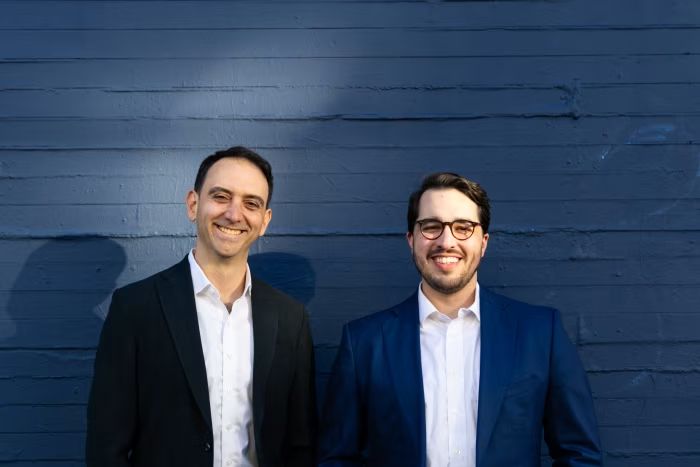
Founded in 2024 by Chief Executive Officer Alex Salazar and Chief Technology Officer Sam Partee—a former principal applied engineer at Redis—Arcade.dev pivoted to address this structural challenge through direct trial and error. The team initially engineered an internal diagnostic agent to troubleshoot server errors. However, they quickly realized that because the diagnostic script required super-user root access across multi-tier software environments, corporate compliance departments would never permit real-world enterprise deployment.
To resolve this bottleneck, the co-founders structurally separated the internal reasoning layer from the active execution layer. This structural design ensures that an AI agent receives matching user permissions only for the specific micro-action it is executing at that precise second, completely eliminating standing privileges and dangerous service accounts.
Standardizing Governance via the Model Context Protocol
Arcade.dev has established itself as an essential infrastructure player by co-authoring the Model Context Protocol (MCP) authorization specification, an open-source standard officially launched by Anthropic to regulate how AI models interact with software tools. The startup builds specialized MCP servers pre-configured with standardized enterprise governance, real-time policy enforcement, and comprehensive audit logging.
Furthermore, the company's architecture can run natively inside a client's private cloud infrastructure. This deployment flexibility allows global banking and security operations to utilize advanced AI workflows while bypassing traditional third-party data compliance risks. The platform's tool call volume has surged 25x over the past six months, with active deployments across major financial institutions, global investment firms like Prosus, and developer platforms including LangChain.
Official Sources Section
Investment details, platform utilization statistics, and corporate governance updates contained in this report were verified through official press statements from Arcade.dev, strategic investment notices from Morgan Stanley, corporate press releases issued by Wipro, and regulatory technology filings compiled by The Wall Street Journal.
Quote Section
"Agents don't fail in production because the core large language model is wrong," stated Arcade.dev Co-founder and CEO Alex Salazar. "They fail because corporate security teams cannot definitively prove that for any given action by an automated agent, that specific agent has explicit permission from the underlying human user to access that particular resource. That is the exact enterprise wall we built our system to overcome."
"Every wave of enterprise software eventually hits the same wall where adoption outruns the security infrastructure," stated Jay Leek, Managing Partner at SYN Ventures. "AI agents are at that exact wall right now, and Arcade is the only infrastructure provider engineered for this production reality from day one."
Why It Matters
For corporate IT executives and compliance officers, Arcade.dev’s infrastructure provides the security framework required to safely transition autonomous systems out of isolated development sandboxes and into revenue-generating workflows. For employees and end-users, the platform generates immutable, transparent audit logs that clearly distinguish an autonomous agent's localized errors from human intent. This safeguard delivers necessary governance protection and liability coverage across highly regulated industries like fintech, healthcare, and enterprise enterprise consulting.
Key Facts at a Glance
Capitalization Acceleration: Arcade.dev raised $60 million in Series A funding, bringing its total institutional backing to $72 million.
Consortium Leadership: The round was led by cybersecurity specialist SYN Ventures, with strategic financial backing from Morgan Stanley and Wipro.
Protocol Pioneers: The startup co-authored the Model Context Protocol (MCP) authorization framework, which has been integrated into Anthropic's enterprise ecosystem.
Surging Adoption: Driven by heightened corporate demand for autonomous agent governance, Arcade.dev's active tool call volume exploded 25x over a six-month period.
FAQ Section
1. What unique problem does Arcade.dev solve for enterprise AI?
Arcade.dev provides a secure action layer that explicitly manages, authorizes, and audits the exact steps an autonomous AI agent takes inside corporate applications. This prevents agents from overstepping their boundaries, abusing system privileges, or exposing sensitive corporate data.
2. What is the Model Context Protocol (MCP) mentioned in the funding?
The Model Context Protocol is an open-source development standard designed to govern how artificial intelligence models connect to external business applications, databases, and APIs. Arcade.dev co-authored the authorization specifications for this protocol.
3. How does Arcade.dev prevent security risks when an AI agent hallucinates?
By enforcing a zero-trust architecture, the platform restricts the agent's active permissions exclusively to the task at hand. If an agent hallucinates or attempts an unapproved action, Arcade.dev detects the anomaly, blocks the unauthorized command, and logs the event for administrative compliance review.
Source: The Wall Street Journal, Business Wire Corporate Feed, and Morgan Stanley Strategic Ventures.