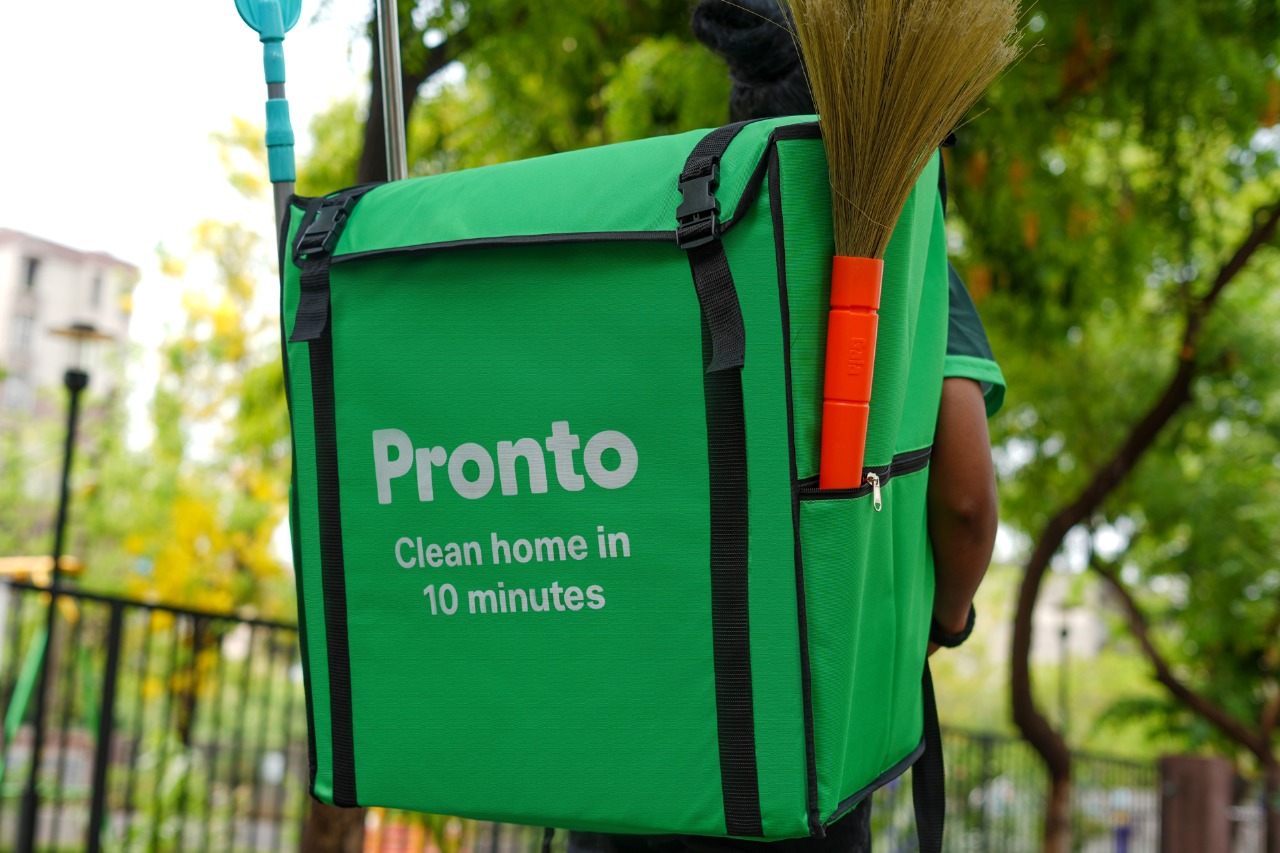
India’s quick commerce wave has a new contender—and it’s not delivering groceries, but domestic help. Gurugram-based home services startup Pronto has raised $11 million in a Series A round co-led by General Catalyst and Glade Brook Capital, with continued backing from Bain Capit...
India’s quick commerce wave has a new contender—and it’s not delivering groceries, but domestic help. Gurugram-based home services startup Pronto has raised $11 million in a Series A round co-led by General Catalyst and Glade Brook Capital, with continued backing from Bain Capital Ventures. The funding marks a major leap for the company’s mission to bring trained, verified household help to your doorstep in under 10 minutes.
Here’s a detailed breakdown of the funding, expansion plans, and what makes Pronto a standout in the fast-growing instant services space.
Key highlights from the funding round:
- Pronto raised $11 million in Series A funding
- Valuation jumped to $45 million post-round
- Investors include General Catalyst, Glade Brook Capital, and Bain Capital Ventures
- Funds will fuel expansion into Mumbai, Bengaluru, and other metros
- Startup aims to onboard 10,000 new workers and build micro-hubs for rapid service
What is Pronto?
Founded in 2024 by Anjali Sardana, Pronto operates as a real-time household help platform. It connects users with trained professionals for tasks like cleaning, laundry, utensil washing, and basic cooking. The company promises sub-10-minute fulfilment through hyperlocal hubs and a shift-based model that guarantees predictable income for workers.
Unlike aggregator platforms, Pronto owns the entire labour supply chain—from recruitment and training to scheduling and performance management. This control allows it to offer consistent service quality and rapid response times.
Expansion strategy
Currently operating in Gurugram with six hubs and two training centres, Pronto processes between 1,000 and 2,000 orders daily. With the new capital, the company plans to:
- Launch operations in Mumbai and Bengaluru within 12 to 18 months
- Set up micro-hubs in residential clusters to maintain fast fulfilment
- Train and onboard 10,000 additional professionals
- Invest in real-time operations technology and quality assurance systems
The startup has also completed a strategic shift in its corporate structure, moving its domicile from Delaware, US, to India. This decision was made to avoid future tax complications and align with its India-focused operations.
Business model and pricing
Pronto charges customers based on tasks completed rather than time spent. The average order value ranges between ₹200 and ₹300. This model addresses two major pain points:
- For households: unpredictable availability and lack of trust
- For workers: irregular income and informal employment
Each worker undergoes background verification and training, ensuring readiness for instant task fulfilment. The platform offers three types of bookings—instant (under 10 minutes), scheduled, and recurring.
Competitive landscape
Pronto is part of a growing quick commerce home services segment. Competitors include:
- Snabbit, backed by Lightspeed, which raised $19 million in May
- Pync, a Bengaluru-based instant services startup
- Urban Company, which recently launched InstaHelp for rapid household services
Despite the competition, Sardana remains focused on category creation. She notes that fewer than 15,000 people in India use organised home-help services daily, making the market largely untapped.
Challenges ahead
While Pronto’s model is promising, rapid expansion comes with risks:
- Oversupply during new launches increases operational costs
- High-frequency, low-ticket services require consistent demand generation
- Balancing workforce utilisation is key to maintaining margins
Conclusion: A new frontier in urban convenience
Pronto’s latest funding round signals strong investor confidence in the future of instant home services. With a scalable model, deep operational control, and a clear roadmap for expansion, the startup is well-positioned to redefine how urban India manages household chores.
Sources: Moneycontrol, Economic Times, YourStory, TechCrunch, MSN India