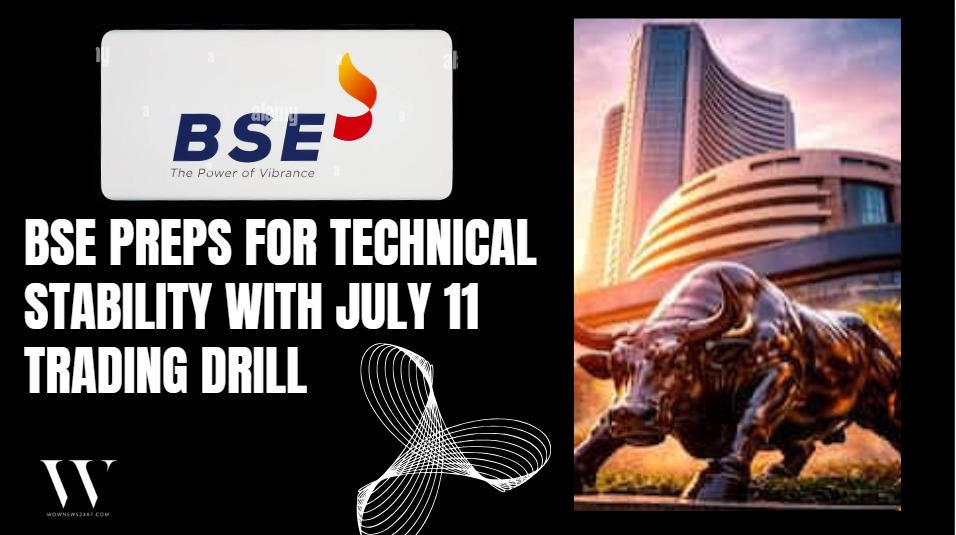
The Bombay Stock Exchange (BSE) will hold a mandatory mock trading session on July 11, 2026, to test its disaster recovery systems. The drill will cover equity and derivative segments, ensuring that brokerage platforms remain stable and operational in the event of a primary site failure.
MUMBAI — The Bombay Stock Exchange (BSE), India’s premier stock exchange, has announced it will conduct a mock trading session on Saturday, July 11, 2026. The exercise is designed to test the exchange’s technical infrastructure, including its disaster recovery site, across the equity, equity derivatives, and currency derivatives segments.
This routine technical drill is part of the exchange's ongoing commitment to ensuring market resilience. By simulating real-world trading conditions, the BSE allows brokers and market participants to verify their connectivity and order execution systems without affecting live market operations.
Scope of the Trading Drill
According to the official circular issued by the BSE, the mock trading session will cover multiple segments. Participants are expected to log in and test their trading terminals to ensure they can connect to the disaster recovery site seamlessly.
The segments included in the mock session are:
Equity Segment: Including cash and F&O.
Equity Derivatives: Futures and options trading.
Currency Derivatives: Currency pairs and cross-currency options.
This session is mandatory for all trading members using algorithmic trading platforms, as these systems must be thoroughly tested for compliance and performance under simulated failover scenarios.
Purpose of Disaster Recovery Testing
The BSE frequently conducts these mock sessions to satisfy regulatory requirements set by the Securities and Exchange Board of India (SEBI). The objective is to maintain a robust financial market environment where technical glitches are minimized, even in the event of unexpected system interruptions at the primary data center.
By migrating operations to the disaster recovery site during the mock session, the exchange verifies that all critical trading data is synchronized and that market participants can continue trading with minimal disruption.
Official Sources
According to the BSE technical notice, all trading members are required to clear their cache and update their software before initiating the connection to the test environment. "According to officials," the exchange maintains that such proactive testing is vital to upholding the integrity of India’s capital markets and protecting the interests of the broader investor base.
Why It Matters
For investors and traders, these mock sessions ensure that the underlying technology powering the stock market remains reliable. While individual investors do not directly participate in these sessions, the stability of the BSE platform directly affects their ability to execute trades during standard market hours. By identifying and resolving technical bottlenecks in a controlled environment, the exchange reduces the risk of market-wide technical failures that could halt trading activity.
Key Facts at a Glance
Event: BSE Mock Trading Session.
Date: Saturday, July 11, 2026.
Segments Covered: Equity, Equity Derivatives, and Currency Derivatives.
Requirement: Mandatory for algorithmic trading members.
Goal: Testing disaster recovery infrastructure for system resilience.
FAQ
What is a mock trading session?
It is a simulated trading environment provided by the exchange to allow brokers and participants to test their systems, connectivity, and software without involving real money.
Are these sessions open to all investors?
These sessions are primarily intended for trading members (brokers) and institutions to test their connectivity and technical systems with the exchange's disaster recovery site.
Will actual money be used?
No, all trades executed during a mock session are for testing purposes only and have no financial impact on the markets.
Why does the BSE conduct these drills?
To comply with SEBI regulations and to ensure that the exchange’s infrastructure is capable of handling failures at the primary site by switching to the disaster recovery site.
Source: Bombay Stock Exchange (BSE), Securities and Exchange Board of India (SEBI)