Yuncheng, China, has implemented a sensor-controlled "rooftop rain" misting system on high-rise buildings to combat extreme heat. By spraying fine water droplets that evaporate rapidly, the system cools surrounding air by 5–8°C. This energy-efficient technology offers a practical, automated solution to urban heat islands, though its viability depends on sustainable water management.
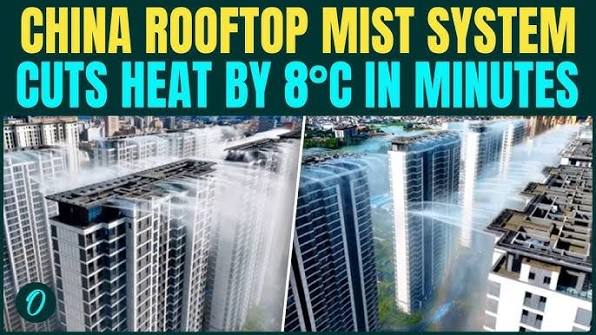
YUNCHENG — Residential high-rises in Yuncheng, located in northern China's Shanxi Province, have introduced a unique “rooftop rain” system designed to mitigate the effects of extreme summer temperatures. The system, which releases a fine, sensor-controlled water mist from building tops, can reduce local air and surface temperatures by 5°C to 8°C within minutes, providing relief to residents and pedestrians during the ongoing heat wave.
The technology, which has recently gained international attention through viral social media footage, functions as an “outdoor air conditioner” for densely populated apartment complexes. By utilizing high-pressure nozzles to create ultra-fine water droplets, the system leverages the physical principle of evaporative cooling to absorb heat from the surrounding environment.
The Science of 'Rooftop Rain'
The effectiveness of the system relies on the rapid evaporation of water droplets in hot, dry air. As these microscopic droplets turn into vapor, they absorb thermal energy from the atmosphere, effectively lowering the ambient temperature. Because the droplets are exceptionally fine, they evaporate almost instantly before reaching street level, ensuring that roads and pedestrians remain dry while the immediate vicinity experiences a noticeable drop in heat.
According to reports from local media, the system is fully automated. Sensors trigger the activation of high-pressure pumps and nozzles when temperatures exceed specific thresholds, such as 38°C. This eliminates the need for manual operation and allows the building management to respond precisely to peak heat periods throughout the day.
Addressing Urban Heat Islands
The deployment of this misting technology is part of a broader effort in Chinese cities to combat the “urban heat island” effect, where dense concrete infrastructure, asphalt roads, and limited green cover cause urban areas to retain significantly more heat than surrounding rural regions.
“The mist cooling system installed on the roof lowers the surface temperature of the building by 5 to 8 degrees in a few minutes,” officials noted in recent updates. Similar misting networks have been utilized for years in China’s public parks, squares, and bus stops, but their scaling to residential high-rises marks a significant shift in urban heat adaptation strategy.
Economic and Sustainability Considerations
Compared to conventional air-conditioning systems, which rely on energy-intensive compressors and chemical refrigerants, the rooftop misting system is significantly more energy-efficient. It primarily requires water, high-pressure pumps, and electrical sensors, making it a cost-effective solution for large-scale outdoor cooling.
However, the technology has sparked discussions regarding water conservation. While proponents argue that the mist evaporates so rapidly that water consumption remains relatively low, environmental experts suggest that long-term viability will depend on regional water availability, particularly in drought-prone or arid areas where water management is critical.
Why It Matters
As global temperatures reach new highs, urban centers are increasingly searching for energy-efficient ways to protect residents from heat-related health risks. The Yuncheng “rooftop rain” system provides a practical, scalable model for cities to manage outdoor thermal comfort without placing an additional burden on the electrical grid, which is often strained during peak summer demand.
Key Facts at a Glance
Performance: Lowers local ambient and surface temperatures by 5°C to 8°C within minutes.
Mechanism: Sensor-controlled evaporative cooling via high-pressure misting nozzles.
Energy Efficiency: Significantly lower electricity consumption compared to traditional refrigerant-based air conditioning.
Operating Conditions: Most effective in hot, dry environments where fine mist can evaporate rapidly.
Frequently Asked Questions
Does the mist make streets and pedestrians wet?
No. The water droplets are fine enough to evaporate before reaching the ground, cooling the air rather than soaking the surroundings.
Why is it called 'rooftop rain'?
The system creates a visual phenomenon where white clouds of mist drift down from high-rise roofs, mimicking the appearance of rain in clear-sky conditions.
Is this system intended to replace indoor air conditioning?
No. It is designed to relieve outdoor areas, building facades, and public circulation zones, serving as a supplement to indoor cooling methods.
Source: India Today, Sigma Earth, Business Today