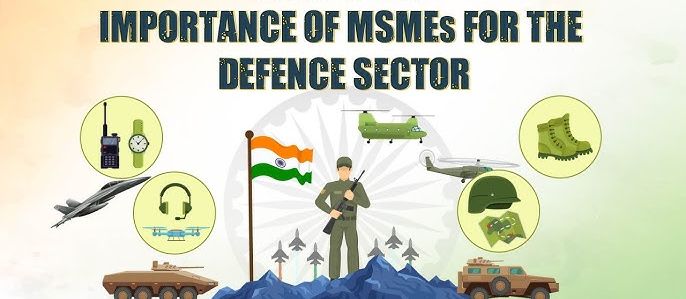
India is aggressively integrating MSMEs into its defence manufacturing sector to achieve strategic self-reliance and meet ambitious 2030 production goals. Through initiatives like iDEX and dedicated Defence Industrial Corridors, the government is providing small enterprises with necessary funding, testing facilities, and procurement incentives to drive critical innovation in strategic technologies.
As India pushes toward a ₹3 lakh crore domestic defence production target by 2030, Micro, Small, and Medium Enterprises are being called upon to become the backbone of the nation's strategic self-reliance.
NEW DELHI — The landscape of India's defence manufacturing is undergoing a structural shift, with the government intensifying its drive to integrate Micro, Small, and Medium Enterprises (MSMEs) into the core of the nation's security ecosystem. Following the National Defence Industries Conclave (NDIC) 2026, policy experts and government officials have issued a clarion call for these agile enterprises to move beyond peripheral component supply and evolve into prime integrators for high-value strategic projects.
With a record-breaking ₹7.85 lakh crore allocated to the Ministry of Defence in the Union Budget 2026-27, the government is creating an unprecedented fiscal runway for domestic industry. For India’s roughly 8,000 defence-focused MSMEs, this represents more than just a procurement opportunity; it is a mandate to drive innovation in critical fields such as artificial intelligence, robotics, and advanced materials.
Bridging the Technology Gap
The government's strategy hinges on a "three-pronged approach" announced earlier this year, designed to provide MSMEs with the equity, liquidity, and professional support needed to thrive in the high-stakes defence market. According to officials, this support is vital for transforming MSMEs into "Champion MSMEs" capable of meeting the stringent quality standards required for global exports.
Key Strategic Drivers
Innovation Ecosystems: Through initiatives like iDEX (Innovations for Defence Excellence) and ADITI, the Ministry of Defence is funding startups and small firms to develop novel solutions for specific armed forces' requirements.
Defence Industrial Corridors: Specialized hubs in Uttar Pradesh and Tamil Nadu are fostering cluster-based development, bringing together testing facilities, research institutions, and manufacturing units to reduce logistical bottlenecks.
Simplified Procurement: Recent policy reforms include reservation of orders up to ₹100 crore per year exclusively for MSMEs and fast-track payment mechanisms to alleviate the financial strain often faced by smaller suppliers.
Why It Matters
For India, the participation of MSMEs is a matter of strategic autonomy. By reducing dependence on foreign Original Equipment Manufacturers (OEMs), the country can secure its supply chains against global geopolitical instability. For MSMEs, the transition into defence provides a stable, long-term market that rewards precision engineering and technological adaptation.
"MSMEs and start-ups are the brand ambassadors of innovation," noted Raksha Rajya Mantri Shri Sanjay Seth during the NDIC 2026 valedictory session. Their ability to rapidly prototype and adopt Industry 4.0 technologies—such as 3D printing and AI-driven predictive maintenance—is seen as the primary catalyst for India achieving its target of ₹50,000 crore in defence exports by 2030.
Key Facts at a Glance
Industry Base: Approximately 8,000 MSMEs are currently active in the defence manufacturing sector.
Budgetary Push: A record ₹7.85 lakh crore Union Budget allocation for 2026-27 provides the capital framework for this expansion.
Export Goal: India aims to achieve ₹50,000 crore in defence exports by 2030, with MSMEs playing a critical role in reaching this milestone.
Innovation Funding: Schemes like the Technology Development Fund (TDF) offer up to ₹10 crore per project for indigenous R&D.
Frequently Asked Questions
What specific benefits are available for MSMEs entering the defence sector?
MSMEs benefit from reservation policies for orders up to ₹100 crore, access to testing facilities via Defence Industrial Corridors, and dedicated funding through platforms like iDEX and the Technology Development Fund (TDF).
How can an MSME get started in defence manufacturing?
Interested firms are encouraged to register on the Udyam portal, attend major defence expos like DefExpo or Aero India, and leverage government platforms like the Defence Investor Cell for guidance on procurement and certification.
What is the role of iDEX in this ecosystem?
iDEX acts as a commercialization engine, connecting innovators with the defence establishment. It provides grants, mentorship, and a direct path to procurement for successful prototypes, democratizing defence innovation.
Source: Ministry of Defence (PIB), Invest UP, Vision IAS, Vajiram & Ravi