Bharat Tex 2026, held at New Delhi’s Bharat Mandapam, showcases India's textile sector as a core component of its Vision 2030 roadmap. Through the "5F" initiative, the government aims to grow the industry into a $350 billion powerhouse by fostering sustainable innovation, massive investment, and deeper integration into global supply chains.
Bharat Tex 2026 has opened in New Delhi, serving as a cornerstone for India’s Vision 2030 roadmap to transform the nation into a $350 billion global textile powerhouse.
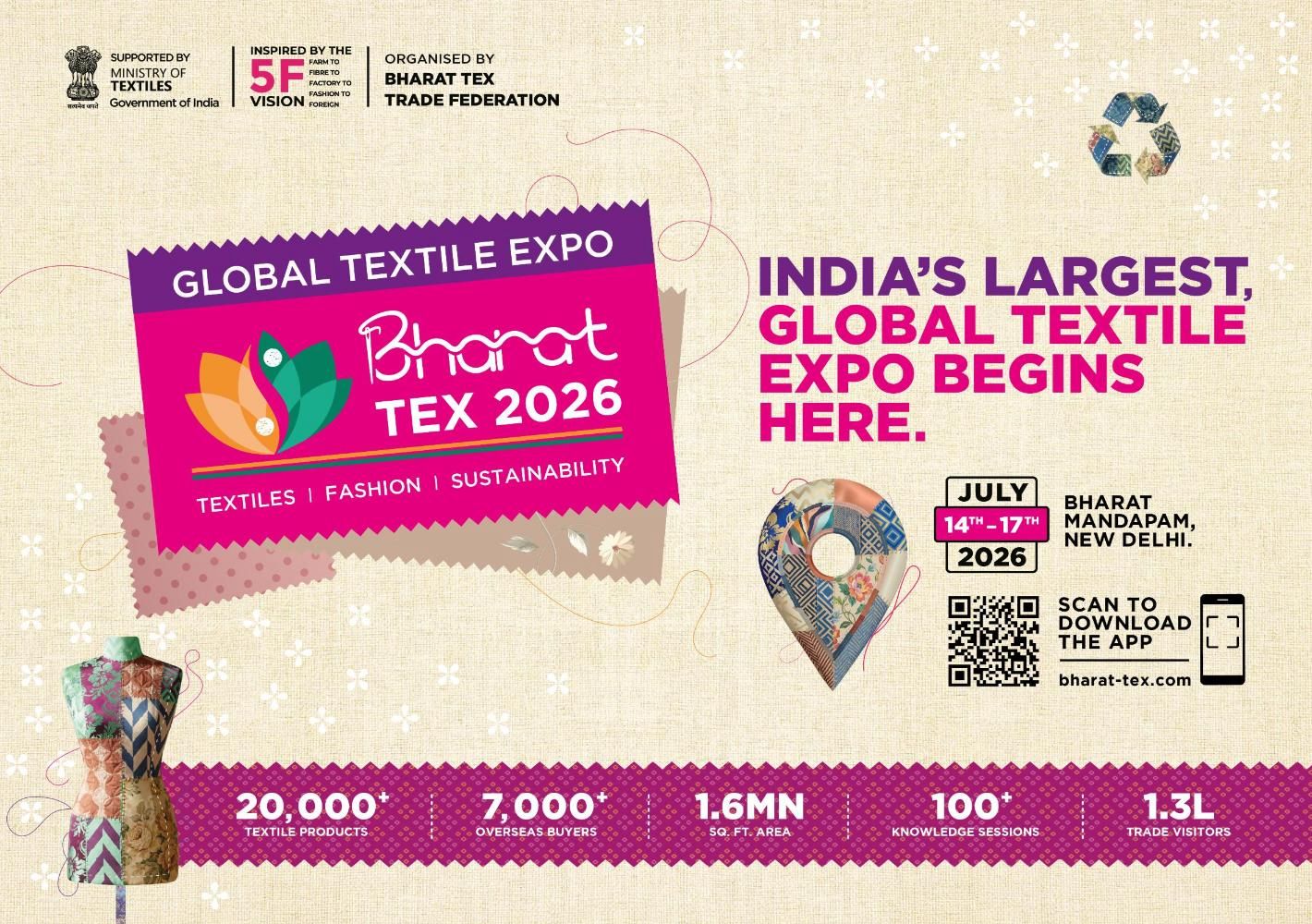
NEW DELHI — As the curtains rose on Bharat Tex 2026 at the iconic Bharat Mandapam, the event underscored India’s surging manufacturing strength and its strategic commitment to becoming a dominant force in the global textile landscape. Running from July 14 to July 17, 2026, the exposition has brought together the complete textile value chain, from raw fibre to global fashion, under a single, unified platform.
Prime Minister Narendra Modi recently highlighted the event as a reflection of India's manufacturing prowess and its long-term Vision 2030 roadmap. By integrating traditional craftsmanship with cutting-edge technology, the government aims to scale the domestic textile industry into a $350 billion powerhouse, supporting the broader objective of achieving a Viksit Bharat (Developed India) by 2047.
The 5F Vision: A Blueprint for Growth
Central to this industrial strategy is the Prime Minister's "5F" vision: Farm to Fibre to Factory to Fashion to Foreign. This integrated approach is designed to:
Empower the Supply Chain: Connecting farmers, weavers, and manufacturers to ensure end-to-end efficiency.
Attract Investment: The Production Linked Incentive (PLI) scheme has already catalyzed over ₹31,687 crore in investment commitments, specifically targeting man-made fibres, technical textiles, and high-value apparel.
Promote Sustainability: In an era of "fast fashion waste," India is positioning itself as a leader in textile recycling and up-cycling, turning ecological challenges into economic opportunities.
A Global Stage for Indian Excellence
Bharat Tex 2026 has witnessed record international participation, hosting over 6,000 buyers from more than 130 countries and 1.3 lakh trade visitors. The exhibition spans 1.6 million square feet, showcasing the diversity of India’s renowned textile clusters—such as Tirupur, Ichalkaranji, and Ahmedabad—to a global audience.
"Bharat Tex 2026 represents a carefully designed industrial strategy," said Union Minister of State for Textiles Pabitra Margherita. "It showcases the country's manufacturing strength, rich textile heritage, and growing global presence, effectively connecting Indian artisans and innovators with world markets".
Why It Matters
For India’s economy, the textile sector is more than just a craft; it is a critical pillar of macroeconomic architecture, contributing approximately 2.3% to the national GDP and 8.6% to total exports. By fostering international partnerships and focusing on Industry 5.0 and sustainable innovation, Bharat Tex 2026 aims to:
Strengthen Export Competitiveness: Helping MSMEs and first-time exporters navigate global supply chains.
Drive Technological Integration: Leveraging AI and advanced manufacturing to enhance productivity while preserving traditional handloom authenticity.
Scale Sustainable Manufacturing: Establishing India as a reliable, green sourcing destination for global fashion brands.
Key Facts at a Glance
Event Dates: July 14–17, 2026, at Bharat Mandapam, New Delhi.
Scale: Over 1,600 exhibitors showcasing more than 20,000 textile products.
Vision 2030 Goal: Transforming the industry into a $350 billion global powerhouse.
Policy Catalyst: PLI Scheme with over ₹31,687 crore in committed investments.
Frequently Asked Questions
What is the core objective of Bharat Tex 2026?
It aims to showcase India's complete textile value chain, attract global investment, and strengthen the country's position as a sustainable sourcing destination under the Vision 2030 roadmap.
How does the "5F" vision impact the sector?
The 5F vision (Farm to Fibre to Factory to Fashion to Foreign) serves as a holistic growth strategy to streamline production, enhance export quality, and provide better opportunities for farmers and artisans.
What role does sustainability play in this event?
Sustainability is a key focus, with sessions dedicated to circular economy practices, waste minimization, and leveraging India’s traditional recycling skills to lead in the global recycled textile market.
Source: Press Information Bureau (Ministry of Textiles), Bharat Tex Official Portal, DD News