Key Highlights
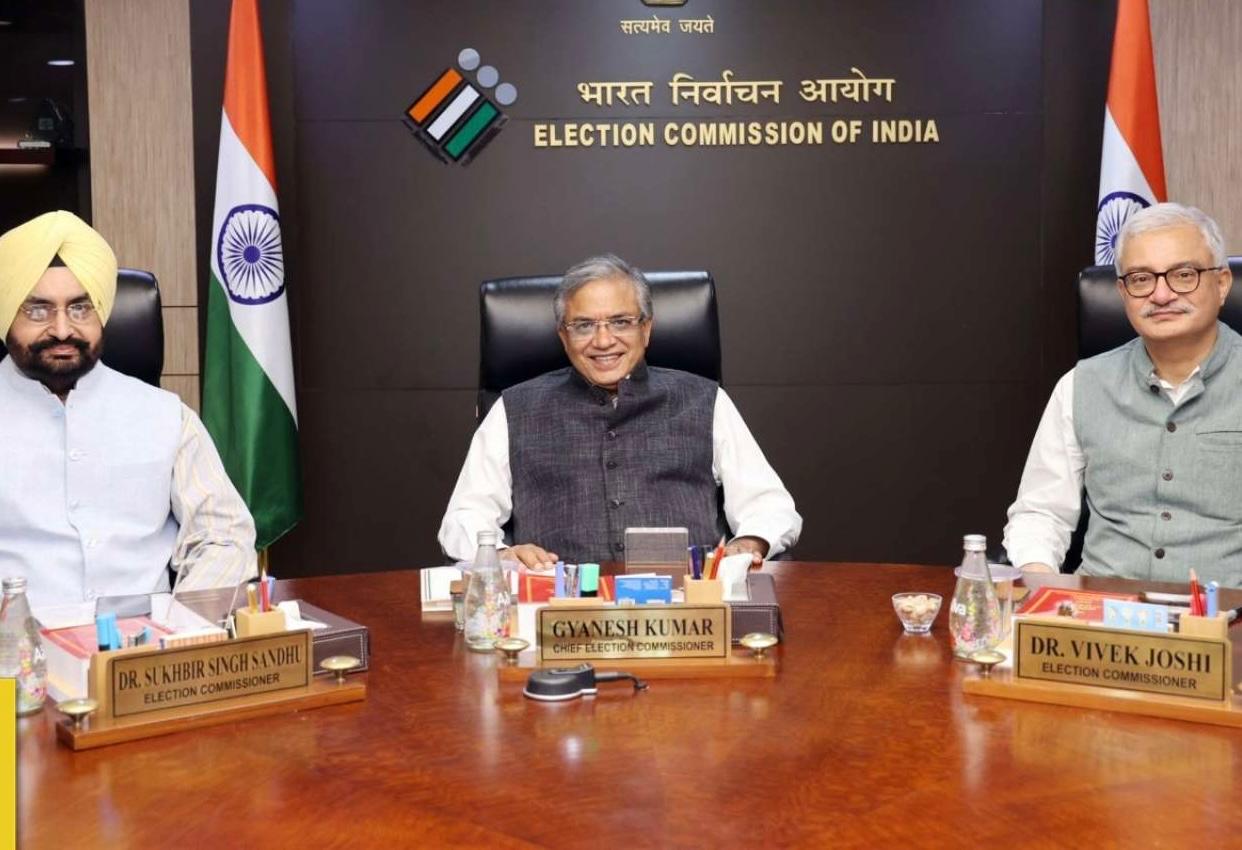
The Election Commission of India (ECI) is set to launch a nationwide overhaul of the voter list through a process called Special Intensive Revision (SIR), following the precedent set by a controversial but constitutionally backed voter list revision in Bihar
&nbs...
Key Highlights
The Election Commission of India (ECI) is set to launch a nationwide overhaul of the voter list through a process called Special Intensive Revision (SIR), following the precedent set by a controversial but constitutionally backed voter list revision in Bihar
The purpose of the revision is to cleanse the electoral rolls by removing ineligible voters such as deceased individuals, duplicate registrations, and foreign nationals, while adding those newly eligible or previously omitted to ensure an accurate and transparent democratic exercise
The revision involves a house-to-house verification exercise to re-register voters afresh, collecting authentic proof of citizenship and place of birth, effectively re-creating electoral rolls to reflect current demographics and migration patterns
This exercise is being conducted under the authority of Section 21 of the Representation of the People Act, 1950, which empowers the ECI to prepare and revise electoral rolls and is distinct from the routine annual summary revisions
The drive has sparked political controversy and legal challenges, especially in Bihar and potentially other states like West Bengal, but has been upheld by the Supreme Court as constitutional and essential to maintain electoral integrity
Understanding the Revision Types: Why Special Intensive Revision?
Electoral roll revision is a regular electoral management activity to maintain updated voter lists but comes in several forms:
Summary Revision: Usually annual, involves updating the rolls by inviting corrections, deletions, and additions based on claims and objections. This is a less intensive process relying on published lists and public feedback.
Intensive Revision: A more thorough process where election officials conduct door-to-door verification to identify errors, duplicate names, and unverifiable entries.
Special Intensive Revision (SIR): A de novo and stringent revision where the existing roll is discarded, and the voter list is rebuilt from scratch. This is invoked when large-scale errors or anomalies are detected or suspected, as was the case in Bihar.
The ongoing SIR in Bihar revealed that around 35.5 million names are being dropped for reasons including death (around 12.5 million), migration (17.5 million), duplication, or non-verifiable identity. It also uncovered names of foreign nationals from Nepal, Bangladesh, and Myanmar who had produced documents like ration cards or domicile certificates leading to their wrongful inclusion, thus highlighting the critical need for this overhaul.
Why Is the Overhaul Necessary?
Accurate electoral rolls are fundamental to free, fair elections and democracy’s legitimacy. Over time, voter lists may grow bloated or outdated due to:
Deaths not being promptly removed
Migrants or relocated voters being counted incorrectly in multiple locations or none at all
Fraudulent inclusions of non-citizens or multiple registrations
New voters who have become eligible not being added promptly
This leads to inflated or inaccurate rolls that may be exploited for electoral malpractice and undermine voter confidence. The current overhaul aims to:
Remove such anomalies and ineligible voters to prevent manipulation
Ensure that the voter list reflects the latest demographic and geographic realities
Facilitate smooth and credible elections especially in the run-up to multiple state and national polls in 2025-26
Strengthen democratic integrity by requiring proof of Indian citizenship, making electoral fraud more difficult
The Process: How Will Voter List Overhaul Be Carried Out?
The Special Intensive Revision involves multiple steps with extensive manpower deployment:
Booth-level officers and enumerators visit every household to verify voters personally
Voters are required to submit documentary proof such as voter ID, Aadhaar card, ration card, or citizenship proof to establish eligibility
Data collected is cross-checked to identify duplication and discrepancies
Draft lists are published for public scrutiny, allowing claims and objections
Final rolls are published after corrections, becoming the basis for upcoming elections
This house-to-house verification contrasts with earlier methods that relied mostly on administrative data and occasional public challenges, aiming for thoroughness.
Controversy and Legal Challenges
The SIR exercise has not been without opposition. Political parties and civil society groups have expressed concerns that it might disenfranchise legitimate voters, be politically motivated, or impose undue hardships, especially in states with high migration.
In Bihar, opposition parties have challenged the exercise in the Supreme Court, fearing it disproportionately targets certain communities or regions
Critics point to the suddenness and scale of the revision, potential lapses in communication, and the challenge for voters to produce documentary proof
The Supreme Court has so far upheld the constitutional validity of the exercise, emphasizing the ECI’s mandate to maintain clean and accurate rolls while directing careful implementation and safeguards against exclusion of bona fide voters
Potential Nationwide Expansion
Following Bihar’s example, the ECI is expected to consider rolling out similar Special Intensive Revisions to other states with indications of outdated or distorted rolls, such as West Bengal. However, the final decision is closely linked to ongoing Supreme Court hearings and political consultations.
What Voters Should Know and Do
Voters must be vigilant to verify their names on draft voter lists when released, participate in claims and objections processes if errors exist
It is crucial to keep identity and citizenship documents ready and ensure timely submission to enumerators during the house visits
The revision exercise offers an opportunity for voters to clean and update the electoral register, improving electoral participation and trust
Conclusion
The Election Commission’s nationwide voter list overhaul exercise initiated through Special Intensive Revision represents a significant and necessary step to ensure India’s democratic foundations remain strong and credible. By removing ineligible entries and adding rightful voters through a house-to-house re-verification and re-registration, the EC aims to provide a robust, accurate electoral roll aligned with constitutional mandates.
While the process faces political and legal scrutiny, it is framed as essential for upholding the sanctity of elections, preventing fraud, and enhancing voter confidence ahead of critical state and national polls in 2025-26.
Sources: NDTV, Hindustan Times