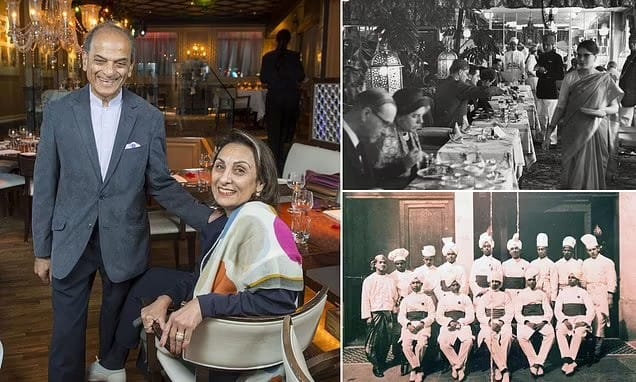
The operators of Veeraswamy, the UK's oldest Indian restaurant, are fighting an eviction attempt by the Crown Estate in court. Management warns that the landlord's refusal to renew the lease to expand an office foyer is hitting British taxpayers through costly litigation and lost rental revenues.
LONDON, United Kingdom — The managing director of the United Kingdom's oldest Indian restaurant has escalated a high-profile legal standoff with the Crown Estate, asserting that the independent property portfolio's aggressive campaign to close the historic venue is financially damaging British taxpayers. Veeraswamy, a Michelin-starred culinary institution operating on London's iconic Regent Street since 1926, is currently fighting a forced eviction after its commercial landlord declined to renew its annual lease. The escalating property dispute has moved from public petitions directly to the Central London County Court. The restaurant's parent firm publicly states that the Crown Estate’s rigid refusal to accommodate the heritage brand is actively draining millions of pounds in public funds through accumulated legal fees and uncollected rental revenues.
Refurbishment Plans and Inverted Financial Logic
At the core of the legal dispute is a year-long impasse over the structural future of Victory House, the Grade II listed building housing the restaurant. The Crown Estate, which manages a vast land and property portfolio on behalf of the reigning monarch to generate revenue for the UK Treasury, refused to extend Veeraswamy's £205,000-a-year lease. Landlord representatives state that an eviction is necessary to facilitate a comprehensive, multi-million-pound refurbishment of the building's upper-floor commercial offices, which have sat completely vacant since a severe flood disrupted their main electrical power grid in 2023.
The Crown Estate's engineering blueprint requires knocking down the existing structural wall that separates Veeraswamy's ground-floor entrance from the primary office foyer. By combining these spaces, the property group aims to create a larger, high-end reception area designed to significantly raise the rental premium charged to future office tenants.
However, MW Eat, the parent company overseeing Veeraswamy, strongly challenges the financial sense of this strategy. Company management presents structural evidence indicating that specialized contractors frequently complete major office overhauls across the UK without displacing long-term commercial occupants on the lower levels. To resolve the deadlock, the restaurant offered to share the expanded entrance with incoming office workers and promised to fully match the increased rental rates projected by the Crown Estate. Despite these financial concessions, the property firm rejected both compromise options.
Heritage Loss and Economic Strain on Taxpayers
The restaurant's management has drawn sharp public attention to the broader financial consequences for the state budget. Because the Crown Estate surrenders its net annual revenues directly to the HM Treasury to fund public services and determine the monarch's Sovereign Grant, any extended vacancy or unnecessary litigation costs land squarely on British taxpayers. MW Eat argues that by forcing out an established, profitable business that pays substantial taxes and premium rent, the landlord is mismanaging public resources.
Beyond the immediate financial friction, the closure threatens a cornerstone of British-Indian cultural history. Founded in 1926 by Edward Palmer, an Anglo-Indian retired officer, Veeraswamy popularized high-end Indian cuisine in Europe and is widely credited with introducing the enduring British cultural tradition of pairing a cold beer with a hot curry. Over its 100-year history, its dining tables have hosted global figures including Winston Churchill, Mahatma Gandhi, Jawaharlal Nehru, Charlie Chaplin, and Queen Elizabeth II.
The threat of closure has provoked a widespread backlash from the hospitality industry. Prominent Michelin-starred chefs, food critics, and heritage preservation societies have publicly condemned the Crown Estate's stance. A public petition titled "Save Veeraswamy" garnered over 20,000 signatures and was formally delivered by hand to Buckingham Palace earlier this year in an attempt to prompt royal intervention.
Official Sources Section
The corporate positions, building asset status, and judicial filings cited in this report are verified through court dockets at the Central London County Court and public corporate statements from The Crown Estate. Operational timelines and historical data are cross-referenced with registries from the British Library and official press briefs issued by MW Eat Management.
Quote Section
"The company challenges the financial arguments made by the Crown Estate, as the dispute is costing the British taxpayer millions of pounds in lost rent and legal fees," stated Ranjit Mathrani, co-owner of MW Eat, during a pre-hearing briefing. "Even at this late stage, we would urge the government to consider intervening on behalf of Indian cuisine—the country's soft power in the UK."
Why It Matters
The legal clash sets a significant precedent for how historic commercial properties are treated during urban redevelopment projects. If a government-backed property firm can displace a profitable, century-old cultural landmark to maximize future office rents, independent hospitality businesses face a more precarious future. For taxpayers, the case highlights how rigid public asset management can lead to expensive litigation and lost tax revenues at a time of fiscal tightening.
Key Facts at a Glance
The Conflict: Veeraswamy, the UK’s oldest Indian restaurant, faces eviction after its landlord, the Crown Estate, refused to renew its commercial lease.
The Reason: The landlord plans to convert the ground-floor entrance area into an expanded reception lobby to raise rental rates for upper-floor office spaces.
The Compromise: The restaurant's owners offered to match the projected higher rents and share the foyer, but the Crown Estate declined.
The Public Cost: Operators warn the legal battle and resulting vacancy are costing British taxpayers millions in lost revenue and rising legal bills.
Judicial Stage: A decisive five-day civil tenancy hearing convened at the Central London County Court to determine eviction rights.
FAQ Section
Why is the Crown Estate evicting the UK's oldest Indian restaurant?
The Crown Estate wants to clear the space to carry out a comprehensive structural refurbishment of Victory House, which includes merging the restaurant's entrance into a larger reception foyer for office tenants.
Can the restaurant afford to pay higher rent to stay?
Yes. Veeraswamy's parent company formally offered to match the higher rental rates expected from new office tenants and proposed a shared entrance plan, but the offer was rejected.
Who pays for the legal fees in this property dispute?
Because the Crown Estate's profits feed directly into the UK Treasury, the ongoing litigation costs and lost rental income indirectly impact British taxpayers.
Source: Central London County Court Tenancy Dockets, Crown Estate Victory House Refurbishment Briefs, and MW Eat Executive Press Statements.