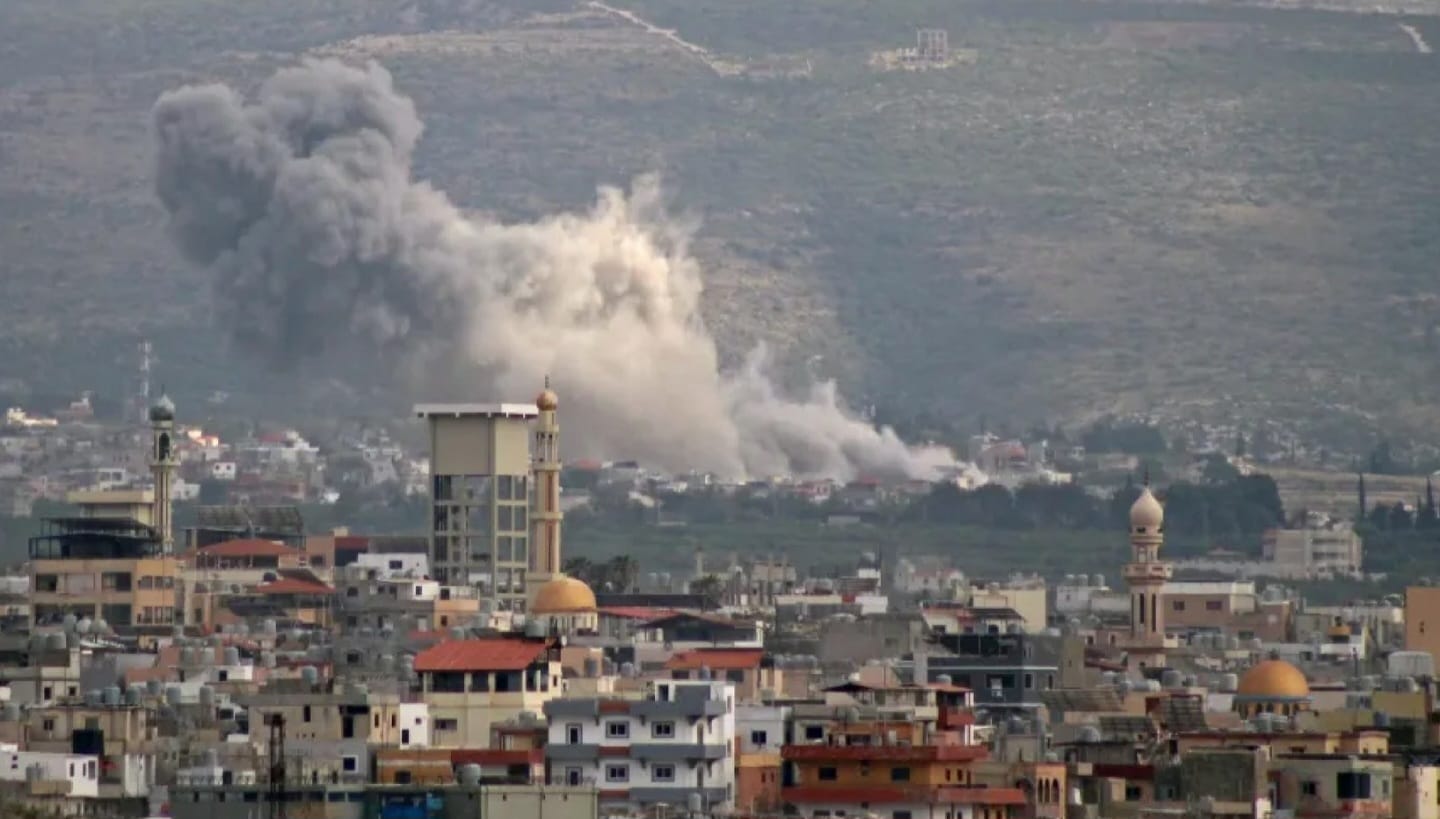
The United States launched heavy airstrikes hitting 140 targets in Iran after an attack on a container ship in the Strait of Hormuz. Tehran retaliated with extensive missile and drone barrages against U.S.-allied Gulf states, including Qatar, Bahrain, and Jordan, causing a dangerous escalation and halting vital global energy shipping.
DUBAI, United Arab Emirates — The United States military launched a massive wave of retaliatory airstrikes across Iran early Sunday, targeting approximately 140 military installations. The heavy bombardments triggered immediate, widespread counterattacks from Tehran’s forces. Iranian ballistic missiles and drones targeted multiple Gulf Arab nations hosting U.S. forces, including Jordan, Bahrain, Qatar, Oman, and the United Arab Emirates, pushing the region into its sharpest escalation in months.
The latest flashpoint erupted after the Islamic Revolutionary Guard Corps (IRGC) disabled a Cyprus-flagged commercial container ship, the M/V GFS Galaxy, in the Strait of Hormuz and subsequently declared the vital maritime chokepoint closed "until further notice". Under orders from U.S. President Donald Trump, U.S. Central Command (CENTCOM) deployed fighter jets, drones, and naval vessels to degrade Iran’s ability to threaten global shipping, fracturing a fragile interim truce that had been signed in mid-June.
CENTCOM Strikes 140 Targets Following Shipping Interdiction
The U.S. military operation commenced late Saturday night in direct response to the IRGC's assault on the GFS Galaxy, which suffered significant engine room damage and left one civilian crew member missing. CENTCOM confirmed its forces systematically struck missile and drone launch networks, ammunition depots, coastal surveillance outposts, and command command structures located primarily across southern Iran and near the capital.
U.S. Defense Secretary Pete Hegseth publicly defended the expansive scope of the campaign, stating online that Iran had "made a poor choice" by violating freedom of navigation principles. President Trump further warned via social media that the U.S. military stood ready to execute broader strikes against Iranian infrastructure if hostilities against commercial mariners continued.
Iran Unleashes Multi-Axis Missiles at U.S. Allies
Following the American bombardment, the IRGC quickly mobilized its missile regiments, conducting multi-wave strikes across the Persian Gulf targeting countries aligned with the West. According to reports from the semi-official Tasnim News Agency, Iranian forces specifically targeted logistics hubs and military bases hosting American personnel, claiming to have hit drone hangars in Jordan and a command facility in Qatar.
Air raid sirens sounded throughout the night in Bahrain, home to the U.S. Navy's 5th Fleet, as defense batteries engaged incoming targets. In Qatar, the Interior Ministry reported that falling shrapnel from successful military interceptions wounded three civilians, including a child. Oman’s state news agency confirmed that rogue drones struck coastal sectors along the Strait of Hormuz, prompting the government to summon Iran's ambassador in an official diplomatic protest.
Official Sources Section
According to official incident reports published by U.S. Central Command (CENTCOM), the multi-zone operation successfully weakened tactical nodes but acknowledged that the Strait of Hormuz remains highly volatile. State releases from the Ministry of Foreign Affairs of Qatar and equivalent ministries in the UAE and Jordan condemned the cross-border strikes, calling the widespread targeting of sovereign Gulf territories a dangerous escalation of the conflict.
Quote Section
"According to officials familiar with the active situation, the Iranian delegation previously engaged in mediated truce talks has hardened its stance. Iran's parliament speaker, Mohammad Bagher Qalibaf, stated publicly through official state channels that the era of one-sided deals is over, declaring that international parties must fulfill past agreements or face continuing consequences."
Why It Matters
The total closure of the Strait of Hormuz and subsequent crossfire poses an immediate threat to the global economy, as roughly one-fifth of the world’s traded petroleum and liquified natural gas moves through this narrow passage. For global oil consumers and energy markets, a prolonged closure will rapidly accelerate crude prices and disrupt international supply chains. Furthermore, the geographical expansion of the war into stable economic hubs like the UAE and Qatar risks drawing foreign investors away from the Middle East and threatens international commercial aviation corridors across the Gulf.
Key Facts at a Glance
U.S. Retaliation: American forces targeted approximately 140 military sites inside Iran using fighter aircraft, drones, and warships.
Chokepoint Closed: The conflict intensified after Iran disabled a Cyprus-flagged vessel and officially declared the Strait of Hormuz closed.
Gulf Nations Struck: Tehran launched missile and drone barrages hitting sectors within Jordan, Bahrain, Qatar, and Oman.
Ceasefire Broken: The heavy exchange effectively derails the fragile, short-lived interim memorandum of understanding signed by Washington and Tehran in mid-June.
FAQ Section
Why did the United States launch strikes against Iran?
The U.S. executed the airstrikes under presidential orders to degrade Iran’s military capabilities after an IRGC attack severely damaged a commercial container ship transiting international waters in the Strait of Hormuz.
Which Gulf countries were targeted by Iranian forces?
Iran launched retaliatory missile and drone waves aimed at locations within Jordan, Bahrain, Qatar, Oman, and the United Arab Emirates, primarily targeting areas hosting U.S. military installations.
Is the Strait of Hormuz completely blocked to maritime shipping?
Yes. Following the initial maritime engagements, Iranian state media carrying military proclamations announced that the strait would remain entirely closed to traffic until further notice.
Source: U.S. Central Command (CENTCOM), Associated Press (AP), Qatar Ministry of Foreign Affairs, Tasnim News Agency.