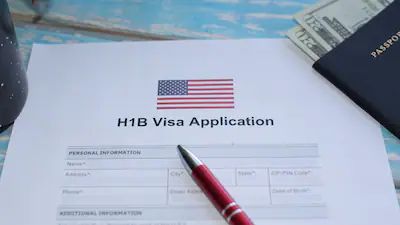
A newly introduced Republican-led Senate bill, the End H-1B Abuse Act, proposes a three-year pause on new H-1B visas, a $200,000 wage floor, and an end to the random lottery system. The sweeping legislative proposal has sparked widespread concern among international professionals, particularly Indian tech workers and students reliant on U.S. employment pathways.
A sweeping new legislative proposal in the United States Senate aims to drastically overhaul the high-skilled immigration system, impacting thousands of international professionals and students.
Opening Paragraph
As debates over immigration policy intensify in Washington, a newly introduced legislative measure has sent shockwaves through international professional communities. Spearheaded by U.S. Senator Tim Sheehy alongside companion proposals in the House, the End H-1B Abuse Act of 2026 proposes a radical restructuring of the nation’s high-skilled foreign labor programs. Announced in late July 2026, the bill seeks to implement an immediate three-year pause on the issuance of new H-1B visas, followed by a permanent, highly restrictive reset of the entire specialty occupation framework. The move comes amid broader legal battles over executive visa fees and heightened scrutiny surrounding the employment of foreign engineers, healthcare workers, and technology specialists in the United States.
Core Provisions of the End H-1B Abuse Act
If enacted in its current form, the proposed legislation would fundamentally dismantle the existing structures governing temporary foreign workers. According to official legislative text and congressional announcements, the bill introduces several unprecedented changes:
Three-Year Moratorium: A complete three-year freeze on the issuance of any new H-1B specialty worker visas to allow federal authorities to reassess labor market demands.
Cap Reduction and Restructuring: Sashing the annual nationwide visa cap from its traditional 65,000 down to just 25,000, while eliminating historical exemptions for non-profit and research institutions.
Wage-Based Prioritization: Permanently replacing the random computerized lottery system with a strict wage-based selection hierarchy, prioritizing petitions offering salaries above a $200,000 annual threshold.
Elimination of Dependents and Status Changes: Prohibiting H-1B visa holders from bringing dependent family members to the U.S., banning third-party staffing agency placements, and barring non-immigrants from adjusting their status directly to permanent residency (green cards).
Impact on Indian Professionals, Students, and Tech Sectors
For Indian nationals—who historically account for the vast majority of H-1B visa approvals—the legislative package carries profound practical implications. Immigration attorneys and policy analysts note that the bill's attack on the student-to-work pipeline, including the proposed elimination of Optional Practical Training (OPT) work authorizations, would severely disrupt young graduates. Furthermore, ending the "dual intent" provision means temporary workers would no longer have a clear, predictable pathway from employment to long-term residency, forcing thousands to reconsider career plans in North America.
Why It Matters
For international technology workers, corporate employers, and academic institutions, the introduction of the End H-1B Abuse Act marks a critical turning point in U.S. immigration policy. While proponents argue the measures are necessary to prioritize domestic workers and curb administrative fraud, critics warn that a near-total freeze on skilled migration could trigger severe talent shortages across critical sectors like technology, healthcare, and advanced research.
Key Facts at a Glance
Proposed Legislation: The End H-1B Abuse Act, introduced in the U.S. Senate and House.
Primary Action: A mandatory three-year pause on the issuance of fresh H-1B visas.
Key Thresholds: A proposed annual cap reduction to 25,000 and a minimum salary benchmark of $200,000.
Student Impact: Proposes terminating OPT and blocking the traditional transition from temporary work visas to permanent residency.
FAQ Section
What is the End H-1B Abuse Act?
It is a Republican-sponsored federal bill that proposes a three-year freeze on new H-1B visas, a reduction in annual caps, a $200,000 wage floor, and stricter limitations on foreign workers.
How will the bill impact Indian professionals and students?
The bill would eliminate the random lottery, ban dependent family members, restrict green card status adjustments, and end Optional Practical Training (OPT) for international students.
Has the bill been passed into law yet?
No. The measure remains a proposed bill introduced in Congress and faces extensive legislative debate and legal scrutiny before it can become law.
Where can official details of the legislation be reviewed?
Comprehensive bill summaries and congressional updates are available via official government portals such as U.S. Senator Tim Sheehy Office and Representative Eli Crane Official Portal.
Source: U.S. Senator Tim Sheehy Office, Representative Eli Crane Official Portal, First U.S. Circuit Court of Appeals