On August 23, 2025, India celebrated its second National Space Day with grand events and exhibitions spotlighting the country’s extraordinary journey in space science — a journey that spans from ancient astronomical wisdom to cutting-edge space exploration missions. Marked to honor th...
On August 23, 2025, India celebrated its second National Space Day with grand events and exhibitions spotlighting the country’s extraordinary journey in space science — a journey that spans from ancient astronomical wisdom to cutting-edge space exploration missions. Marked to honor the historic Chandrayaan-3 soft landing on the Moon’s south pole in 2023, National Space Day 2025 carried the evocative theme, “Aryabhatta to Gaganyaan: Ancient Wisdom to Infinite Possibilities.” The day was a vibrant blend of science, culture, education, and patriotism, uniting people across generations to witness and participate in India’s space odyssey.
Key Highlights of the National Space Day 2025 Celebrations
-
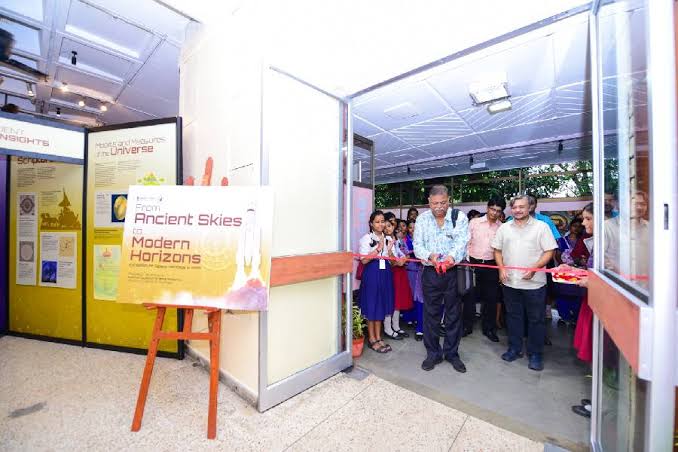
The centerpiece exhibition, titled From Ancient Skies to Modern Horizons, was inaugurated at the Birla Industrial & Technological Museum (BITM) in Kolkata. This exhibition traced the evolution of India’s astronomical legacy starting from the pioneering work of Aryabhata and ancient observational tools, moving through ISRO’s milestones including the launch of India’s first satellite Aryabhata in 1975, and culminating in current landmark missions such as Chandrayaan-3 and the upcoming human spaceflight Gaganyaan mission.
-
Renowned astrophysicist Dr. Debiprosad Duari, former director of the M. P. Birla Institute of Fundamental Research, delivered an inspiring lecture on “India’s Space Odyssey: Aryabhata to Gaganyaan,” showcasing how traditional astronomical knowledge laid the foundation for modern scientific achievements. His talk deepened public appreciation of the continuum linking ancient sky watchers and modern scientists.
-
Students were actively engaged with interactive exhibits, including a detailed model of the Chandrayaan-3 Vikram lander, enabling young minds to grasp the complexities and triumphs of India’s lunar exploration. These exhibits also featured ISRO’s early years and the societal benefits of satellite applications in communication, navigation, and earth observation.
-
The celebratory events extended beyond Kolkata, with exhibitions and activities held across cities such as Mumbai, Goa, Guwahati, and New Delhi. For example, the Mumbai Nehru Science Centre displayed India’s heritage through ancient cosmological models and lunar-solar calendars alongside satellite mission achievements.
-
New Delhi hosted the inauguration of the Aryabhata Gallery: Story of Astronomy and Space Science at the Nehru Planetarium and Prime Ministers’ Museum & Library, featuring Group Captain Shubhanshu Shukla, the second Indian astronaut and first to dock at the International Space Station, underscoring the human dimension of India’s space pursuits.
-
The day featured diverse science-oriented activities including open house quizzes, film screenings themed on Chandrayaan missions, hands-on workshops such as drone flying, and science demonstrations known as Space-tacular events designed to ignite curiosity and scientific temper in the youth.
-
A key outreach initiative, “Space on Wheels,” rolled out mobile exhibition buses to schools and colleges nationwide, delivering engaging space science content to students and encouraging participation in national level contests like the Bharatiya Antariksh Hackathon and ISRO Robotics Challenge.
India’s Space Legacy: A Saga of Ancient Wisdom and Modern Innovation
The 2025 celebrations emphasized the inseparable link between India’s ancient astronomical heritage and its contemporary space program. The theme “Aryabhatta to Gaganyaan” symbolized this bridge—from the legendary 5th-century astronomer Aryabhata’s calculations of Earth’s rotation and celestial observations, through the nation’s first satellite launch in 1975, to India becoming the fourth country to land on the Moon and the first to reach its southern polar region with Chandrayaan-3 in 2023.
These events highlighted how India’s space endeavors have transformed into global leadership in satellite technology, planetary exploration, and impending human spaceflight missions aimed at sustainable scientific development and national progress.
Collaborative efforts spearheaded by ministries of Science & Technology and Culture ensured a holistic approach in curating exhibits, educational content, and outreach programs, creating a platform to inspire students, scientists, and citizens alike. The celebrations reaffirmed India’s commitment to advancing space science while honoring traditional knowledge and cultural heritage.
Looking Forward: Inspiring Future Generations
National Space Day 2025 was not merely a reflection on past achievements but a clarion call for future innovations and exploration. It encouraged youth participation in science, promoted space education, and infused pride in India’s place among the world’s prominent space-faring nations.
Through lectures, exhibitions, competitions, and hands-on experiences, the day sought to kindle a sustained enthusiasm for space science careers and foster an ecosystem that propels India toward cosmic frontiers and infinite possibilities.
In totality, the grand observance of National Space Day 2025 reaffirmed that India’s space legacy remains a profound fusion of ancient sky wisdom and modern scientific vision, inspiring a nation to dream beyond the stars and reach for the cosmos.
Source: ISRO, Deccan Herald, PIB India, Telegraph India, Times of India, National Council of Science Museums