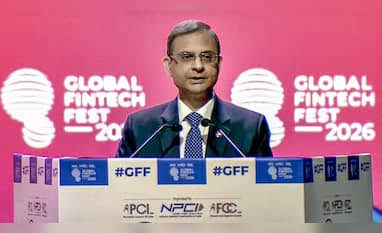
RBI Governor Sanjay Malhotra stated that fintech has fundamentally reshaped India's financial architecture, taking banking from physical branches to every citizen. Speaking at Global FinTech Fest 2026, he highlighted how digital public infrastructure and cash-flow lending are driving financial inclusion and bridging the MSME credit gap.
MUMBAI — Reserve Bank of India (RBI) Governor Sanjay Malhotra announced that financial technology has fundamentally transformed India’s economic architecture over the past decade, successfully shifting banking services from physical branches directly into the hands of citizens. Delivering a keynote address at the Global FinTech Fest 2026 in Mumbai, Malhotra emphasized that digital rails have democratized access for populations across urban centers and rural hamlets alike.
The central bank chief highlighted that everyday digital transactions—anchored by the Unified Payments Interface (UPI), the Aadhaar-enabled payment system, and the Jan Dhan ecosystem—allow small-town shopkeepers, rural farmers, and metropolitan professionals to utilize identical financial infrastructure. This widespread integration has established India as a benchmark for practical, scalable financial inclusion.
Infrastructure Efficiency and MSME Credit Expansion
Beyond consumer payments, Malhotra pointed to systemic efficiency gains achieved through advanced digital infrastructure. Technologies including AI-driven analytics for fraud detection, account aggregators, and the Unified Lending Interface (ULI) have slashed transaction costs and reduced payment settlement durations.
Crucially, these digital frameworks have transformed credit delivery for micro, small, and medium enterprises (MSMEs). By utilizing cash-flow-based lending models, financial institutions can now extend formal, collateral-light credit to millions of small-scale entrepreneurs who historically remained invisible to traditional underwriting systems.
According to official central bank statements, regulatory updates, and institutional disclosures:
Universal Access: Digital public infrastructure connects diverse demographics to formal financial networks.
Credit Innovation: Cash-flow-based lending and ULI bridge long-standing financing gaps for MSMEs.
Operational Security: AI-driven analytics strengthen real-time supervision and fraud mitigation across digital rails.
Regulatory Approach: Collaborative frameworks prioritize responsible innovation while safeguarding consumer trust.
Official Sources Section
Reserve Bank of India (RBI) Speeches: Official transcripts, policy addresses, and regulatory frameworks outlined by central bank leadership.
Reserve Bank Innovation Hub (RBIH): Strategic initiatives promoting digital financial inclusion and technology incubation.
Quote Section
"According to RBI Governor Sanjay Malhotra, fintech has emerged as the critical bridge connecting India's diverse population to formal finance faster and more affordably, turning financial inclusion into a lived, everyday reality."
Why It Matters
For citizens and small business owners, the expansion of digital banking infrastructure ensures lower transaction friction, faster credit approvals, and secure banking access without geographic constraints. For investors and fintech developers, the central bank's collaborative stance signals a stable, progressive regulatory environment that supports long-term digital economic growth.
Key Facts at a Glance
Core Assessment: Fintech has successfully transitioned banking from physical locations to mobile devices nationwide.
Primary Enablers: UPI, Aadhaar, Jan Dhan accounts, and account aggregators.
Target Sector Beneficiaries: MSMEs gaining access to collateral-light formal credit.
Regulatory Philosophy: Fostering self-regulation and continuous dialogue via platforms like the RBI Regulatory Sandbox.
FAQ Section
How has fintech transformed banking accessibility in India?
Fintech has replaced physical branch dependencies with seamless digital rails like UPI and Aadhaar, allowing citizens nationwide to transact, save, and borrow digitally.
What role do fintechs play in MSME financing?
Through cash-flow-based lending and platforms like the Unified Lending Interface, fintechs help extend formal, collateral-light credit to small businesses previously excluded by traditional banking.
What is the Reserve Bank of India's stance on financial technology?
The RBI views fintech as a vital partner in building a secure, inclusive, and efficient financial system, supporting innovation through structures like the regulatory sandbox.
Where can stakeholders review official RBI policy updates and governor speeches?
Complete transcripts and regulatory guidelines are published regularly on the Reserve Bank of India Portal.
Source: Reserve Bank of India, Reserve Bank Innovation Hub, The Financial Express Banking Bureau, Economic Times BFSI Desk