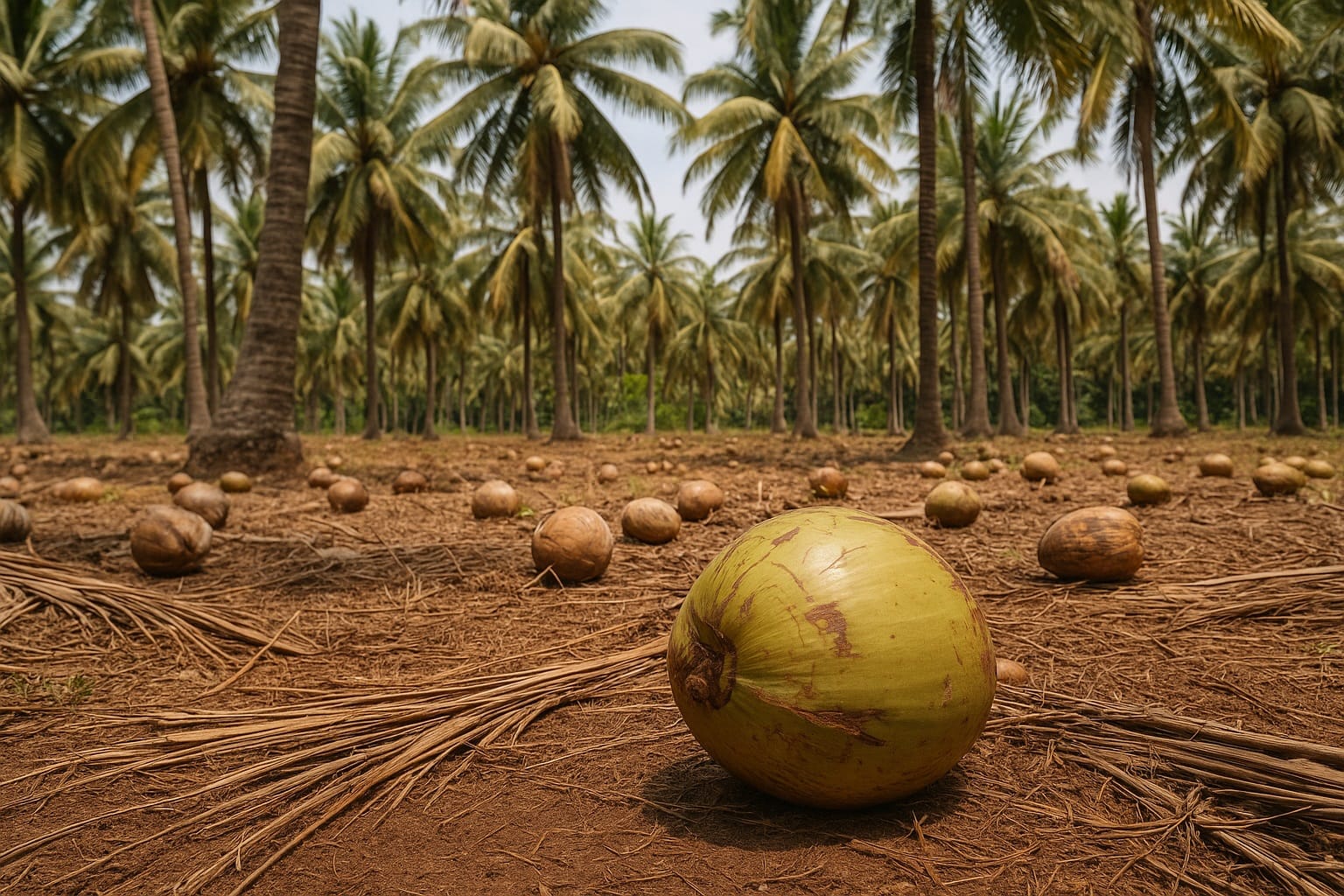
Goa’s iconic coconut, a staple of its cuisine, culture, and economy, is facing a troubling decline. Once abundant across the state’s coastal belt and hinterlands, coconut production has dropped sharply over the past two years, triggering price hikes and supply shortages just ahead of...
Goa’s iconic coconut, a staple of its cuisine, culture, and economy, is facing a troubling decline. Once abundant across the state’s coastal belt and hinterlands, coconut production has dropped sharply over the past two years, triggering price hikes and supply shortages just ahead of the festive season. With Ganesh Chaturthi around the corner, the strain is being felt by farmers, vendors, and households alike.
Key highlights from the latest data
- Coconut production in Goa fell from 163.1 million nuts in 2022–23 to 150.8 million in 2024–25
- Productivity per hectare dropped nearly 8 percent, from 6,113 nuts to 5,625 nuts
- Prices have surged, with large coconuts selling for up to Rs 100 in some markets
- Wildlife damage, ageing plantations, and high input costs are major contributors
- The state is importing coconuts from Karnataka to meet festive demand
Factors driving the decline
1. Ageing plantations
- Many coconut farms in Goa are populated by senile palms that have surpassed their productive years
- Replanting has been slow, and rejuvenation efforts are limited by funding and awareness
2. Labour shortages
- Coconut farming is labour-intensive, especially during harvest seasons
- A shortage of skilled pluckers and rising labour costs have led to neglected farms and missed harvests
3. Fertiliser costs
- The price of agricultural inputs, particularly fertilisers, has risen steeply
- Small growers find intensive farming economically unviable, leading to reduced care and lower yields
4. Wildlife damage
- Monkeys and squirrels are causing significant damage to flowering parts and immature coconuts
- Farmers report losses due to crop destruction, especially in unattended fields during monsoons
Market impact and festive strain
- Coconut prices have nearly doubled in some areas, with small nuts selling for Rs 45 and jumbo ones reaching Rs 90 to Rs 100
- Vendors cite higher transport and labour costs as additional factors behind the spike
- Households preparing for Ganesh Chaturthi are struggling to afford coconuts, a key ritual item
Government response and mitigation
- The Goa State Horticulture Corporation Ltd has imported 75,000 coconuts from Karnataka
- These are being sold at subsidised rates of Rs 44 per piece to ease the burden on consumers
- The corporation plans to continue imports beyond the festival if local supply remains insufficient
- The agriculture department is conducting taluka-level interactions with farmers to address field-level issues
- Awareness programmes and seminars are being held in collaboration with CCARI-ICAR to promote best practices
- Schemes from the Coconut Development Board are being implemented to support replanting and rejuvenation
Long-term outlook
- Officials acknowledge that current measures may not fully offset the production shortfall
- There is a push to set up demonstration plots to showcase effective farming techniques
- Farmers are being encouraged to adopt pest control, irrigation upgrades, and replanting strategies
- The success of these efforts will depend on sustained engagement, funding, and farmer participation
Conclusion
Goa’s coconut sector is at a crossroads. Once a symbol of abundance, the humble nut is now a costly commodity. While government interventions offer short-term relief, the long-term health of the industry hinges on structural reforms, rejuvenation of ageing plantations, and better support for farmers. As the state celebrates Ganesh Chaturthi, the coconut’s scarcity serves as a reminder of the delicate balance between tradition, agriculture, and sustainability.
Sources: Times of India, Daijiworld, Nursery Today