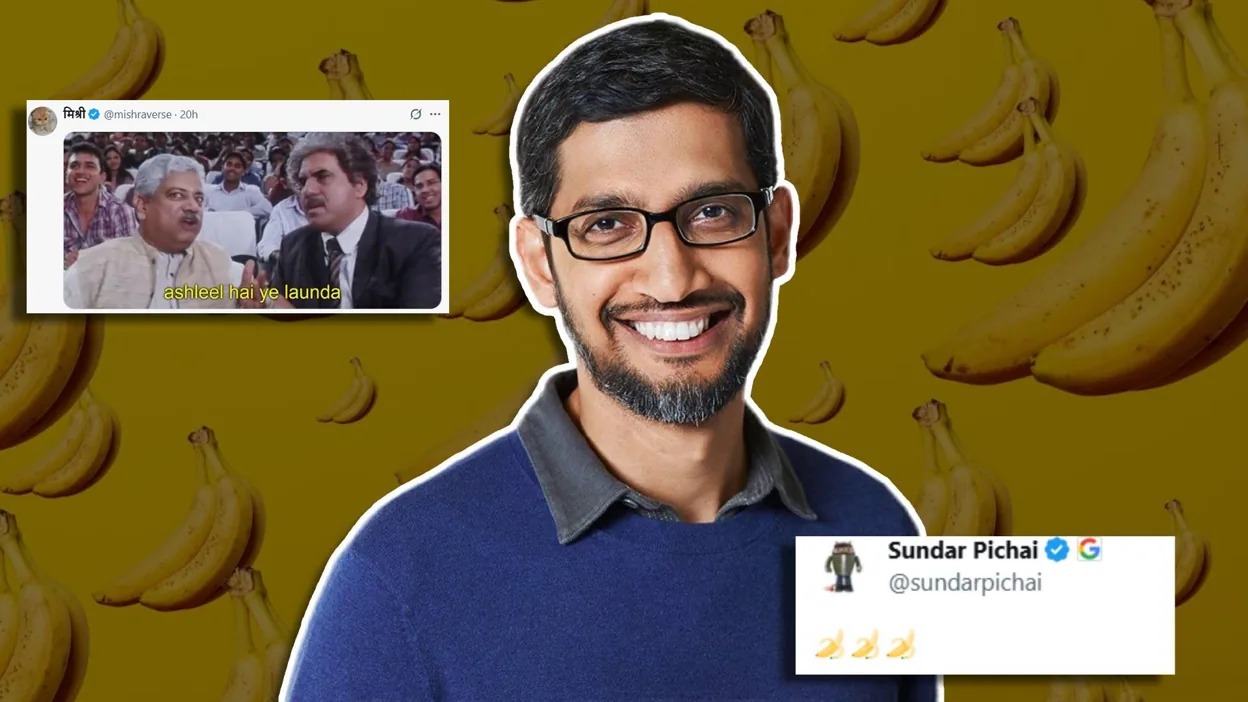
In a move that sent tech Twitter into a frenzy, Google CEO Sundar Pichai posted three banana emojis on X, sparking wild speculation and viral reactions. But behind the fruity cryptic tease lies a major product reveal: Google’s new AI-powered image editing tool, internally codenamed Nano Ban...
In a move that sent tech Twitter into a frenzy, Google CEO Sundar Pichai posted three banana emojis on X, sparking wild speculation and viral reactions. But behind the fruity cryptic tease lies a major product reveal: Google’s new AI-powered image editing tool, internally codenamed Nano Banana, now officially launched as Gemini 2.5 Flash Image. The tool promises lightning-fast, photorealistic edits with uncanny precision—ushering in a new era of generative visuals.
Key highlights from the Nano Banana reveal
1. Sundar Pichai’s banana emoji post was a playful nod to Google’s new AI image editing model, Gemini 2.5 Flash Image
2. The tool allows users to modify photos with costume swaps, background changes, object additions, and blending—all while preserving likeness and style
3. Pichai showcased the tool by posting AI-edited images of his dog Jeffree in various roles, from superhero to chef, in celebration of International Dog Day
What is Gemini 2.5 Flash Image
- Gemini 2.5 Flash Image is Google’s latest generative AI model focused on image editing and creation
- It enables users to upload a photo and describe changes using natural language, with edits completed in one to two seconds
- The model ensures consistent facial features, object proportions, and stylistic coherence across multiple edits
Editing features and capabilities
- Costume and background changes: Users can place themselves or pets in different outfits, settings, or even historical periods
- Photo blending: Merge multiple images into one, such as combining a person and their pet into a single frame
- Step-by-step edits: Add or remove objects in stages, like redesigning a room or customizing a product layout
- All AI-generated images include watermarks to ensure transparency and prevent misuse
Why the bananas
- The internal codename for the model was Nano Banana, a quirky reference that became the centerpiece of Pichai’s emoji teaser
- The bananas also symbolized the tool’s playful nature and its ability to generate fun, imaginative edits
- Google DeepMind followed up with its own post, calling the upgrade a bananas-level leap in image generation
Social media buzz and reactions
- Pichai’s post went viral within minutes, with users speculating everything from a new Pixel feature to a secret fruit-themed project
- AI chatbot Grok chimed in, confirming the emojis were likely a teaser for Nano Banana and praising its leaderboard-topping performance
- Comments ranged from confusion to excitement, with users asking if the CEO’s account had been hacked or if Google was launching a fruit-based app
Use cases and future potential
- Gemini 2.5 Flash Image is ideal for creators, marketers, designers, and everyday users looking to personalize visuals
- It can be used for product mockups, social media content, pet edits, and even professional presentations
- The tool is expected to be integrated into the Gemini app and other Google platforms, expanding its reach across Android and web
Google’s broader AI strategy
- The launch of Nano Banana aligns with Google’s push to make Gemini the most versatile and creative AI suite in the market
- With competition heating up from OpenAI, Meta, and xAI, Google is doubling down on multimodal capabilities that blend text, image, and reasoning
- Gemini 2.5 Flash Image is part of a larger rollout that includes upgrades to code generation, document summarization, and voice synthesis
Outlook and what’s next
- Google plans to release more editing features in the coming months, including video generation and 3D object manipulation
- The company is also working on ethical safeguards and watermarking standards to ensure responsible use of generative visuals
- As AI-generated content becomes mainstream, tools like Nano Banana could redefine how we create, share, and interact with digital media
Sources: Times of India, NDTV, Hindustan Times, News18, Financial Express