The Central Government has launched a multi-ministerial response to tackle India's sharp June rain deficit and emerging drought risks linked to El Niño. Home Minister Amit Shah directed central agencies to coordinate with states, preserve reservoir water, secure rural power, and help farmers transition to low-water alternative crops.
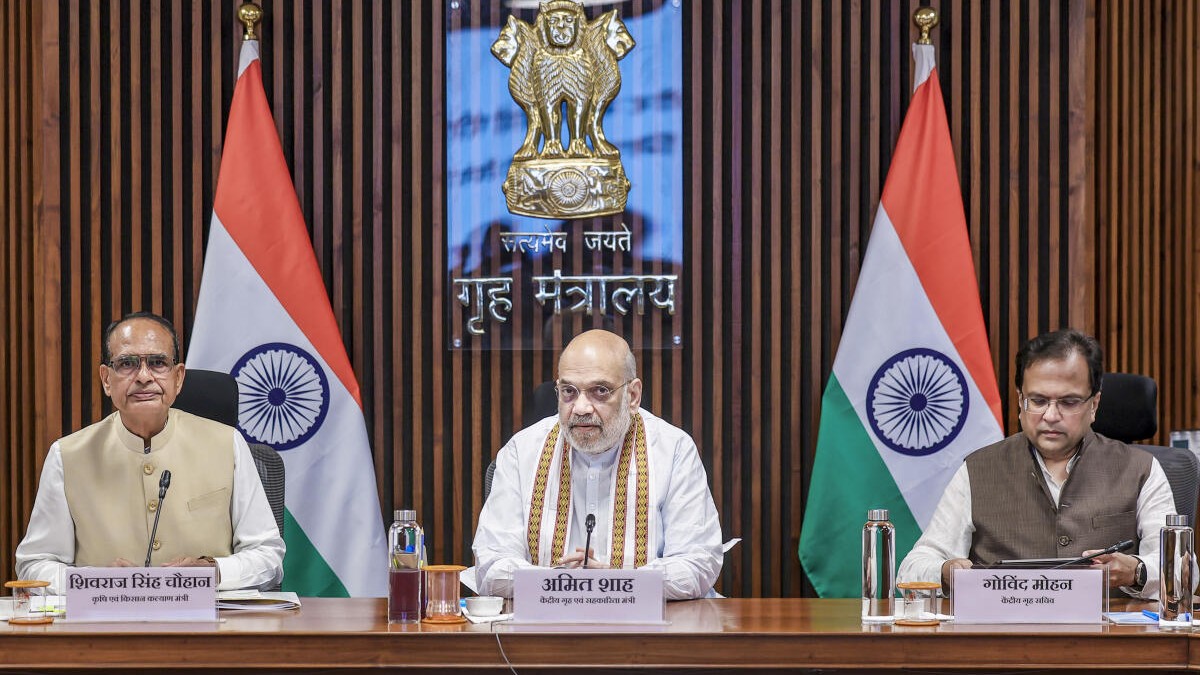
NEW DELHI — The Central Government has initiated an emergency response mechanism to counter an emerging agricultural crisis after India recorded one of its driest months of June since 1901. Union Home Minister Amit Shah, alongside Union Agriculture Minister Shivraj Singh Chouhan, chaired a high-level review meeting on Friday to evaluate the widening monsoon rain deficit and rising potential drought situation in multiple regions. Compounded by the active El Niño climate phenomenon in the equatorial Pacific Ocean, the prolonged dry spell has severely hampered the sowing of crucial summer-sown kharif crops, prompting the Centre to mandate immediate, seamless coordination between federal ministries and state governments.
El Niño Triggers Severe June Deficit and Crop Delays
Official data presented during the high-level assessment revealed that India witnessed an average rainfall deficit of roughly 40 percent throughout June. The situation is particularly acute in Central India, where the regional precipitation shortfall has breached 50.4 percent. This sharp contraction in seasonal rainfall has led to a direct 23 percent drop in the sowing of kharif crops, which fell to 182.72 lakh hectares compared to the corresponding period last year.
With the India Meteorological Department (IMD) forecasting below-normal precipitation for July as well, the government has shifted its focus toward aggressive mitigation strategies to safeguard farmers, retail food consumers, and general commodity markets.
Strategic Directives and Resource Management
To prevent localized agricultural distress from evolving into a widespread rural crisis, Home Minister Amit Shah issued several direct instructions to key infrastructure and welfare ministries:
Agricultural Advisory Shift: The Ministry of Agriculture and Farmers Welfare is directing state departments to actively advise farmers to pivot toward alternative, low-water-consuming crops. Officials are emphasizing the cultivation of millets, pulses, and fodder over water-intensive varieties.
Water Resource Monitoring: The Department of Water Resources and the Ministry of Jal Shakti have been ordered to conduct real-time, rigorous monitoring of all water reservoirs, smaller water bodies, and local groundwater tables across the country to protect drinking and irrigation supplies.
Rural Power Safeguards: The Secretary of the Union Ministry of Power has been tasked with executing localized arrangements to guarantee an uninterrupted and smooth supply of electricity to rural sectors, ensuring that ground pump irrigation remains functional.
Official Sources Section
According to official releases published by the Press Information Bureau (PIB) on behalf of the Ministry of Home Affairs, the review session involved extensive briefings from the National Disaster Management Authority (NDMA), the Central Water Commission (CWC), and the National Remote Sensing Centre. Administrative secretaries from consumer affairs, power, environment, and rural development also submitted departmental readiness overviews.
Quote Section
During the multi-agency assembly, Union Home Minister Amit Shah outlined the administrative posture required to manage the unfolding weather anomalies.
According to officials and statements issued via the Ministry of Home Affairs:
"The government is continuously monitoring the situation regarding below-normal rainfall and potential drought conditions in certain parts of the country due to El Niño."
The Home Minister further instructed that while drought mitigation is handled in the west and center, immediate relief must reach the northeast:
"The Inter-Ministerial Central Team (IMCT) of the Ministry of Home Affairs should be deputed to Assam and Arunachal Pradesh immediately to assess the damage caused by recent heavy rainfall, flash floods, and landslides."
Why It Matters
The prompt activation of a Centre-state coordination grid prevents panic buying and stabilizes rural economies. By shifting acreage to alternative crops like millets and securing power lines for tube wells, the government protects the purchasing power of Indian farmers, shields citizens from domestic food inflation, and assures commodity market investors that critical grain inventories remain resilient despite a weak southwest monsoon.
Key Facts at a Glance
Monsoon Shortfall: India recorded a 40 percent national rainfall deficit in June, with Central India tracking a severe 50.4 percent deficiency.
Kharif Impact: Sowing of essential summer crops has decelerated by 23 percent due to missing early-monsoon showers.
High-Level Directives: Home Minister Amit Shah ordered strict monitoring of national reservoirs and guaranteed power supplies for agricultural irrigation.
Buffer Stocks: Food ministry officials confirmed that national reserves hold adequate quantities of wheat and rice, keeping essential commodity prices stable.
FAQ Section
Q: Which regions in India are currently worst affected by the rain deficit?
A: Central India is facing the most severe impact, experiencing a rainfall deficit exceeding 50 percent during the initial phase of the monsoon cycle.
Q: What alternative crops is the government advising farmers to sow?
A: The Ministry of Agriculture is advising a transition toward less water-intensive, drought-resistant varieties including pulses, coarse millets, and livestock fodder.
Q: Will the rain deficit lead to a spike in food grain prices?
A: No. Current internal reviews show that India maintains adequate buffer stocks of essential staples like rice and wheat, ensuring overall price stability in retail consumer markets.
Source: Official meeting records, operational directives, and press releases published by the Press Information Bureau (PIB) India, the Ministry of Home Affairs, and updates from the India Meteorological Department (IMD).