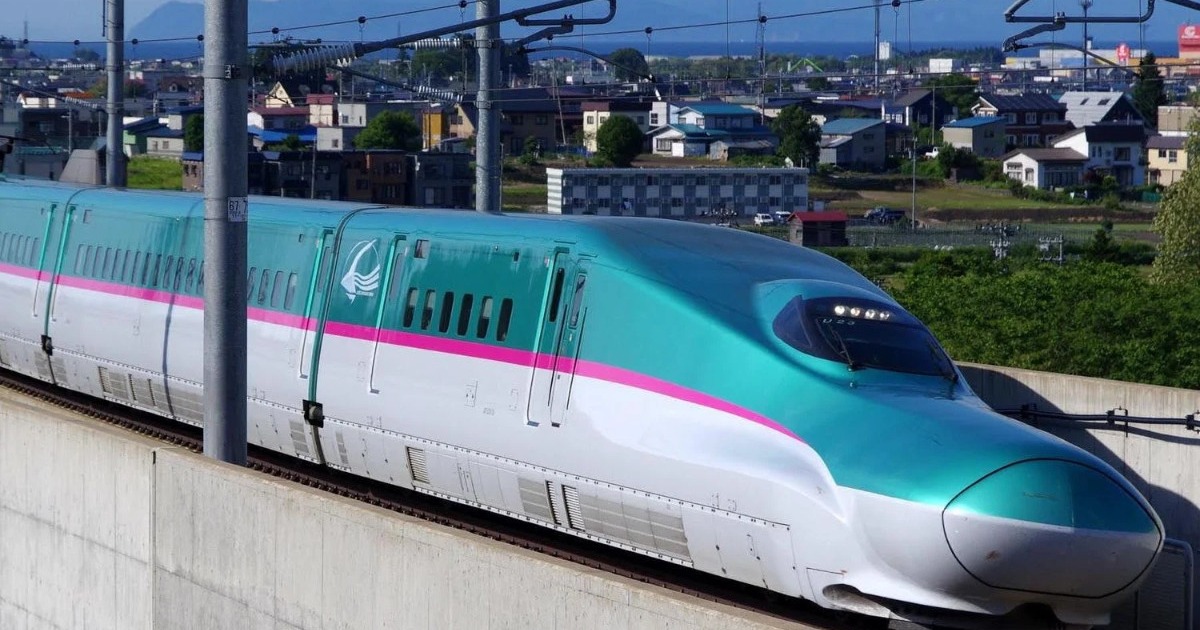
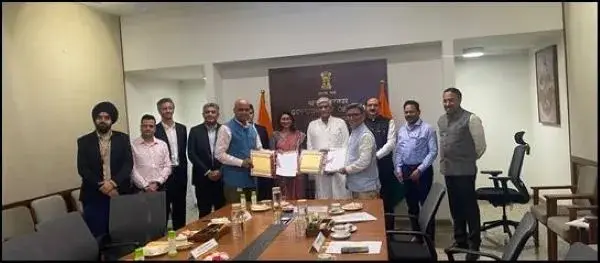
The Ministry of Railways has approved seven new bullet train corridors covering 4,000 kilometers across India. Managed by the NHSRCL, the ₹16 lakh crore high-speed rail expansion will link key cities like Mumbai, Pune, Bengaluru, Chennai, and Delhi at operational speeds of 320 kmph, significantly reducing regional travel times.
NEW DELHI — The Ministry of Railways has finalized plans to expand the nation’s high-speed rail network by greenlighting seven new bullet train routes. Administered by the National High Speed Rail Corporation Limited (NHSRCL), the newly approved corridors will cover approximately 4,000 route kilometers (RKM). The massive network expansion follows technical alignment clearances and the formal authorization of Detailed Project Reports (DPRs) for the initial developmental phases.
This infrastructure push marks a structural transition in India’s transit policy, shifting focus toward high-speed inter-city connectivity. While construction continues on the country’s first high-speed rail link between Mumbai and Ahmedabad, the addition of seven new corridors aims to link critical IT hubs, manufacturing clusters, and cultural centers across Northern, Western, Southern, and Eastern India.
Mapping the 7 New High-Speed Rail Corridors
According to official releases from the National High Speed Rail Corporation Limited (NHSRCL), the seven newly approved routes are structurally designed to achieve an operational speed of 320 kmph, utilizing indigenous 'B35' trainsets engineered for local climatic conditions.
The approved corridors encompass the following segments:
Delhi–Varanasi Corridor: Connecting the national capital to Uttar Pradesh’s major cultural center, reducing travel times from eight hours down to 3 hours and 50 minutes.
Varanasi–Patna–Siliguri Corridor: Extending connectivity into the eastern wing to integrate West Bengal and Bihar with the main rail grid.
Bengaluru–Chennai Corridor: Spanning 350 kilometers to connect two principal southern IT hubs in just 73 minutes.
Bengaluru–Hyderabad Corridor: Linking crucial technology zones within an estimated transit frame of two hours.
Chennai–Hyderabad Corridor: A major regional connector designed to facilitate faster transit across southeastern industrial belts.
Mumbai–Pune Corridor: A high-density transit passage that will cut travel times down to just 48 minutes from the current three hours.
Pune–Hyderabad Corridor: Establishing an onward high-speed framework to link western industrial centers with southern cities.
Design Engineering and Tender Allocations
The NHSRCL has officially opened global consultancy bids for structural and civil engineering designs, focusing heavily on the complex underground segments of the Delhi–Varanasi and Bengaluru–Chennai lines. Architectural blueprints specify major civil engineering undertakings, including a 14.79-kilometer mountain tunnel passing through the Kaundinya Wildlife Sanctuary and specialized underwater structural channels.
According to technical specifications published by the Ministry of Railways, the standard design parameters require double-track frameworks engineered to sustain a maximum structural design speed of 350 kmph. To maintain design consistency and lower long-term manufacturing costs, the central government has mandated uniform technical standards for all civil structures, including bridges, viaducts, and elevated terminals across all seven lines.
Socio-Economic Impact and Market Implications
The implementation of the expansion is projected to draw an estimated investment of ₹16 lakh crore. Industry analysts note that the rapid movement of professionals, students, and corporate travelers will encourage the formation of integrated mega-economic zones, mimicking the economic spillover effects observed in Japan and Western Europe.
For businesses and real estate markets, towns surrounding the proposed intermediate terminals—such as Boisar, Vapi, and Jewar—are anticipated to witness significant commercial expansion. Logistics firms, housing developers, and manufacturing units are already adjusting spatial planning models around planned multimodal hubs, which will merge bullet train terminals with existing metro systems and conventional commercial rail networks.
Official Sources Section
The operational blueprints, route distances, station configurations, and engineering bid metrics are verified via statutory project announcements compiled by the Press Information Bureau (PIB) Delhi Bureau and specific design tender notifications published on the official procurement portal of the National High Speed Rail Corporation Limited.
Quote Section
"According to officials at the Ministry of Railways, the forward-looking high-speed corridors will function directly as growth connectors. The standardization of bridge, tunnel, and station designs will allow engineering teams to execute these capital-intensive projects in an accelerated, cost-effective manner."
Why It Matters
The practical implication of this multi-corridor blueprint rests on the physical integration of India’s far-flung industrial engines. By shrinking commute times between multi-state IT and manufacturing hubs to under two hours, the infrastructure project will allow businesses to execute same-day inter-state transactions, significantly reducing corporate logistical costs while alleviating the traffic burdens currently weighing down domestic aviation and legacy rail grids.
Key Facts at a Glance
Total Coverage: The seven newly authorized high-speed rail lines will span approximately 4,000 route kilometers.
Capital Investment: The extended infrastructure deployment is estimated to attract close to ₹16 lakh crore in public and institutional capital.
Velocity Metrics: All networks are engineered for a maximum design speed of 350 kmph, with standard commercial operations set at 320 kmph.
Southern Expansion: The Bengaluru–Chennai link will mark Southern India’s inaugural high-speed corridor, featuring three major underground terminals.
FAQ
When will the first bullet train become operational in India?
According to project updates from the Ministry of Railways, the initial trial segment of the country's first bullet train line—connecting Surat and Vapi along the Mumbai–Ahmedabad corridor—is target-scheduled to begin commercial operations in August 2027.
How will these new tracks affect the existing Indian Railways network?
The bullet train corridors will operate on entirely separate, high-grade elevated or underground standard-gauge tracks. This ensures high-speed operations remain entirely isolated from conventional passenger and freight train tracks.
What are the 'B35' trainsets mentioned in the project reports?
The B35 designation refers to Bharat-made high-speed rolling stock specifically engineered to maintain structural stability, cooling, and propulsion efficiency within India's unique tropical climatic variations and high-density passenger loads.
Source: Press Information Bureau (PIB) Government of India, National High Speed Rail Corporation Limited (NHSRCL) Procurement Division, Ministry of Railways Statutory Project Logs