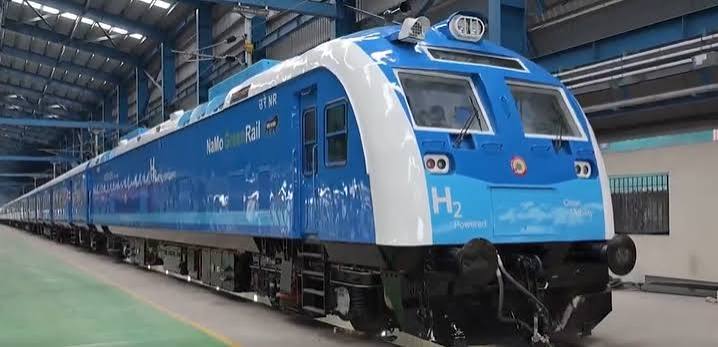
Indian Railways has successfully concluded final high-speed trials for India's first hydrogen-powered train. Reaching 120 kmph, the zero-emission train utilizes fuel cell technology to generate electricity, marking a pivotal step in the national effort to replace diesel locomotives and achieve net-zero carbon emissions across the rail network by 2030.
Indian Railways has successfully completed the final high-speed trial of the country’s first hydrogen-powered train on the Jind-Sonipat section in Haryana. The test run, conducted on June 26, 2026, saw the 10-coach train reach speeds of 120 kmph, confirming the stability and safety of the indigenous technology. This milestone brings India closer to launching its first commercial hydrogen-based rail service, a flagship project under the "Atmanirbhar Bharat" (Self-Reliant India) initiative.
The project is a cornerstone of the national strategy to achieve net-zero carbon emissions by 2030. By transitioning from traditional diesel-powered locomotives to hydrogen fuel cell technology, Indian Railways aims to eliminate carbon emissions on non-electrified or heritage routes, offering a sustainable alternative that produces only water vapor as a byproduct.
How the Technology Works
Unlike traditional diesel engines that rely on fossil fuel combustion, the hydrogen train functions as a mobile power plant. The system utilizes hydrogen fuel cells, which generate electricity through an electrochemical reaction between hydrogen stored in onboard tanks and oxygen drawn from the surrounding air.
This process produces clean electrical energy that powers the train’s traction motors. To optimize performance, the train is also equipped with battery systems that capture energy from regenerative braking and provide supplemental power during acceleration. This Distributed Power Rolling Stock (DPRS) technology ensures that power is spread across the coaches, allowing for efficient operation. According to technical specifications provided by the Ministry of Railways, the train features a total power output of 2,400 kW, making it one of the most powerful hydrogen trainsets globally on broad-gauge tracks.
Infrastructure and Safety Standards
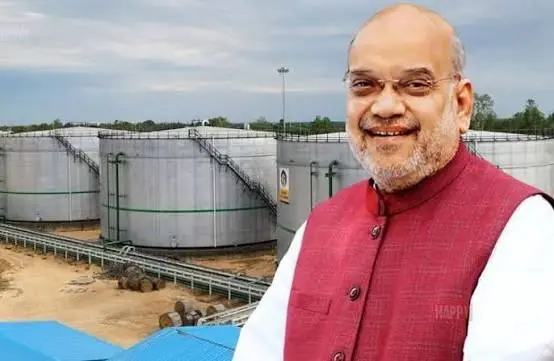
The commercial viability of this technology relies on a robust support network. To facilitate the project, Indian Railways has established a dedicated hydrogen production, storage, and refueling facility in Jind. This site, managed by GreenH Electrolysis, uses a 1 MW electrolyser to produce green hydrogen, which is then stored in high-pressure tanks for rapid refueling.
Safety remains the highest priority for the new fleet. The trains are outfitted with advanced sensors, including hydrogen leak detectors and flame sensors, which provide 24/7 monitoring. The Petroleum and Explosives Safety Organization (PESO) has officially granted the necessary licenses for the storage and dispensing of compressed hydrogen, ensuring that all operations meet international safety benchmarks.
Why It Matters
The introduction of hydrogen-powered rail represents more than just a technological upgrade; it is a critical step toward environmental stewardship. With conventional diesel trains contributing significantly to air pollution, the switch to hydrogen-based rail transit will improve air quality in towns and cities along the rail network. Furthermore, by targeting "difficult-to-electrify" lines and heritage routes, the technology offers a path for decarbonization where standard overhead electrification may not be feasible or cost-effective.
Key Facts at a Glance
Top Trial Speed: 120 kmph (operational speed planned at 75 kmph).
Technology: Hydrogen Fuel Cell with Distributed Power Rolling Stock (DPRS).
Environmental Impact: Zero carbon emissions; byproduct is pure water vapor and heat.
Infrastructure: Dedicated hydrogen production and refueling plant located at Jind.
Safety: Equipped with leak detectors, flame sensors, and continuous monitoring systems.
Frequently Asked Questions
When will the hydrogen train be open to the public?
While the high-speed trials have been successfully concluded, Indian Railways is currently finalizing operational and regulatory formalities. An official commercial launch date for passenger services is expected to be announced soon.
Is the hydrogen train safer than diesel trains?
The train is designed with extensive safety features, including automated leak and flame detection systems. All refueling and storage infrastructure complies with stringent safety regulations mandated by PESO.
What routes will the hydrogen train operate on?
The pilot project is currently focused on the Jind-Sonipat section in Haryana. Future deployments are being considered for other regional or heritage routes that are currently not electrified.
Source: Ministry of Railways (Government of India), Press Trust of India (PTI), Northern Railway