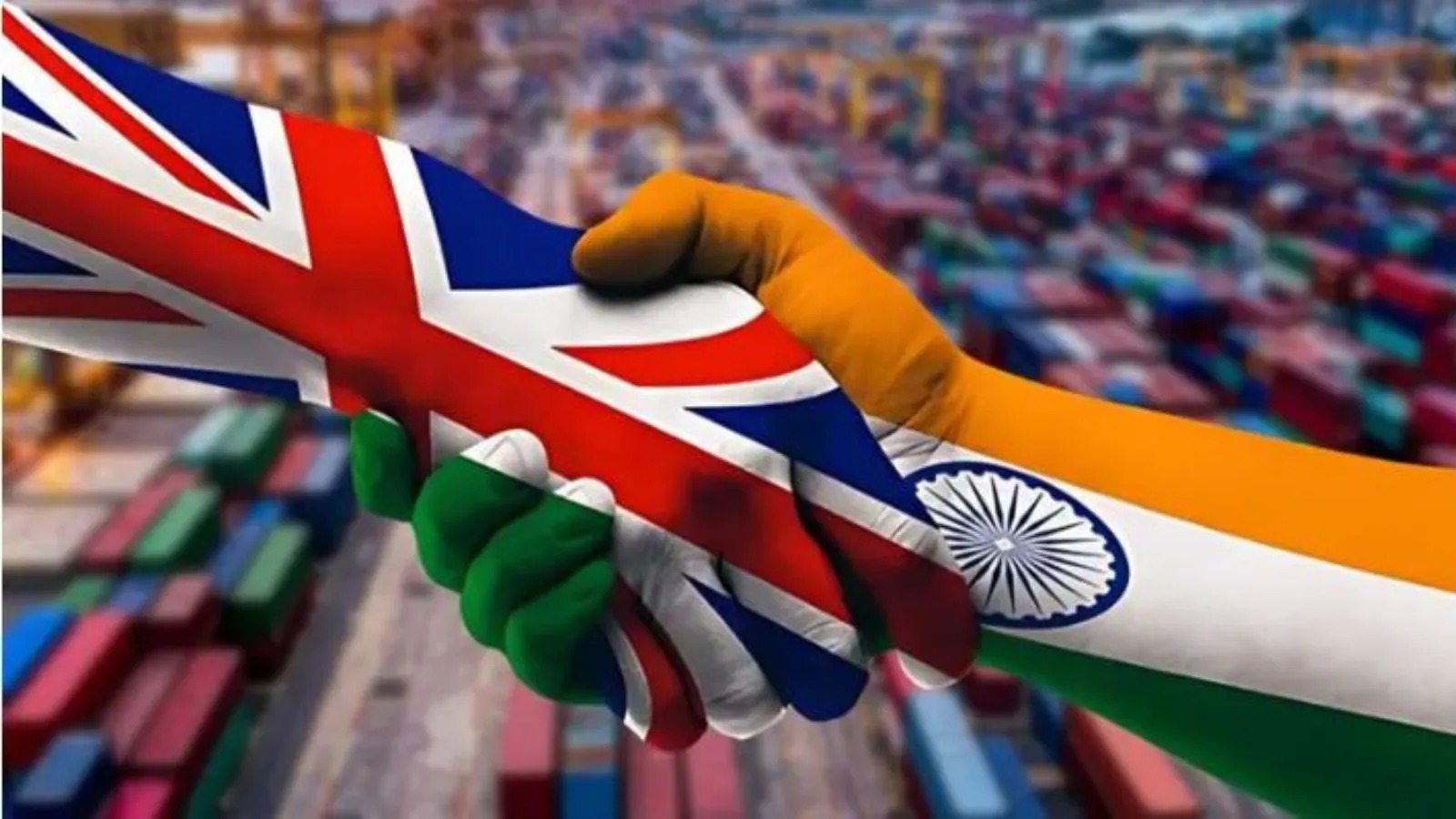
The India-UK Comprehensive Economic and Trade Agreement (CETA) and Double Contribution Convention (DCC) officially entered into force on July 15, 2026. This landmark deal provides duty-free access for nearly 99% of Indian exports to the UK and offers significant social security relief, setting the stage for $100 billion in bilateral trade by 2030.
The landmark India-UK Comprehensive Economic and Trade Agreement (CETA) and the companion Double Contribution Convention (DCC) officially took effect on July 15, 2026, marking a transformative milestone in the bilateral relationship between the two nations.
NEW DELHI – Following years of rigorous negotiations and strategic planning, the India-UK Comprehensive Economic and Trade Agreement (CETA) and the Double Contribution Convention (DCC) officially came into force on July 15, 2026. This historic milestone, announced by Prime Minister Narendra Modi and British Prime Minister Sir Keir Starmer at the G7 Summit in Evian last month, establishes a new framework for trade and investment that prioritizes parity, mutual growth, and long-term economic stability.
The agreement transcends traditional tariff-cutting, introducing a comprehensive architecture that covers goods, services, digital trade, government procurement, and intellectual property. By creating a more balanced and accessible market, both nations aim to elevate bilateral trade to $100 billion by 2030.
A Balanced Economic Framework
The CETA is designed to foster a more equitable trading environment, addressing long-standing barriers that have historically hindered business expansion in both countries. For India, the agreement secures immediate duty-free access for nearly 99% of its tariff lines, offering significant relief to labor-intensive sectors such as textiles, leather, footwear, and engineering goods.
"This is one of the most ambitious and aspirational FTAs of India, which we are operationalizing," said Commerce Secretary Rajesh Agrawal. He emphasized that the deal goes beyond conventional tariff liberalization, incorporating digital trade, innovation, and sustainable finance—elements essential for a modern, 21st-century economic partnership.
Double Contribution Convention: Empowering Professionals
Simultaneous with the CETA, the Double Contribution Convention (DCC) has also been implemented, providing immediate relief to the Indian workforce in the UK. By exempting Indian professionals from paying double social security contributions for up to five years, the convention is expected to benefit over 75,000 workers and 900 employers. This provision ensures that Indian companies—including major IT firms—can maintain competitive operations in the UK without the burden of redundant financial outlays.
Official Sources
Quote Section
"A historic milestone for India-UK relations," Prime Minister Narendra Modi wrote on social media. "This agreement will significantly boost our bilateral trade and investment and unlock numerous opportunities for Indian farmers, workers, MSMEs, startups and innovators."
According to officials, the CETA represents a structural transformation, shifting the focus from simple commodity trading to a sophisticated integration of manufacturing and service capabilities.
Why It Matters
For businesses and investors, the CETA reduces uncertainty and streamlines cross-border operations. UK firms now face fewer restrictions in sectors such as telecommunications and construction, while Indian exporters gain unprecedented access to a major developed market. By harmonizing regulatory processes and facilitating the movement of skilled labor, the agreement strengthens supply chain resilience and promotes clean, sustainable economic growth.
Key Facts at a Glance
Effective Date: July 15, 2026.
Market Access: The UK will eliminate tariffs on 98.8% of tariff lines; India will eliminate tariffs on 89.5% of lines, many on a phased basis.
Automotive Shift: For the first time, India has agreed to tariff concessions on UK-made vehicles, with quotas increasing through Year 5.
Social Security: The DCC prevents double social security contributions for Indian professionals in the UK for up to five years.
Strategic Goal: Aiming to double bilateral trade to $100 billion by 2030.
FAQ Section
What is the primary difference between this deal and traditional FTAs?
Unlike traditional agreements focused only on tariffs, this CETA includes advanced disciplines like digital trade, government procurement, and intellectual property, creating a broader economic architecture.
How does the DCC benefit Indian workers?
It allows Indian professionals and their employers to avoid paying double social security contributions, potentially saving nearly 23% of an employee’s salary that would otherwise go toward the UK system.
Will this deal affect the cost of goods in India?
Yes. Reductions in tariffs on UK goods—such as premium beverages, cosmetics, and certain machinery—are expected to lead to lower prices for these products in the Indian market.
Source: Press Information Bureau, UK Department for Business and Trade, The Hindu