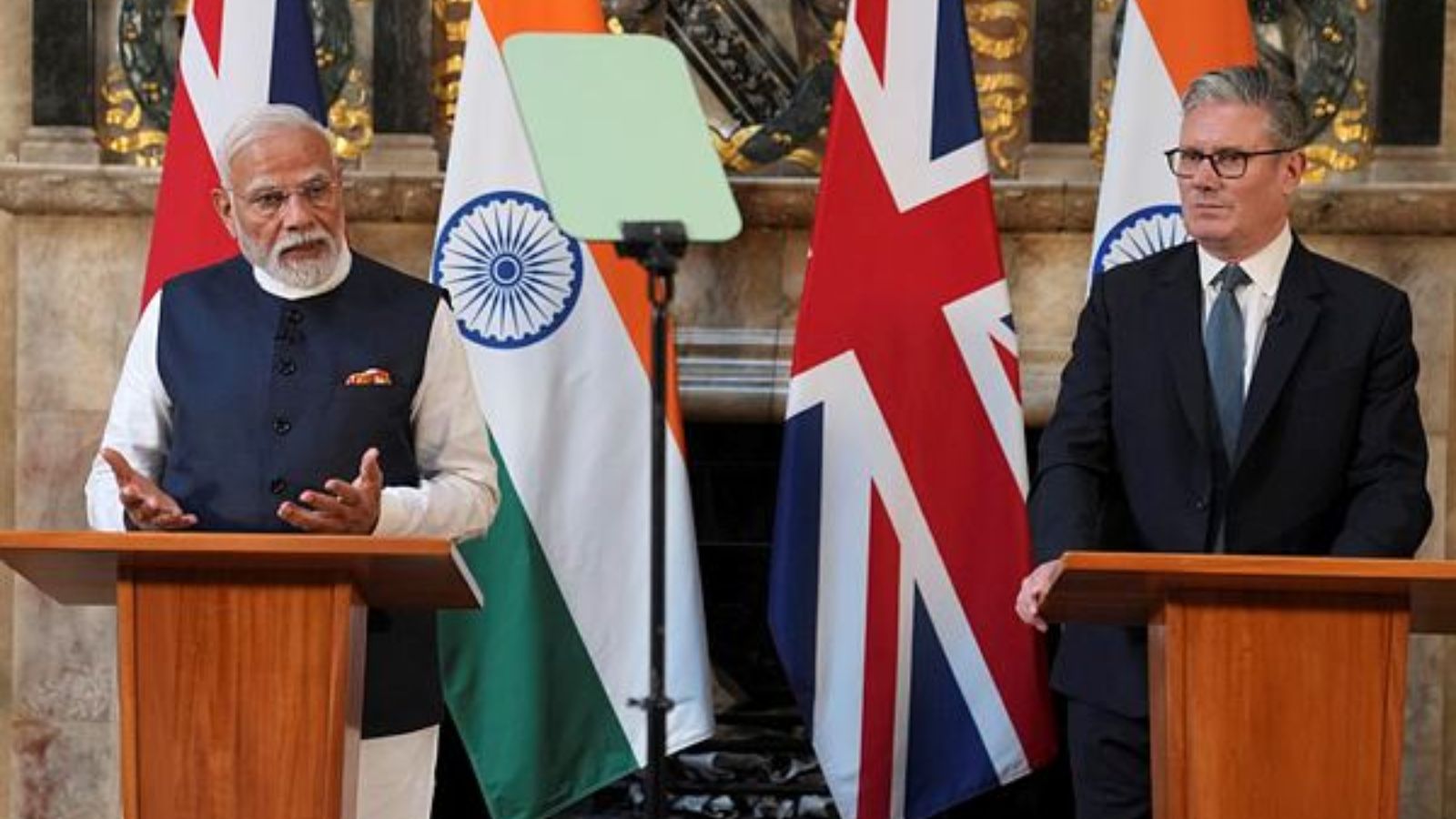
The India-UK trade pact, launching July 15, 2026, will allow 3.78 lakh British conventional vehicles into India under a concessional quota system, dropping luxury duties to 10% by year five. Crucially, the deal blocks tariff cuts for electric vehicles under £40,000, protecting India's domestic mass-market EV manufacturing push.
NEW DELHI — On June 17, 2026, details from the newly finalized India-UK Comprehensive Economic and Trade Agreement (CETA) confirmed a strategic restructuring of bilateral automotive trade rules. Scheduled to officially come into force on July 15, 2026, the trade pact will allow India to import up to 3.78 lakh conventional internal combustion engine (ICE) passenger vehicles from the United Kingdom at concessional customs duties over a 15-year period.
Crucially, the bilateral framework opens up India's high-end premium vehicle market while completely protecting its domestic mass-market electric vehicle (EV) sector from foreign competition. This balanced compromise secures immediate relief for luxury automakers and offers localized market insulation for Indian manufacturers heading into the next decade.
Phased Tariff Reductions and Quota Structures
Under the quota-based mechanism unveiled in the CETA documentation, India’s baseline automotive tariffs—which historically scaled up to 110 percent—will gradually decline to as low as 10 percent for eligible British-built internal combustion vehicles. The first year of implementation will permit a total quota allocation of 20,000 passenger cars across three distinct engine capacity classifications:
Large-Capacity Engines: For petrol vehicles above 3,000cc and diesel models exceeding 2,500cc, the first-year quota is capped at 10,000 units, with customs duties immediately slashing from 110 percent down to 30 percent.
Mid-Range Engines: For petrol vehicles between 1,500cc and 3,000cc and diesel setups up to 2,500cc, a 5,000-unit quota applies, lowering duties from 66 percent to 50 percent.
Mass-Market Engines: Conventional cars with engines up to 1,500cc will also feature a 5,000-unit limit, seeing tariffs drop from 66 percent to 50 percent.
According to the official schedule, these import quotas will expand progressively to peak at 37,000 units by the fifth year, at which point customs duties across all conventional categories will settle at a flat 10 percent. Beyond the 15th year, the annual concession caps will stabilize permanently at 15,000 units per annum.
Complete Insulation for India's Domestic EV Industry
While conventional engines enjoy immediate tariff reliefs, the agreement creates a clear firewall around India’s nascent green vehicle ecosystem. To protect the domestic EV push led by homegrown auto giants like Tata Motors Passenger Vehicles, Mahindra & Mahindra, and Maruti Suzuki, India has excluded all imported electric, hybrid, and hydrogen-powered passenger vehicles priced below £40,000 (Cost, Insurance, and Freight - CIF) from any tariff concessions.
Furthermore, India will offer zero tariff relief on any UK-manufactured electric or hybrid platforms during the first five years of the pact. Beginning in the sixth year, premium electric vehicles valued between £40,000 and £80,000 CIF will face a 50 percent duty under an initial restrictive quota of 400 units, whereas luxury EVs above £80,000 CIF will enter under a 4,000-unit limit at 40 percent duty. Tariffs for these luxury electric categories are scheduled to drop to 10 percent by the tenth year. Notably, zero-emission commercial trucks, buses, and two-wheelers are entirely excluded from any tariff reduction obligations.
Major Export Windfall for Indian Automakers
Conversely, the pact unlocks massive reciprocal access for Indian automotive exporters into the British green mobility space. Starting from the sixth year of the agreement, made-in-India electric, hybrid, and hydrogen-powered passenger cars priced between £20,000 and £80,000 will receive entirely duty-free access into the UK market.
This green vehicle export window will debut with an initial quota of 17,600 units in year six, scaling up continuously to reach a peak of 88,000 units annually by the 15th year. Industry analysts expect this structural window to significantly boost global revenues for Indian manufacturing groups expanding their localized clean-energy factories.
Impact on Consumers and Luxury Car Prices
The structural easing of trade blockades has triggered immediate price corrections within the domestic premium vehicle market. Anticipating the July 15 implementation date, British luxury marque Jaguar Land Rover (JLR) India has already slashed retail prices on its completely built-up (CBU) Range Rover SV and Range Rover Sport SV models by up to ₹75 lakh.
Supercar manufacturer McLaren Automotive is similarly preparing a significant downward pricing overhaul across its Indian portfolio, with select luxury performance models projected to become cheaper by as much as ₹3.32 crore. Other top-tier British luxury brands, including Bentley, Rolls-Royce, and Aston Martin, are also positioned to benefit directly from the newly established concessional quotas.
Official Sources Section
The operational provisions, detailed tariff matrices, and quota caps presented in this report are based directly on the official India-UK CETA agreement text published by the Ministry of Commerce and Industry and corporate regulatory releases distributed via the Press Information Bureau (PIB). Supplementary trade details and implementation timelines were corroborated by official statements from the UK Department for Business and Trade.
Quote Section
"According to officials from the commerce ministry, the negotiated automotive architecture achieves two critical national objectives simultaneously," the trade document highlights. "Organizers stated that while the quota system provides luxury consumers and British brands with structured access to premium vehicles, it carefully maintains high tariff barriers on mass-market electric vehicles to protect billions in domestic green mobility investments."
Why It Matters
This trade agreement establishes a definitive template for how developing economies can engage in free trade with Western manufacturing hubs without decimating their internal sustainability goals. By establishing strict price floors on electric vehicle imports, India guarantees that its localized production lines remain highly competitive against foreign imports. Meanwhile, the luxury segment receives long-awaited tax rationalization, and domestic manufacturers secure a direct, tariff-free pipeline into the United Kingdom's expanding clean-transport sector.
Key Facts at a Glance
Total Car Quota: India will permit 3.78 lakh UK conventional cars at lower duties over 15 years.
Implementation Date: The India-UK trade pact takes effect starting July 15, 2026.
Immediate Luxury Cuts: First-year tariffs for large internal combustion engines over 3,000cc plunge from 110% to 30%.
EV Protection Threshold: No tariff cuts apply to any imported electric cars priced below £40,000 CIF.
Indian Export Window: India secures duty-free export access to the UK for up to 88,000 green vehicles by year 15.
FAQ Section
When do the lower import duties on British cars take effect?
The revised tariff and quota structures under the India-UK CETA will officially implement starting July 15, 2026.
Will mass-market electric vehicles like those from Tata or Mahindra become cheaper?
No. The trade agreement explicitly excludes all electric and hybrid vehicles priced below £40,000 CIF from any tariff reductions. This preserves total protection for domestic mass-market electric vehicles.
Which premium car manufacturers are passing on benefits to consumers?
Jaguar Land Rover India has already introduced price drops of up to ₹75 lakh on select Range Rover models. McLaren is similarly preparing adjustments of up to ₹3.32 crore across its portfolio.
What are the limits on car imports during the first year?
India will allow a total of 20,000 conventional-engine passenger cars from the UK in the first year, split across large (10,000 units), mid-range (5,000 units), and smaller engine capacities (5,000 units).
Source: Ministry of Commerce and Industry, Press Information Bureau (PIB), UK Department for Business and Trade.