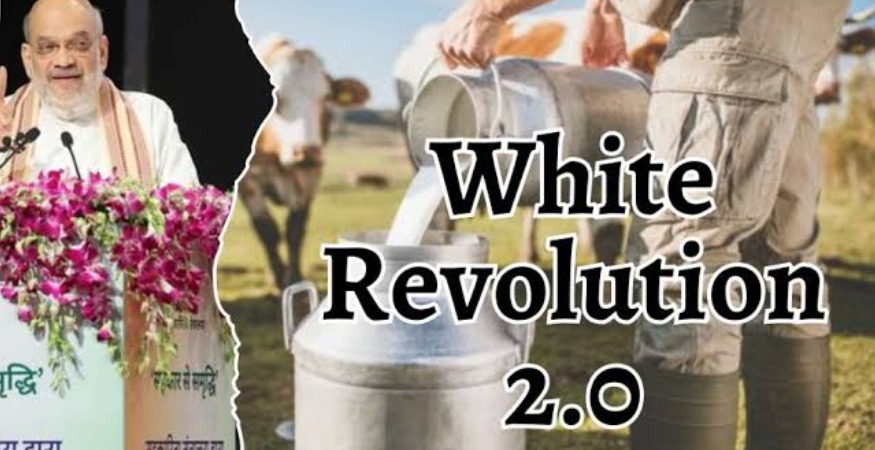
India’s dairy sector is undergoing a technology-led transformation through the "White Revolution 2.0." By integrating AI, IoT-driven livestock health monitoring, and automated procurement systems, the government aims to boost milk productivity and cooperative efficiency, effectively turning rural dairying into a modern, data-driven, and highly profitable industry.
Driven by AI-driven procurement and advanced livestock management, India’s dairy sector is entering a technology-led phase aimed at massive productivity gains.
NEW DELHI — India’s dairy industry, already the world’s largest, is undergoing a profound structural transformation in 2026. Building on the momentum of the "White Revolution 2.0" launched in 2024, the sector is rapidly shifting from manual, fragmented operations to a highly digitized ecosystem. By integrating artificial intelligence (AI), Internet of Things (IoT) monitoring, and robust digital procurement systems, the government and private sector are working to boost cooperative milk procurement by 50% over the next five years.
The current transition is defined by a shift toward precision dairying. According to official data from the Department of Animal Husbandry and Dairying (DAHD), the productivity of cattle and buffaloes has seen a record growth of over 36% in the last decade, a trend now being accelerated by real-time health tracking and automated data-driven farming.
Digital Infrastructure: The Backbone of Change
The heart of this modernization is the "Bharat Pashudhan" database, a unified digital livestock ecosystem that tracks over 84 crore transactions related to breeding, health, and vaccination. Through this initiative, the National Dairy Development Board (NDDB) has enabled seamless traceability, ensuring that millions of small and marginal farmers are connected to a formal, transparent market.
Key technological advancements currently reshaping the industry include:
Automatic Milk Collection Systems (AMCS): These digital units record milk quality (fat/SNF content) in real-time, ensuring instant, transparent payments directly to farmers' bank accounts.
AI-Powered Monitoring: Automated milking systems and IoT-driven livestock health monitors are becoming standard in organized dairy operations, allowing for early disease detection and stable milk yields.
GIS Route Optimization: Cooperative federations are utilizing geospatial technology to streamline milk collection routes, significantly reducing transportation costs and post-harvest spoilage.
Empowerment Through Cooperative Networks
The "White Revolution 2.0" remains centered on the cooperative model, with an ambitious target of establishing 75,000 new Dairy Cooperative Societies (DCS) in uncovered panchayats. As of July 2026, this expansion is heavily focused on women’s empowerment, with current data indicating 38% participation from women, which the Ministry of Cooperation intends to increase to broaden rural economic inclusivity.
Financial support has been bolstered by the Union Budget 2026-27, which allocated record funding to the DAHD. This includes enhanced credit limits for dairy farmers through the Kisan Credit Card (KCC) scheme—now reaching ₹5 lakh—and substantial investments in the Animal Husbandry Infrastructure Development Fund (AHIDF) to support private sector processing and cold-chain infrastructure.
Official Sources and Oversight
Official announcements from the Ministry of Fisheries, Animal Husbandry and Dairying highlight the effectiveness of these interventions in stabilizing rural incomes. "The integration of digital platforms such as the NDDB Dairy ERP and the Internet-based Dairy Information System (i-DIS) is not just enhancing operational productivity but ensuring that every animal is traceable and every drop of milk is accounted for," the department stated.
The National Animal Disease Control Programme (NADCP) also provides a free safety net for farmers, offering universal vaccination against Foot and Mouth Disease (FMD) and Brucellosis, which officials describe as the "silent killers" of milk production.
Why It Matters
For the Indian economy, the modernization of the dairy value chain is a primary driver of rural prosperity. By reducing post-harvest losses and improving the quality of produce, these technologies allow India to compete more effectively in global markets while ensuring nutritional security for its domestic population. For the consumer, this shift means more reliable access to standardized, high-quality, and hygienic dairy products.
Key Facts at a Glance
Procurement Target: The government aims to increase daily milk procurement by cooperatives from 660 lakh kg to over 1,000 lakh kg by 2028–29.
Digital Reach: Over 35.68 crore animals have been issued “Pashu Aadhaar” (unique IDs) for traceable health and breeding management.
Budgetary Push: The 2026-27 Union Budget allocated over ₹8,900 crore to the Ministry, with significant interest subvention for private dairy infrastructure.
Productivity Growth: Productivity of indigenous cattle has surged by nearly 45% since 2014, validated by the effectiveness of the Rashtriya Gokul Mission (RGM).
Frequently Asked Questions (FAQ)
How is technology helping the average dairy farmer in India?
Farmers now benefit from real-time digital payments, accurate milk testing at collection centers, and easier access to veterinary health services and credit via the KCC scheme.
What is the role of AI in Indian dairy farming?
AI is being used for robotic milking systems, predictive analytics for animal health, and optimizing supply chains to reduce operational inefficiencies and spoilage.
How is the "White Revolution 2.0" different from the original?
While the original focus was on increasing production, the 2.0 phase prioritizes procurement infrastructure, digital integration, quality traceability, and aggressive cooperative expansion into previously uncovered rural areas.
Source: Department of Animal Husbandry and Dairying (DAHD), National Dairy Development Board (NDDB), Ministry of Cooperation, Union Budget 2026-27 Documents