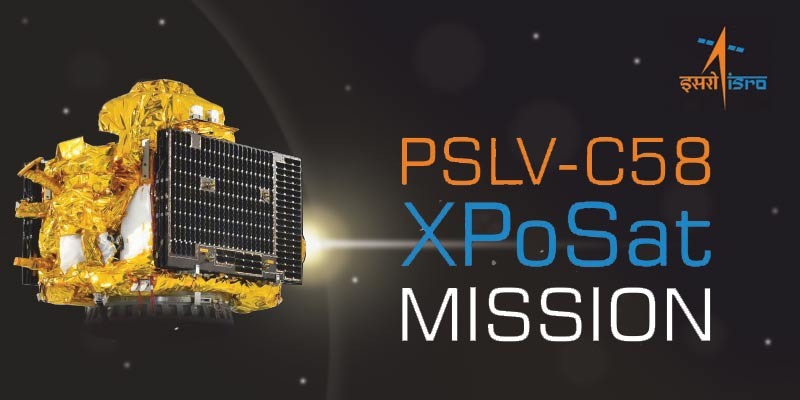
ISRO has issued its second Announcement of Opportunity, inviting proposals from Indian researchers to utilize data from the XPoSat mission. Launched in January 2024, the satellite's dual payloads provide unique X-ray polarimetry and spectroscopy data to study black holes and neutron stars, boosting India's role in advanced space science.
BENGALURU, INDIA — The Indian Space Research Organisation (ISRO) has formally invited research proposals from the domestic scientific community to analyze cosmic observation datasets generated by its X-ray Polarimeter Satellite (XPoSat). According to the announcement released by the space agency on June 22, 2026, the call for proposals marks the official commencement of the second Announcement of Opportunity (AO) cycle for the space-based observatory. This initiative is explicitly structured to maximize the scientific return of India's indigenous astronomical infrastructure.
The development highlights a calculated push by India to strengthen its global footing in high-energy astrophysics. By opening up direct access to exclusive polarimetry and spectroscopic datasets, the state-run space program aims to accelerate peer-reviewed discoveries regarding the universe’s most extreme celestial objects, such as black holes, neutron stars, and active galactic nuclei.
Dual Payload Capabilities Drive Advanced Space Diagnostic Studies
According to operational documents uploaded to the Indian Space Science Data Centre (ISSDC) portal, the XPoSat satellite operates from a low Earth orbit at an altitude of approximately 650 kilometers. The spacecraft carries two distinct, co-aligned scientific payloads designed to complement each other during prolonged celestial targets monitoring sessions.
The primary instrument, the Polarimeter Instrument in X-rays (POLIX), captures medium-energy X-ray photons within the 8–30 keV range. Developed by the Raman Research Institute (RRI) in Bengaluru, POLIX measures the degree and angle of polarization of incoming cosmic rays. Simultaneously, the X-ray Spectroscopy and Timing (XSPECT) payload tracks fast timing variables and soft X-ray spectroscopy across an energy window of 0.8–15 keV. This dual data capture allows researchers to cross-examine complex emission mechanisms that cannot be resolved via conventional imaging systems alone.
Digital Platform Streamlines Institutional Project Submissions
To process the incoming wave of institutional requests, the space agency has fully deployed its web-based XPoSat Proposal Processing System (XPPS) interface. The digital platform provides Indian scholars with integrated technical justification templates and visibility tools like "XPoViewer" to verify whether targeted cosmic bodies fall within the satellite's physical scanning arc over the upcoming observation calendar.
The submission track enforces rigid institutional affiliation checks. Faculty members, research scholars, and principal investigators working as full-time employees at recognized Indian universities, academic institutions, or autonomous research labs are eligible to submit scientific bids. Independent individual submissions without formal institutional endorsement will not be cleared for peer review.
Official Sources Section
The logistical deadlines, payload performance grids, and data processing rights have been certified directly via official space program directories.
Quote Section
"According to officials, the scientific data gathered by the mission has already been progressively released into the public domain for international utility, generating valuable papers in global peer-reviewed journals. Organizers stated that the second cycle aims to cultivate high-quality proposals that push the technical boundaries of how we model complex cosmic physics."
Why It Matters
For space scientists, astronomers, and academic researchers, this announcement provides direct access to state-of-the-art orbital datasets, removing the need to rely on foreign space agency streams. For the broader public, this expanding research push helps solidify India's position as a major contributor to global deep-space exploration, laying the intellectual groundwork for next-generation satellite payloads and high-technology educational advancements.
Key Facts at a Glance
Program Cycle: Formally opens the second Announcement of Opportunity (AO) observation phase for Indian researchers.
Target Subjects: Focused on analyzing emission models of black holes, pulsar wind nebulae, and neutron stars.
Payload Instruments: Utilizes dual datasets from the POLIX polarimeter and XSPECT spectroscopy frameworks.
Access Requirements: Handled entirely through the web-based XPPS platform under institutional verification.
FAQ Section
When was the XPoSat satellite originally launched into orbit?
The spacecraft was successfully launched into low Earth orbit on January 1, 2024, using ISRO’s Polar Satellite Launch Vehicle (PSLV-C58) from Sriharikota.
What makes XPoSat different from other space telescopes?
Unlike standard telescopes that only capture the brightness or spectrum of light, XPoSat measures the polarization of X-rays. This reveals the exact orientation and magnetic environments of extreme cosmic sources.
Can international researchers apply under this specific announcement?
This particular Announcement of Opportunity cycle is explicitly structured for researchers, scientists, and post-graduate scholars affiliated with Indian academic institutions and domestic research organizations.
Source: