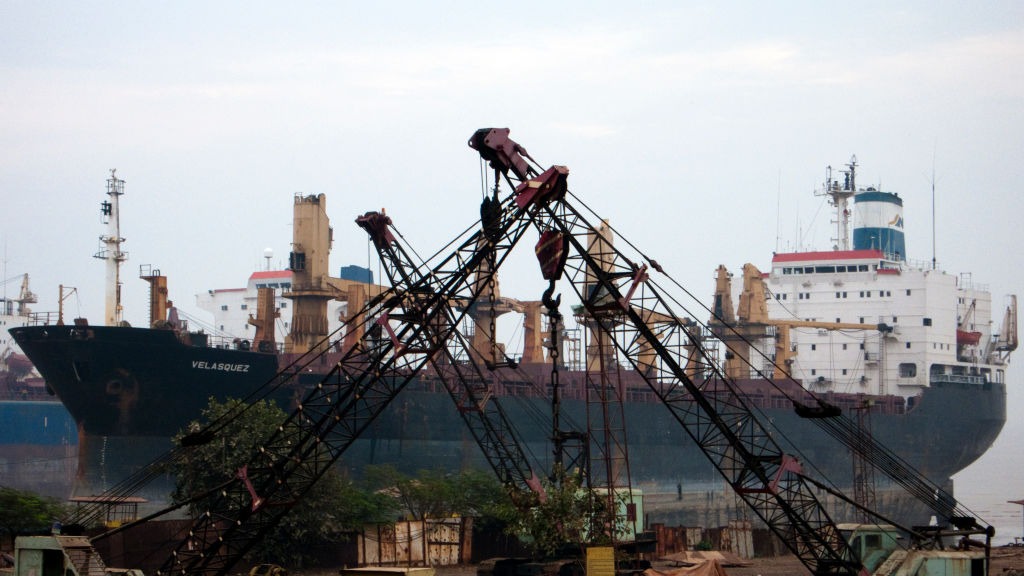
India has climbed to the number one position globally in ship recycling for 2025, capturing a 35.4% market share ahead of its Vision 2030 schedule. Driven by UNCTAD-tracked volume gains and the modernization of 115 yards to meet international eco-standards, the sector is successfully advancing India's position in the global circular economy.
NEW DELHI, INDIA — India has officially emerged as the world’s top ship-recycling nation in 2025, securing the primary global ranking ahead of long-term domestic development schedules. According to the comprehensive global maritime report published by the United Nations Conference on Trade and Development (UNCTAD), India’s volume share of the international ship dismantling market expanded dramatically to 35.4%. This milestone marks the successful achievement of the statutory targets outlined under the Union Government's baseline Maritime India Vision (MIV) 2030 five full years ahead of schedule.
The announcement, verified today, June 22, 2026, by the Ministry of Ports, Shipping and Waterways, highlights a structural surge in localized green recycling. This shift is drawing international fleets away from traditional East Asian alternative blocks due to India's strict adherence to international safety parameters.
Global Market Share Surges as Tonnage Grows by 60 Percent
According to statistical frameworks processed in the UNCTAD annual industry review, the volume of decommissioned structures recycled across Indian maritime hubs reached 2.99 million gross tons (GT) in 2025. This output marks a sharp 60% expansion compared to the 1.86 million GT managed by the sector during the 2024 calendar window.
The consolidation of global vessel arrivals reflects the direct operational impact of domestic regulatory modernizations and simplified customs frameworks. These changes have significantly accelerated turnaround times for international cash buyers and vessel owners.
The massive increase in incoming tonnage has repositioned key regional hubs like the Alang Ship Recycling Yard in Gujarat. Alang has evolved from a conventional labor-intensive breaking coast into an integrated, environmentally certified industrial industrial zone.
Industrial data indicates that this structural shift allows India to retain over a third of the global marine recycling market. This footprint places the country ahead of historical regional competitors such as Bangladesh, Pakistan, and Turkey.
Compliance and Financial Incentives Drive Yard Modernization
A primary factor behind this milestone is the legislative backing provided by the Recycling of Ships Act, 2019. This law aligned India's coastal manufacturing yards with the rigorous safety standards of the Hong Kong International Convention (HKC).
The Ministry of Ports, Shipping and Waterways confirmed that the state provided ₹53.5 crore in targeted financial assistance to help upgrade coastal infrastructure. This funding allowed 115 unique dismantling yards across the country to secure official international HKC safety certifications.
To build a continuous circular economy loop, the government deployed the strategic Ship-breaking Credit Note Scheme. Under this initiative, shipowners who dismantle their aging fleets at certified Indian yards receive a digital credit note worth 40% of the vessel's realized scrap value.
This credit note can then be applied to offset up to 5% of the construction cost for a new ship built at an Indian shipyard. This mechanism effectively links the recycling sector with domestic shipbuilding, creating an integrated, sustainable maritime lifecycle.
Official Sources Section
The underlying production metrics, capital allocations, and policy frameworks have been validated by primary state and international agencies.
Quote Section
"According to officials, India's emergence as the world's top ship-recycling nation demonstrates the success of sustained policy reforms, industry efforts, and adherence to international environmental and safety standards. Union Minister Sarbananda Sonowal stated that the achievement further reinforces the nation’s position as a global hub for responsible and sustainable ship recycling."
Why It Matters
For heavy industrial sectors, India's leading market position guarantees a steady domestic source of high-grade rerolled steel scrap, reducing the manufacturing sector's reliance on imported iron ore. For coastal communities, the expansion of certified green yards creates thousands of safe, regulated engineering and logistics jobs. Crucially, this growth aligns with international environmental standards, preventing dangerous heavy metal leaks into delicate marine habitats.
Key Facts at a Glance
Global Market Control: India secured a dominant 35.4% share of the international ship recycling industry in 2025.
Volume Expansion: Annual processed volume rose nearly 60% year-on-year to reach 2.99 million gross tons.
Vision 2030 Milestone: Achieved the primary targets of the Maritime India Vision 2030 five years ahead of schedule.
Infrastructure Compliance: Modernization funding helped 115 domestic yards achieve full Hong Kong Convention (HKC) environmental compliance.
FAQ Section
What is the Hong Kong Convention (HKC) in ship recycling?
The Hong Kong Convention is an international treaty aimed at ensuring that ships, when being recycled after reaching the end of their operational lives, do not pose unnecessary risks to human health, safety, or the environment.
How does the Ship-breaking Credit Note Scheme benefit vessel owners?
It provides a credit note equal to 40% of the scrap value of a recycled vessel, which can be used to pay for up to 5% of a new ship’s cost if it is built at an Indian shipyard, promoting domestic shipbuilding.
What are the future capacity targets for India’s ship-recycling hubs?
Under current expansion master plans prepared by regional boards, India aims to nearly double its aggregate recycling capacity to about 9 million light displacement tons (LDT) through infrastructure upgrades at the Alang yard.
Source: