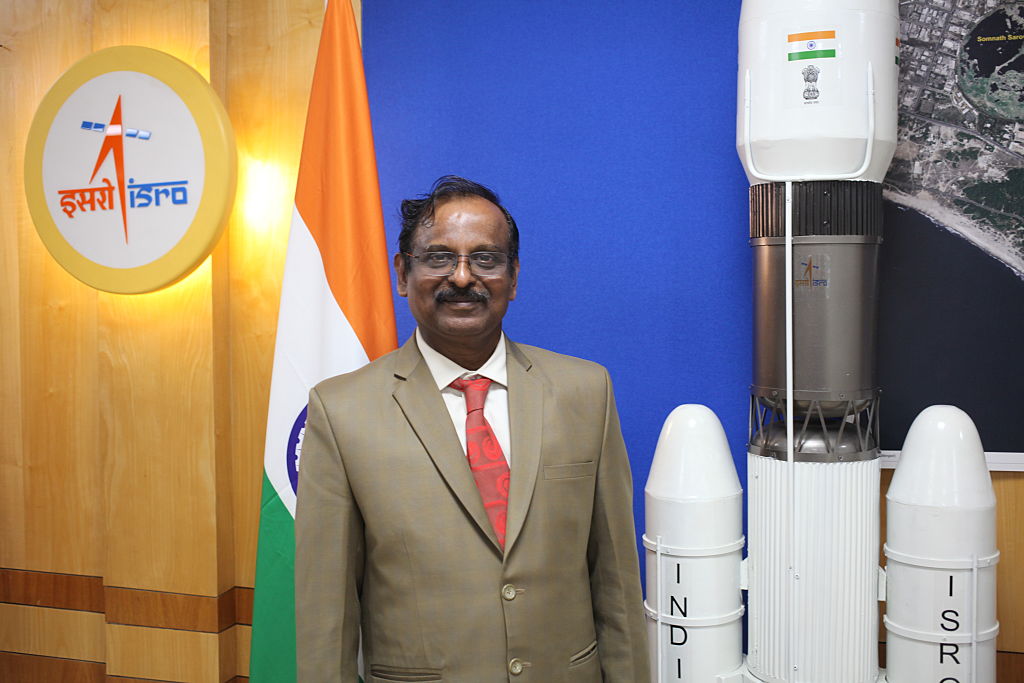
A study by Cambridge and Politecnico di Torino researchers published in Economics Letters reveals India’s average space launch cost stands at $13,302 per kilogram—the highest among major spacefaring nations. The higher unit cost stems from lower launch frequencies and smaller rocket capacities that spread fixed expenses over limited payloads.
CAMBRIDGE, U.K. — A landmark academic study published in the peer-reviewed journal Economics Letters has revealed that India incurs the highest per-unit rocket launch cost among major spacefaring nations, challenging the long-held public narrative surrounding the country's frugal space program.
The research—conducted by Alessio Terzi of the University of Cambridge and Francesco Nicoli of the Politecnico di Torino—analyzed more than six decades of rocket launches. The authors estimated that sending one kilogram of payload into Low-Earth Orbit (LEO) using Indian rockets cost $13,302 in 2025. By comparison, the average cost in the United States stood at $3,225 per kilogram, placing India's unit cost at more than four times that of the U.S.. Researchers attributed the discrepancy primarily to the Indian Space Research Organisation's (ISRO) reliance on smaller payload capacities and relatively low launch frequencies, which prevent fixed operational costs from being amortized efficiently over larger payloads.
Economic Factors and Payload Amortization Behind High Unit Costs
The Cambridge-Politecnico study analyzed launch data between 1960 and 2025 across six primary spacefaring markets: the United States, Europe, Russia, China, Japan, and India. While India's total mission budgets remain notably modest by global standards, unit economics paint a different picture when evaluated on a dollar-per-kilogram basis.
According to the study, the global average cost to deliver a kilogram to LEO stood at $3,868. Europe recorded an average of $9,897 per kilogram, followed by Russia ($6,682), China ($5,809), Japan ($5,287), and the U.S. ($3,225). The authors explained that fixed costs involved in rocket assembly, launchpad preparation, and ground operations remain largely constant regardless of payload mass. Because vehicles such as ISRO’s PSLV and SSLV carry smaller payloads compared to heavy-lift rockets like SpaceX's Falcon 9, the fixed expenses spread across fewer kilograms. Furthermore, since 2010, only the U.S. and Europe have demonstrated statistically significant "experience curves"—where unit costs consistently decline as cumulative launch cadence accelerates.
Strategic Implications for India’s Commercial Space Market
The findings come at a critical juncture as India seeks to expand its domestic space economy from government-led exploratory missions toward a commercial satellite launching hub. Through initiatives managed by the Indian National Space Promotion and Authorization Centre (IN-SPACe) and NewSpace India Limited (NSIL), New Delhi has actively encouraged private space startups—such as Skyroot Aerospace and Agnikul Cosmos—to develop private launch vehicles and heavy-lift capacities.
Industry analysts note that while private players are entering the market, achieving competitive scale will require significantly higher launch frequencies and the development of reusable rocket technology to drive down per-kilogram pricing.
Official Sources Section
According to official study details published in Economics Letters and datasets compiled by academic researchers at the University of Cambridge and Politecnico di Torino, unit costs reflect country-level averages for payload delivery into Low-Earth Orbit based on historical launch logs.
Quote Section
"The very high figure for India might be counterintuitive as it stands in stark contrast with the narrative of the country's frugal space programme," wrote authors Alessio Terzi and Francesco Nicoli in their published study. "However, this is a result of focusing on small rocket sizes, which implies that, albeit being low by international standards, fixed costs get amortised over a limited payload."
Why It Matters
For Satellite Operators: Highlights commercial price disparities when choosing launch providers for small and medium satellite constellations.
For Private Space Startups: Emphasizes the commercial urgency for Indian private firms to develop reusable, higher-capacity launch vehicles.
For Policy Makers: Underscores the need to increase overall launch cadence and infrastructure utilization to achieve true cost parity with global competitors.
Key Facts at a Glance
Average India Launch Cost: $13,302 per kilogram delivered to Low-Earth Orbit.
U.S. Launch Cost: $3,225 per kilogram, benefiting from heavy-lift reusability and high launch cadence.
Global Average: $3,868 per kilogram across major space powers.
Primary Cause: Fixed operational costs amortized over smaller payload capacities and lower flight frequencies.
Frequently Asked Questions (FAQ)
Why is India's space program known for being frugal if per-kg costs are high?
India's total mission budgets (such as Chandrayaan and Mangalyaan) are significantly lower in absolute terms than those of NASA or ESA. However, because ISRO frequently flies smaller rockets carrying less total weight, the cost per kilogram of payload remains higher than heavy-lift reusable rockets operated in the U.S..
Which country has the lowest rocket launch costs?
According to the study, the United States offers the lowest average cost per kilogram to Low-Earth Orbit at $3,225, largely driven by high launch frequencies and reusable vehicles like SpaceX's Falcon 9.
How is India working to lower space launch costs?
Through IN-SPACe, India is encouraging private space companies to build larger, reusable launch vehicles and expanding commercial launch capabilities via NewSpace India Limited (NSIL).
Source: Economics Letters Journal | Indian Space Research Organisation (ISRO) | IN-SPACe India